The Art of Virtual Interventions: Angela Washko
Listen to the interview on Apple, Spotify, or your listening platform of choice. Captioned interviews are available on YouTube.
The views and opinions expressed by speakers and presenters in connection with Art Restart are their own, and not an endorsement by the Thomas S. Kenan Institute for the Arts and the UNC School of the Arts. This interview has been edited for length and clarity.
Much of Angela Washko’s work begins with a simple question: What if we took the media we consume every day — the video games, the reality shows, the online chatrooms — as seriously as we take traditional art spaces? What if we examined them not just as distractions or products but as public arenas where identity, power and belonging are actively negotiated?
With a practice that spans performance, social engagement, video games and film, Angela has spent more than a decade doing just that. Her work doesn’t just critique digital culture from the outside; it embeds itself within it, creating space for dialogue in places not usually known for nuance. Whether she’s convening feminist councils in the fantasy worlds of online gaming or crafting interactive experiences from the textures of real life, her projects ask how we behave when no one — or everyone — is watching.
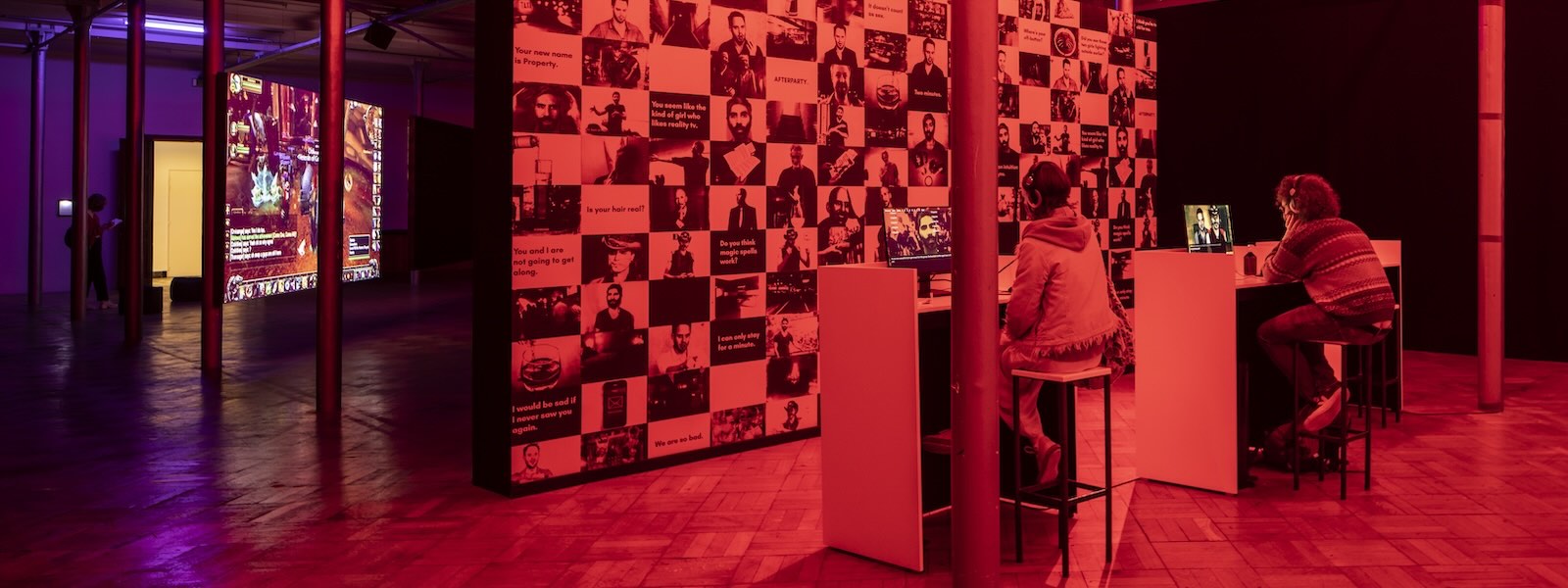
In 2012 she launched The Council on Gender Sensitivity and Behavioral Awareness in World of Warcraft, an in-game social practice project that sparked multi-hour dialogues between initially hostile players. Later she created The Game: The Game, an RPG in which a player could try to negotiate a bar packed full of male pickup artists following the same seduction playbook. And just last year, fascinated by the allure and promises of reality television, she directed her first documentary, “Workhorse Queen,” about a few members of the tightknit drag community in Rochester, NY and their complicated relationship with “RuPaul’s Drag Race” and the commerce of 21st century drag celebrity.
In this interview, Angela, now a full professor and the MFA Program Director at the Stamps School of Art & Design at the University of Michigan, reflects on how she found her voice as an artist inside a male-dominated gaming culture, why she continues to work in and not against the media she critiques and how becoming a mother during a global crisis reshaped her ideas of creativity, care and time.
Pier Carlo Talenti: I understand you were an avid gamer as a young person and are still today. At what point in did you realize that questioning the world of gaming that you adored so much would become central to your inquiries and to your artmaking?
Angela Washko: I grew up playing games, and I especially loved role-playing games. I was an avid reader, and I was so excited about these very text-heavy stories that took 80 hours to play through and that I had this role in enacting. I just loved them. I was lucky enough that, even though I lived in a very rural place, there was this — I don't want to call him bizarre because that's mean — very eclectic collector of obscure role-playing games who opened his own video-game rental store called Marx TV Games.
Pier Carlo: Where was this?
Angela: This was in Sinking Spring, PA, not a known place to most people. He had all of these incredible games that I think most kids didn’t have access to, including really obscure early Japanese dating-simulator RPG games, bootleg translations of Japanese games that didn't get translated into English.
Pier Carlo: That is so niche! You must have been the most cultured gamer out there.
Angela: I was definitely like, “You name a Super Nintendo RPG, I have probably played it and beat it.” I was so into escaping into these role-playing game worlds. Eventually when I was in undergrad, massively multiplayer role-playing games became a thing, first with EverQuest, then with World of Warcraft. My college roommates and I were very into playing World of Warcraft together.
I just played as a sincere, authentic gamer for a long time, but there was always something that was frustrating about my experience, particularly in online role-playing games, because anytime either people I was playing with or random people in a town would find out in some way that I was a cisgender woman behind my avatar, it would just change everyone's dynamic with me in this very heightened way.
Pier Carlo: Was your avatar female-presenting?
Angela: Yes, my avatar was female-presenting, but I will say in World of Warcraft, this phenomenon early on in games like Lifespan of cisgender male players playing as female-bodied avatars became a whole thing. I ended up later interviewing players and talking to them about it. “Are you interested in women's experiences?” The answer was always, “No. I don't want to look at a dude’s butt all day,” or, “I'm not gay, and so therefore I have to play a female avatar.” Because in that particular game, you are positioned as the camera behind the character; it's not first-person. So, yeah, there's this ownership and projection thing going on. But I digress.
So when players would find out that I was a cisgender woman, they would usually react in one of two categorical ways. One way was they would say something to the effect of, “Get back in the kitchen and make me a sandwich. Show me some sort of sexualized expletive.” There was some expectation that I was not good at the game now that they knew that I was a woman. I put that in the super-negative misogynistic responses.
Then on the other side, if players realized I was a woman behind my avatar, many, many cisgender male players would send me private messages in the game in the form of a whisper. They would ask me to go on Skype with them or some other video chat. They would offer me gold in exchange for having certain types of, let's just say, sexual conversations with them. It just felt like it was super frustrating to the point that I quit the game for a while because of it.
Later as I was out of undergrad, I was starting to do artist residencies, and I became introduced to a lot of socially engaged interventionist artists. I started working with The Yes Men. I had moved to an art collective called Flux Factory in New York, and I was doing all of these interventions and performances in public space with them.
Then I was like, “Wait a second, I participate in a virtual public space, and I could be applying some of the methodologies that we're using in this physical public space in the game environment.” That's where I had the moment of realization that maybe it's time to not give up on these games or ignore these dynamics that are happening and instead come up with an artistic strategy to facilitate discussions about what’s going on and heighten awareness around this experience that marginalized players are having with these games.
Pier Carlo: Doing an online intervention like the Council and Gender Sensitivity and Behavioral Awareness in World of Warcraft is very different from doing an in-person intervention, in that the amount of anonymous hostility directed at you must be exponentially worse. Did you anticipate what was going to hit you? How did you prepare yourself?
Angela: I had been on the internet getting insulted and told to get back in the kitchen and make other players sandwiches long enough that I had awareness around that. Also, at the time I was coming up in a net-art community. There were a lot of other artists that I was working with who were looking at the politics of digital culture and why these niche communities and anti-feminist hate communities were forming in relationship to the social media web, so it was definitely something that was on my radar.
I think in the beginning of the Council on Gender Sensitivity and Behavioral Awareness in World of Warcraft, I was interested in thinking about it as this protest and getting other players to rise up against the misogynistic, racist and homophobic communal language within the space and some of tendencies of the community to exclude. But I think over time I realized that I was more interested in having a conversation about it, and that was maybe where I found what my own artistic voice is as a facilitator, a social-practice-adjacent person and an improvisational performer.
My approach eventually became to create spaces for conversation and to allow for disruption if that's what the community inside World of Warcraft wants to do. If I'm having a conversation with 15 players in a town square in World of Warcraft, if a literal troll shows up, takes off all of his clothes and starts throwing fireballs and fireworks all over to try to disrupt the conversation, I don't see it as a disruption; I see it as part of the space. They're entitled to participate in that way, if that's the way that feels right to them.
I found that by allowing for that to be part of the work, those people who were initially disruptive ended up having some of the most engaged long conversations with the Council. It created space for those who maybe feel threatened by feminism to talk to an actual feminist without the mediation of social media and the rewarding of niche-community algorithm stuff. We would have sometimes eight-hour long conversations.
Pier Carlo: Using that example that you just said of a troll casting off his clothes and trying to destroy everything, how would the Council intervene? How would it happen in real time?
Angela: In the beginning of the Council, when I first started that project, I would go to a town square, and I would start asking players to talk to me about their definitions of feminism and stuff like that. But I realized early on that that did not produce the most interesting conversations, and I started instead to just play the game as I would. If something came up that was relevant to the Council on Gender Sensitivity and Behavioral Awareness, I would engage and ask the people involved in that conversation if they wanted to have a recorded dialogue and invite other people to it.
For example, there was one time when a player was shouting in the town of Orgrimmar. They were shouting that the players should not be allowed to start LGBTQIA+-inclusive guilds because that's a “furthering of the gay agenda and its propaganda.” I saw that as a topic that is certainly relevant to the Council, so I had a conversation with that player and other players in a public square with a campfire and lots of characters running around. We had a conversation about why many players might want to have a safe space to play with other queer players and why this player felt so threatened by the possibility of that. That’s just one example.
Then there was also a guild that formed around the Council, and we would start to schedule not performances but meetings of the Council where it would be known among the guild members that every Tuesday we’re going to show up at this place and just have a conversation with whoever shows up.
Pier Carlo: Did you and the Council develop protocols for engaging with trolls, with real trolls and metaphorical trolls?
Angela: Yeah, it was so early on, I think, in my own experience with social practice and the kind of ethics of engaging with real people. I think in my own approach, ultimately, as the project went on for four years, over time I was committed to not shutting down people’s viewpoints, even if they were ones that I really disagreed with, but instead to ask questions. I was always stating where my position was because I also didn’t want it to seem like I'm undercover, extracting things from them and then making them go viral in other places and doing gotcha journalism.
That's why it was also important that eventually I was facilitating this as the maximum-level character with very high-level gear, so it was clear that I had spent a lot of time in the space.
Pier Carlo: You were legit.
Angela: Yeah, I was a member of the community, not an artist trying to exploit this community and take it to the art world that's going to make fun of it. Yeah, I think I always disclosed what I was doing. That was really important to me. I had a copy-and-paste statement that I would put into the space every few minutes to make sure that everybody coming into the conversation saw it, which was basically just like, “Hi, I am facilitating a conversation as the Council on Gender Sensitivity and Behavioral Awareness. If you come into this space, we would love to talk with you but just know that this conversation is being recorded and maybe presented elsewhere.” It was the equivalent of a filming notice.
Pier Carlo: Right, very ethical and definitely creating a safe space for anyone involved.
Angela: I think over time, that became more and more important to me. It became less about, “Let me show the world outside of World of Warcraft how messed up and misogynistic, homophobic and racist it is,” and rather an effort to engage directly with the community in that space and create a dialogue between people with different identities, experiences and backgrounds who share that space.
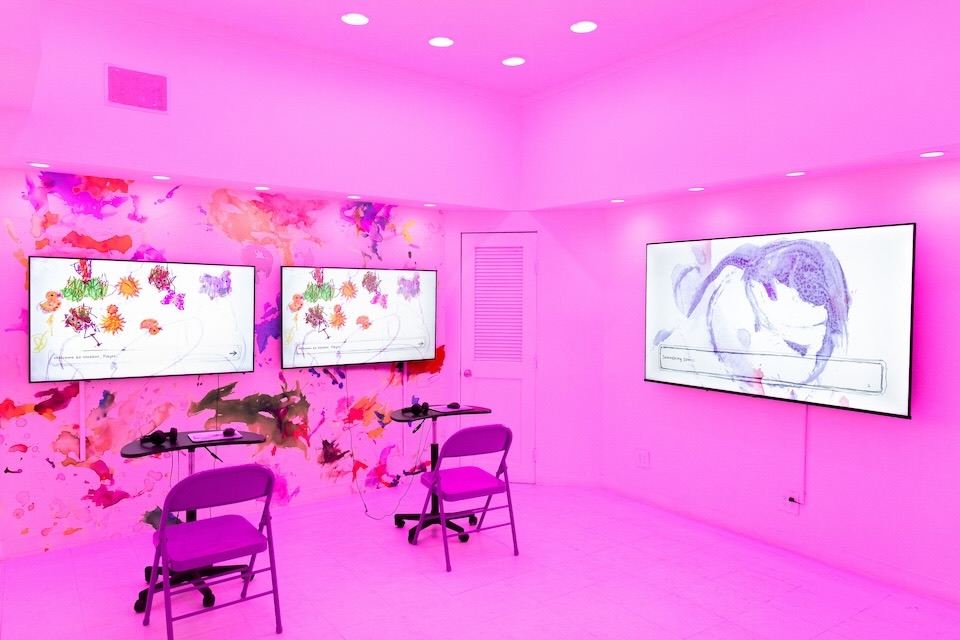
Angela Washko’s solo exhibition “Mother, Player” at Public Works Administration Gallery in New York City; Photo: Courtney Kinnare
Pier Carlo: Were you ever tempted to become a professional game-maker and join the industry yourself?
Angela: Well, when I was a kid, I came from a small town that nobody left and where the ambitions weren’t very high. I knew that I wanted to make art. I'd never been to a museum as a kid, so I didn’t really know what that meant, but I had this idea that I would just become an illustrator of role-playing game booklets. [She laughs.] That was so specific. I was like, “I don't know what you do with this.”
Eventually, as I moved out of Sinking Spring, I became more familiar with other contexts for art. I think I was of a generation that, “Only certain people are supposed to go into programming. You have to be a scientist; you have to be a computer scientist.” I think that changed for me when I read Anna Anthropy’s book, “The Rise of the Videogame Zinesters,” which is this amazing book that is basically a manifesto call for people who've historically been excluded from games to make their own games in whatever formal means make sense to them or they have access to. She makes an argument for games that are smaller scale, games that are made using not Triple-A gaming tools and broadening the point of view that games are produced from.
After I read that, I was like, “Maybe it's time to not just make artwork with existing games but also start making my own games that potentially fill a … I don't want to say void … games that could only be made from someone with my set of experiences and interests and using more democratically accessible and open-source tools.”
Pier Carlo: Since you started doing your interventions in the gaming and tech world, do you think the needle has moved at all towards inclusiveness?
Angela: It's all over the place right now. I would say that since the time that I started making art about games and Anna Anthropy’s book “The Rise of the Videogames Zinesters” came out, there have been substantial changes in the industry that I think have been positive in getting more voices involved and more voices supported with full-time creative jobs in the games industry. I think there are a couple of things that have led to that.
One is the way that games get distributed now. Because of all the markets that games are distributed through, like the Steam market and the Nintendo Switch market and the PlayStation market, the barrier to entry has changed. There are way more indie publishers who can put their games onto these platforms, and there wasn’t a thing like that before. Steam, when it first started, had this pretty heavy vetting system, and now that's changed a lot. It means that there are a lot of really bad rip-off games in the market that are just copies of other games and it's annoying because there's too many games to sort through — Paolo Pedercini writes a lot about that — but I will say that it’s possible, because of those markets, to encounter a very small-scale, very beautiful game that is not attempting to look like a Triple-A game.
I also think the tools and resources for game-making have become more democratized. I think there are so many tutorials now to get started. If you wanted to use Unity, if you wanted to use the Unreal Engine, if you were more open-source-leading, if you want to use something like Godot, these are all things for which there are resources to learn them yourself without the need to go through a specific program or a specific set of trainings.
The Game: The Game was made using Ren’Py, which is basically a dating-simulator template software for Python. It’s very user-friendly, it’s very easy to learn, and most kids are using it to make just really, really simple dating games for themselves. I found as I was making it that a lot of artists are using it. A lot of game developers are using it because even though it's very easy to learn, it’s a very robust tool. There's also a lot of people learning Twine because it doesn't require a lot of knowledge of code. You can use visual coding, and it’s more accessible for people without any code background as a gateway into other forms of game-making.
A few years ago, the industry had a reckoning around sexual assault, racism in the workplace, just lots of issues around the makeup of these developers. There’s a great indie game developer named Soha El-Sabaawi. She was one of the founders of Dames Making Games in Canada, to me a really important collective of experimental game-makers. She was making games in Twine, and she ended up becoming the lead of diversity and inclusion at Riot Games. Now she’s a game producer there as well, because a lot of these large developers are recognizing that people have been critical of issues of representation in games for a long time. They want authentic stories from new voices, and in order to get that, they have to hire new voices to tell those stories.
Pier Carlo: Right, and increase their user base, of course.
Angela: Yeah. There is certainly the capitalistic monetization side of that too, where it’s like, “OK, if you tell an authentic lesbian story within a game, you’re going to have access to a new audience that potentially was not going to play your game before.”
Pier Carlo: You have a very young daughter, so I have two questions relating to your parenthood. One is, given what you know about the online world, how are you preparing yourself and her for the time when she goes online? And also, how did her arrival change the way you’re approaching your artmaking?
Angela: Starting with the first question, yeah, it’s really a nightmare out there right now. I grew up in the era of AOL, some of the first wide distribution of the internet, and [laughing] I certainly got into my own trouble in those spaces, encountering trouble from the very beginning. I would be in a chat room for a specific age of people, and there would be older people on there. What it should have been was a red flag and a concern, but instead I was like, “Oh, they must think we’re cool!” [She laughs.]
My longtime collaborator, Ann Hirsch, made a project called “Twelve,” which was about an AOL chat room for 12-year-old girls that eventually was moderated and overseen by a 27-year-old man who was basically dating them all and soliciting different inappropriate materials from them. So, yeah, really horrible but also incredibly common in that era.
Now everything’s just accelerated. People are online earlier. There’s so many things that have been published about things going on in Roblox, Minecraft, Fortnite. You name a multiplayer game where kids are playing, and there has been some form of blackmailing, scamming or inappropriate sexual advances on minors in those spaces. It’s a nightmare. Gosh, there's so much to say about this.
Pier Carlo: Yes. But I want her, as I’m sure you do, to experience the same joy in gaming that you did as a child. How are you going to make sure that she can have that safely?
Angela: Because I am so engaged in media, so appreciative of media but also very critical, I am very intentional about what she's consuming. She's 4 1/2; she’ll be 5 in November. We have limited screen time. When we are going to watch something, it’s going to be something that I have previewed, that we’ve talked about. I know there are a lot of people because times are stressful and also especially post pandemic who sometimes just go like, “Here’s this tablet. Good luck.” I’m just not like that, at least not at this point. I am not going to just let the algorithm choose a bunch of things because I also know that the YouTube algorithm for kids also moves toward more and more extreme material — James Bridle wrote a great essay on that — so yeah, so I'm very intentional.
I’ve been thinking about when is the right time to introduce games, and I definitely didn’t want to ... . I've seen people hand off their phones to their toddlers with a button or a screen-mashing mindless game because it’s the only thing that makes their kids stop screaming. I totally get that. [Laughing] I totally get the use of that. But because I care about the differences between addiction-driven design games and games that are thoughtfully designed, I did recently get a new game system. It's called the Nex Playground, and it’s kind of great. We play like one hour on it on a weekend, and all of the games are physical in some way. They’re multiplayer family-oriented. She gets to pretend to be Abby from Sesame Street and I’m Elmo, and we’re jumping and we're finding letters. It’s very physical. Most of the games are educational, and there are specific games curated for toddlers.
I guess the short answer here is just being really intentional and also playing with her. I think that’s one thing, that I am someone who knows games and likes to play games and I’m happy to play with her. If it becomes a major interest of hers, I’ll support it in ways that are engaged with the field and intentional. Then there’s the second question.
Pier Carlo: Oh yeah, there's the second question about how becoming a parent has affected your current artmaking.
Angela: The day I realized I was pregnant was the same day that basically lockdown started during the pandemic and I found out I wouldn't be going back onto campus. At first, it seemed like just for a semester, then it was much longer than that. It was like, “Oh wow, OK, I'm going to have a baby, which was something I wanted to do,” but I was also like, “But now maybe the world is ending. I’m not sure.” It was quite hard to feel that isolated during that time, but at the same time, I think there was a reassessment of the care structures that we have, the way that we, at least in the U.S., have deprioritized care.
A lot of accommodations were being made — and I think some of the ways that those have continued have been positive — but I had no access to daycare for a long time. There was a real shortage of people working in that field. There was an interest in not expanding or letting in more kids because of the pandemic. I did not have daycare for a long time, and I had to go back to full-time teaching, so I was trying to figure out, “What am I doing? How do I do this? How do I put a film out into the world during this time and also feed in the middle of the night and watch cuts of the film?”
I ended up deciding that I wanted to make a game that put players into the experience of navigating these new pandemic experiences while also thinking about what it means to be an artist parent. I also had to change the way that I work because of the care needs of my kiddo. Beforehand, I was someone who just would be like, “I need to be by myself for a week uninterrupted to really focus on this thing and get it done.” Well, all of a sudden, I have this child who needs to be fed every two to three hours, who naps in little 45-minute bursts, who needs constant care, so I had to really change the way that I worked. These 45-minute naps became the space where I was able to make.
I started making all of the animations for this game, these hand-drawn frames of animation, because that was something I could do within her nap time. I started making this game called “Mother, Player.” You play through basically my experience being pregnant in the pandemic, maintaining a life as an artist and thinking through what it means to have the transformative experience of having a kid, being an artist, being a pansexual feminist person and still trying to maintain a practice and a community despite all of these things.
My kiddo ended up making the painted backgrounds for it, so they’re really beautiful. My partner made the soundtrack from all of her toys that make sound. So, it's definitely —
Pier Carlo: A family effort!
Angela: Yeah, in its materiality, for sure.
August 13, 2025
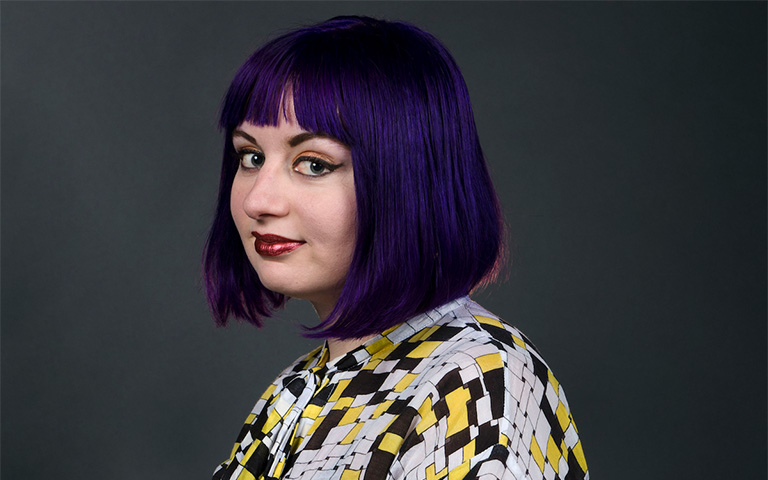
Angela Washko
Media Artist, Filmmaker, Game Developer
Angela Washko is a media artist, filmmaker, and experimental game developer who creates new forums for discussions about feminism in spaces frequently hostile towards it. Her practice spans interventions in virtual environments, performance art, media installation, documentary film, and video games. A recipient of the United States Artists Fellowship, Creative Capital Award, National Endowment for the Arts award, Franklin Furnace Performance Fund, and the Impact Award at Indiecade, Washko's practice has been highlighted in The New Yorker, Frieze Magazine, Time Magazine, The Guardian, ArtForum, The Los Angeles Times, Art in America, The New York Times and more. Her projects have been presented internationally at venues including Museum of the Moving Image in New York, Centre Pompidou-Metz, Los Angeles Museum of Contemporary Art, the Milan Design Triennale, the Shenzhen Animation Biennial, and the Korean Film Archive. Angela Washko is the Catherine B. Heller Professor of Art and the MFA Program Director at University of Michigan. Photo: Gray Swartzel
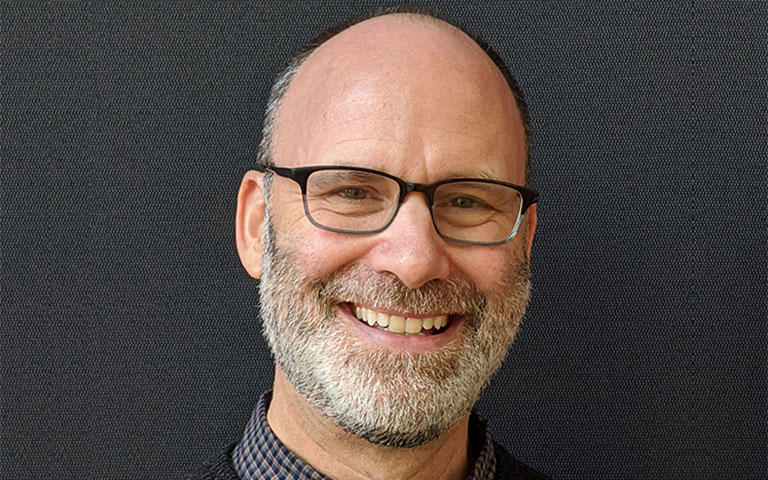
Pier Carlo Talenti
Podcast Producer & Host
Until 2016 Pier Carlo Talenti was the director of new play development at Center Theatre Group in Los Angeles where he oversaw one of the country’s most vigorous new-play commissioning programs. Over 20 years he developed scores of new works for the theater by the some of the country’s most innovative theater artists, and his combination salon/playwriting group, the Writers’ Workshop, counts among its alumni/ae extraordinary playwrights who are also currently producing and writing TV’s most exciting shows. He is currently a resident of Hillsborough, NC, where he is pursuing his own creative projects.