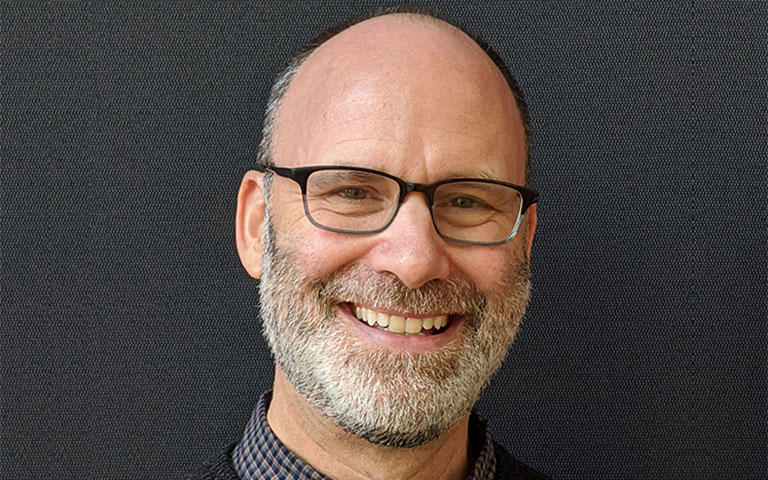
Brian Petkovich
The views and opinions expressed by speakers and presenters in connection with Art Restart are their own, and not an endorsement by the Thomas S. Kenan Institute for the Arts and the UNC School of the Arts. This interview has been edited for length and clarity.
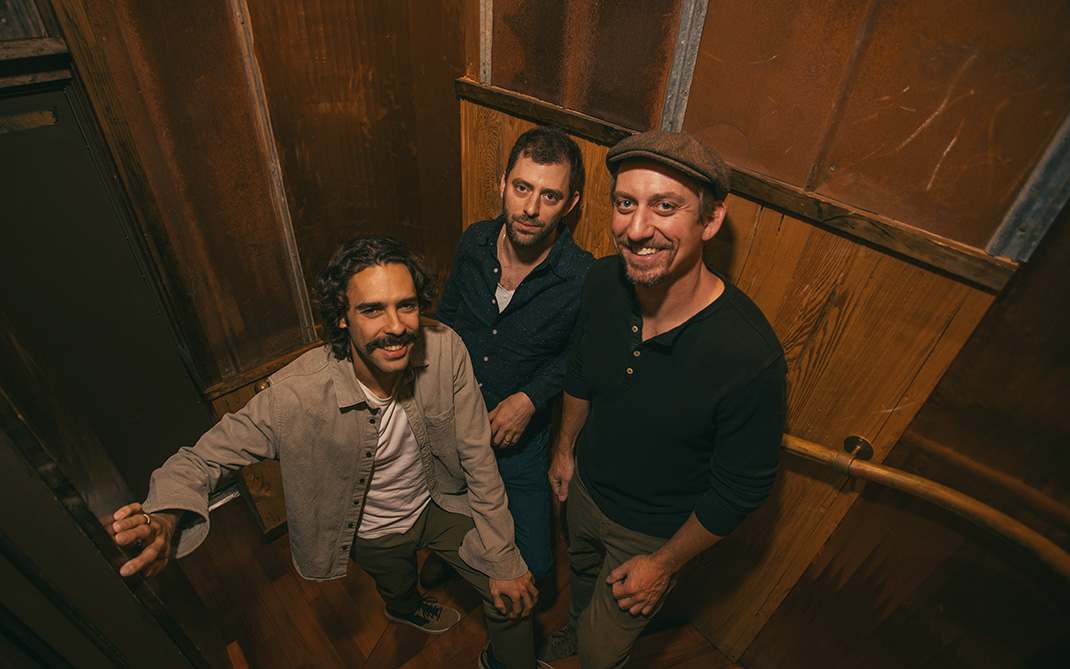
Last summer, bassoonist Brian Petkovich lost his job and then got a job that had never existed before. Not long after the San Antonio Symphony, with whom Brian played for 25 years, shut its doors, he became the inaugural president of the nascent San Antonio Philharmonic, which as of this writing is seven months old.
For a brief moment in 2022, it seemed like San Antonio, the nation’s seventh-largest city, might not have a major orchestra. The musicians of the San Antonio Symphony, protesting significant personnel and salary cuts demanded by the Board, had gone on strike in September of 2021, and nine months later, on June 16, 2022, the Symphony Society of San Antonio declared it was shutting down the 83-year-old institution for good, declaring a Chapter 7 bankruptcy.
The musicians had not been idle throughout this tumult, however. They had founded the Musicians of the San Antonio Symphony (MOSAS) through which they raised private funds that allowed them to perform through the spring and early summer of 2022 in venues throughout the city. When the Symphony’s demise was finalized, they set about creating a new permanent ensemble, appointing Brian as its president, and on September 16, 2022, the brand-new San Antonio Philharmonic played its first concert to a rapt audience at First Baptist Church of San Antonio.
In this interview with Pier Carlo Talenti, Brian reveals some of the assumptions and miscalculations that led to the Symphony’s dissolution and discusses his and his fellow musicians’ dreams for how their new classical-music ensemble will serve San Antonio for years to come.
Choose a question below to begin exploring the interview:
- How has the San Antonio Philharmonic been doing so far? What have you learned in the first year of its existence?
- Was the position of president of a brand-new performing-arts organization offered to you? Why did you accept? What were your concerns initially?
- Leadership by committee is not the status quo in classical-music ensembles. Do you think it’s sustainable going forward?
- Going back over the the history of the Symphony, the Board demanded reductions in wages and the size of the orchestra. Why did the musicians think that was unreasonable and didn’t make sense?
- You mentioned that over the years, people who were there to reinvent the organization were not getting the support they needed. Where should they have gotten the support? What would that have looked like?
- If in 2010 you had been handed the $200 million used for the performing arts center, how would you have spent it? What might you have done differently?
- As you’re looking forward, what are your plans to raise enough money to fulfill your artistic mission and pay your musicians and staff a reasonable wage?
- How are you presenting yourself to your community as not the Symphony, as an organization that will do things differently henceforth?
- What in your artistic training has been particularly useful in your leadership role, and what do you think you’ve had to learn from scratch?
- What do you think would make it easier for an artist such as you and a new institution to share their artistry with their community?
- What advice do you have for a bassoonist currently in a conservatory like ours who’s just starting to map out their career?
- What do you think you’re going to be looking for in your next leader?
Pier Carlo Talenti: I’d like to start in the present and hear how the Philharmonic has been doing so far. What have you learned in the first year of its existence?
Brian Petkovich: It’s going really well. We have a 10-classic series this year, and we’re halfway through. We have a concert next week, and we’ve had basically a concert a month starting in September, so it’s been an exciting time. A lot of this has been getting back out into the public after the pandemic and all that. It’s been fun, it’s been interesting, it’s been good to see people out in the audience and be back onstage.
Pier Carlo: What’s been your favorite concert so far?
Brian: Well, let’s see. We do a lot of YPC concerts, a lot of Young People’s Concerts, and those for me have been the most fun because I get to see a roomful of kids that have been locked away for the pandemic out in public and just having a good time. That has been the nicest part for me, as far as organizing these concerts.
We’ve had some really fantastic guest artists and guest conductors come through, and so there have been some really serious concerts that we’ve played, and I’ve really enjoyed those.
Pier Carlo: The YPC element is a crucial component of the Phil going forward?
Brian: It’s basically why I wanted to get back going and why a lot of the musicians wanted to start, so yeah, as far as crucial, it’s basically what we want to do. It’s what we need to do for the next generation, but more than that, playing these concerts and getting people back together is what we need to have happen.
Pier Carlo: You’re in a position that I think many people might find enviable and others might not, which is the president of a brand-new performing-arts organization in 2023. Was it offered to you? Why did you accept? What were your concerns initially?
Brian: Before it sounds like I’ve inflated myself to being the president, really how all this came about was a group of musicians got together and decided that we wanted to get back onstage after the pandemic during this strike that we were on. Early last year was when everything ended. Basically, we wanted to get back onstage. I was put forward as the person to be president, but it was really a group effort from the start, and it still is a group effort.
A lot of what I’ve done is reach consensus with a committee. This is almost like leadership by committee more than anything else, so that’s been an interesting part of this and probably a different part of it than normal. It’s not normal. That’s what does not seem normal to me, as far as the management and governance are concerned. It’s much more collaborative on all levels than the top-down CEO kind of mindset.
Pier Carlo: Leadership by committee. Yeah, that’s definitely not the status quo, I think, certainly in classical-music ensembles. Do you think it’s sustainable going forward?
Brian: I think it’s sustainable for a little while, but usually when this kind of effort starts, it winds up going back to a normal governance and CEO kind of structure. I have no illusions about the fact that this is a transitional-type situation or structure. The transition away from what we’re doing now, which is basically just startup, to something that’s normal will take a little bit of time. But we’re eyeing that. It’s not like we’re trying to hold onto some new model.
Pier Carlo: But I’m guessing, given what you and your community of musicians went through in the last couple of years, you’re not going to want to replicate what the old normal was, right? Or am I wrong?
Brian: Well, I mean this is about people, willpower and just the consensus of the whole community. Just because you have X, Y, or Z person in charge doesn’t mean that there’s a huge change. So yeah, basically we want to have a little bit of self-determination as musicians and as far as how we build and go forward, but it’s a community trust.
Pier Carlo: I do want to go back over the last couple years and talk a little bit about the history of the Symphony, which filed for bankruptcy last year. Now I know it had struggled financially for years, and even filed for bankruptcy once before. And the pandemic only made things worse. So in that regard, the Symphony was similar to many other performing-arts organizations in the 21st century and especially through the pandemic.
I gather what happened was that after negotiations with your union, the Board demanded reductions in wages and the size of the orchestra that you musicians decided was unreasonable. Could you talk about why you thought it was unreasonable, why you believed what the Board was demanding didn’t make sense?
Brian: To go back to one of your earlier comments, there was a bankruptcy in 2003, 2004, and then basically we were growing from that. We had a new performing-arts center built to the tune of over $200 million where we were the resident company. Really it was sold as a home for the Symphony. That opened in 2014. Then we were trying really grow the ensemble.
There’s always been a paying-for-musicians as opposed to paying-for-venues. Bricks and mortar versus people has always been a little bit of a focus, and so really a lot of that was, what does the symphony need to be in San Antonio and how does that look?
What I’ve seen over the 25 years that I’ve been a musician and been a musician board member has been a transition, a parade of different people that want to really help out and change the Symphony, but then when they get in that position, they find not as much help from past people who have done that work. That’s basically what happened before the pandemic. I don’t think the pandemic was necessarily instrumental in what eventually happened. My feeling — and I think a lot of the feeling in the orchestra — was that we were almost on the verge of where we got to last year before the pandemic and the pandemic was basically just a big pause over the whole world.
Certainly, one of the things I’ve learned is that the board or the musicians or anyone there, it’s not like it’s a block of people thinking exactly the same. Really the musicians are all very different people, have different lives, and so it’s more about what’s acceptable, not what’s reasonable. If something is going to affect your life where it would be better to move out of town and accept other work, then you’re going to vote no if you were just going to not accept the contract. I think it’s not a matter of reasonable; it’s a matter of being acceptable. And on an individual level, not on a group level.
Pier Carlo: You mentioned that over the years you’d seen a parade of people who were there to reinvent and support the organization, but they were not getting the support they needed. Where should they have gotten the support? What would that have looked like?
Brian: So that’s what I’ve seen: Basically, someone comes in, a new group or a new institution wants to come in and help, and then the people that have gotten burned out basically take a step back and don’t stay engaged. This is about, like I said before, willpower and engagement, and that’s across the board from all constituents, funders, foundations, musicians, the management. A lot of arts managers are half-volunteers, because it’s not like you’re going to make as much money doing this as something in the private sector. It’s really about engaging people in the idea of what is possible and what can get done.
Pier Carlo: So what went wrong? What turned out not to be possible, and what could not be done?
Brian: I think there was just the continual decline of people that were burned out from seeing a string of crises. Whether or not those are financial crises or willpower crises is another question. I think the money is here, but then the will to spend it and see that return in the community is part of what I think needs to be raised.
I mentioned this $200 million investment from the community in a performing-arts center supported by the Symphony. I think really the question there needs to be, given that that money was spent to support performing arts, how is that investment capitalized on with the people that are operating in it? I mean, I always thought that the model of how the Tobin Center is going to be looked at going forward and frankly in the past when it was started … . They focused a lot on building the building. It’s a wonderful place, but then it’s like, what happens in it? And that’s the planning that I think really the community needs to address.
Pier Carlo: In what way? How has it not been addressed previously?
Brian: Well, what activities go on inside of that building, as far as performing arts, both with working with the opera and the ballet and having the Philharmonic be really the anchor of the performing-arts situation in San Antonio. There’s been a large capital investment in bricks and mortar, and I think the mindset needs to change. “Well, if there’s been this investment in bricks and mortar, how do we invest in people and the artists that are making that work here in San Antonio?”
Pier Carlo: Huh, this makes me want to ask you if in 2010 you had been handed that $200 million, how would you have spent it?
Brian: [He laughs.] No one has ever asked me that one before! How would I have spent it?
Pier Carlo: Because it seems like what the community did was build a new temple to the arts, which I think we’re learning can have diminishing returns in communities. So I’m wondering what you might have done differently.
Brian: Sure, sure. That’s a really good way of framing it.
I would say, well, the endowment piece for what we’ve had in San Antonio has always been a big question mark. Part of the discussion for building the Tobin Center back in the early 2000s before the first brick was laid was about having an operational endowment of $30 million to support the activities inside the building. That endowment really was used for the construction instead of that performance support for what happens in the building.
So, I mean, if someone is going to hand me a big check, I mean that kind of big check, the $100 million kind of checks really are long-term investments in the performing-arts community, and that’s really an endowment. I suppose right now we’re talking about building from scratch and really talking about rainy-day funds, having a support structure there. That’s a question that I probably won’t have to address, but it’s an interesting thought experiment.
But all of a sudden there was a large capital investment on bricks and mortar, and then everyone assumed, "Well, the arts institutions will just take care of themselves." And that assumption wasn’t a good assumption.
Pier Carlo: The endowment was meant to support all of the artistic work in the building, to be spread equally among the companies?
Brian: That $30 million never materialized as an endowment. It was spent on the construction of the building rather than supporting what was happening in it. Now, granted, there are construction overruns, there’s the need for maintenance support and endowment for the hall. All that is great. But all of a sudden there was a large capital investment on bricks and mortar, and then everyone assumed, “Well, the arts institutions will just take care of themselves.” And that assumption wasn’t a good assumption.
The idea for the operational model was that the local arts organizations that are using the building as nonprofits were going to have 70% to 80% of the dates and supply 20% or 30% of the money. But then on the flip side, the Tobin Center was going to raise or earn 70% or 80% of their revenue by booking those other 20% or 30% of dates. And that basically creates a competition for time in the building.
Pier Carlo: Meaning for touring productions or one-off concerts, that type of thing?
Brian: Exactly. So basically, you have a for-profit company being run in support of the nonprofit mission to the tune of 80/20, but right now we’re not there, and so really, it’s basically a for-profit enterprise at the moment.
Pier Carlo: As you’re looking forward to ensuring the Phil’s continued success, what are your plans to raise enough money and sell enough tickets to fulfill your artistic mission and pay your musicians and staff a reasonable wage?
Brian: Right now, we are just starting out, and the support that we’ve gotten has basically been from individual donors who are close. They’re patrons; they’re long-term donors. That support has continued. There have been some key foundations that have supported us. And then it’s a matter of getting support from the public sector. We have a grant that we received in December from the county, and we hope to have that matched by the city and just see this basically continue to grow.
We didn’t have a preconceived notion of where we were going to wind up or what we needed to have happen. We were just starting. Part of what we saw last year this time was that people were being turned off of the art form or philanthropy to classical music just because of the rancor with the Symphony or dissatisfaction with what was happening with the Symphony as an institution. Rather than see that support evaporate, that was part of the reason why we formed our own 501(c)(3), so that there was a vehicle to accept that generosity.
Pier Carlo: So how are you presenting yourself to your community as not the Symphony, as an organization that will do things differently henceforth?
Brian: That is really the question that we get the most. And really right now, I suppose the basic answer is, we don’t have a prescription for what this is going to look like. It’s going to organically grow to what it can be and what it needs to be and what the community wants. Part of that is reaching out to maybe different parts of the community that have not felt invited. Not that they weren’t welcomed before, but they just weren’t invited, and so we’re trying to get out into different parts of the community or at least reach out to those parts of the community in a new way and really basically just be here for people.
At the moment, we can’t do everything that we want, but we’ve started with our core things, which is getting the audience back in the hall and getting out into the schools for the Young People’s Concerts. That’s probably the biggest change right now: We’re going out into the community schools rather than having people brought in, so it’s basically engaging people where they are rather than having them brought in to us, if that makes sense.
Pier Carlo: Now, I don’t want to forget that I’m speaking primarily to an artist, so I want to know how this past year of leadership has been. What in your artistic training has been particularly useful, and what do you think you’ve had to learn from scratch?
Brian: That’s a good question. As far as my musical training is concerned, the thing that I think is different for musicians leading anything is the fact that we’re used to working with a lot of different people in an ensemble. In an orchestra, you might be called a principal, or you might be called this or that, but really everyone is there together working at the same time. That part of the leadership is really finding group consensus and listening louder than you’re talking. So that has been maybe an easier thing for an artist to do, or at least orchestral musicians.
Part of being in an orchestra and having this job is serving on a lot of different committees. I’ve served on committees since I joined the orchestra, and so I’ve had that kind of on-the-job training for the last 25 years as well. There’s that aspect of orchestral life that really you don’t become aware of until you get the job. Some people are disposed to it and other people aren’t. But it’s important work to keep the organization going and to represent the group as an ensemble.
Pier Carlo: Also, just so you know, the chancellor of our school is a bassoonist, and the dean of music is a bassoonist. What’s up with the bassoon?
Brian: What is up with that?
[They both laugh.]
Pier Carlo: What’s going on? You guys seem to be natural-born leaders.
Brian: [Laughing] Well, I think it’s that after you figure out how to make reeds, a lot of your time is open again. For the first 20 years of your existence as a bassoon player, you got to figure that part out, and then after you figure it out, you got a little bit more free time than you thought you had before.
Pier Carlo: Aha, that’s the secret, making the reeds. OK, now I know!
And then how is your musicianship, the amount you can rehearse and play, been affected
by this new role?
Brian: It’s been OK up until recently. I just had COVID, and so I’ve had to take this past week and this upcoming week off. But it’s been a challenge. In an orchestral life, when you’re really busy, it’s easy to stay on top of things physically. Coming out of the pandemic, the physical part of this has been more difficult than it has been for me in the past. Maybe it’s just because I’m getting old. [He laughs.]
Pier Carlo: You mean the actual physical part of playing the bassoon?
Brian: Yeah, yeah. The nonphysical part gets easier as you get older, but the physical part … . There’s the riding-the-bike aspect of performance, and then there’s like if you’re doing it every day, you’re just in the zone. But with the amount of time I’ve spent here and with the pandemic and the reduced schedule, there’s more time off in between. So the physical part has been more challenging for me personally.
Pier Carlo: And you’re recuperating OK from COVID?
Brian: Yeah. This is my second go-round, and yeah, this has been easier for me than the first time.
Pier Carlo: OK, glad to hear it.
One thing I do love to talk about is reinventions of outmoded systems, and one system that we all know is outmoded and needs reinvention is the whole nonprofit system. What do you think would make it easier for an artist such as you and a new institution to share their artistry with their community? If you could snap your fingers and change the way something works, what might that be?
Brian: It’s been interesting having more determination about what we can do and having more involvement as a musician for how things happen out in the community or what our planning is. Some of the dissatisfaction about the artistic life that orchestral musicians lead — maybe not for me as much — is really that a lot of those decisions as far as repertoire, where you’re going, how you’re playing, who you’re playing with are decided for you. I think part of having more engagement as a musician in the orchestra is having maybe a little bit more control over that kind of decision-making.
Pier Carlo: Do you know of any other large ensembles where that does happen, where the musicians do have some say in their repertoire?
Brian: Well, I feel like The Saint Paul Chamber Orchestra started to do something like this. But it’s more to the extent that how structurally you set that up. And that’s a question for us going forward —
Pier Carlo: Yeah, you know that’s going to be my next question. How are you yourselves going to set that up?
Brian: Really right now it’s been the four or five musicians with a lot of input from a lot of different people talking about what is possible. A lot of people are offering help from outside, as far as guest conductors, guest artists and who makes those decisions about repertoire.
We’ve had a committee that’s been doing that, and I try to stay out of that because [he laughs] I’m pretty happy doing whatever it is. But having that kind of engagement from the musicians in the orchestra themselves, I think, is new and different. It at least feels different to me; I don’t know if it feels different to everyone in the orchestra or not.
Pier Carlo: How did you set this first season?
Brian: Very, very quickly. [He laughs.]
Pier Carlo: I noticed it had a world premiere, which is awesome, a world premiere by a local composer.
Brian: Yeah, that was great. He’s a professor at a local college, University of Texas, San Antonio. That work was thought about with the Symphony beforehand, but then with the pandemic and the bankruptcy, it resurfaced for us. And it was like, “Well, yeah, of course we want to involve as many local artists as we can. That includes composers!” It was just a wonderful thing to have happen.
Pier Carlo: Finally, what advice do you have for a bassoonist currently in a conservatory like ours who’s just starting to map out their career?
Brian: Figure out how to make the reeds, and then you have a lot of free time. [He laughs.]
Pier Carlo: Then you can run the world, apparently!
Brian: Yeah, yeah, that’s right. No, I think part of that is just knowing that your work life is going to be more than auditions and practicing. I think part of the preparation that maybe needs to happen in colleges is basically an awareness of what the non-performance parts of the job entail or can entail. It’s not like it’s required.
Pier Carlo: Like what?
Brian: Well, like serving on committees. The interpersonal skills that you have to wind up developing or using are very important. Being a successful colleague makes your life a lot happier. Really working well with other people just makes the job much more enjoyable.
Pier Carlo: And when do you think you’ll be ready to hand the reins over to somebody else?
Brian: About two weeks from now. [He laughs.] Well, the terms on the board are two years, so I guess that answers that question obliquely. It feels like there needs to be some security going forward, but then it seems like one of the large jobs of anyone in the chair in any institution is the succession of what comes after.
Pier Carlo: But I’m guessing in your situation, the musicians will be more involved in the search than maybe in other organizations. So what do you think in particular you’re going to be looking for in your next leader?
Brian: Just love of the artform, really wanting to see the artform flourish in San Antonio. It’s that shift in the culture of what the performing arts do for San Antonio that I think really needs to be focused on. Like we were talking earlier, I think a lot of the focus has been on, “Well, if we just build a better building, the arts will take care of themselves.” I think there needs to be a focus on running the nonprofit institution of the orchestra and how that relates to the venue, the community, and just what’s possible going forward.
February 20, 2023
Brian Petkovich
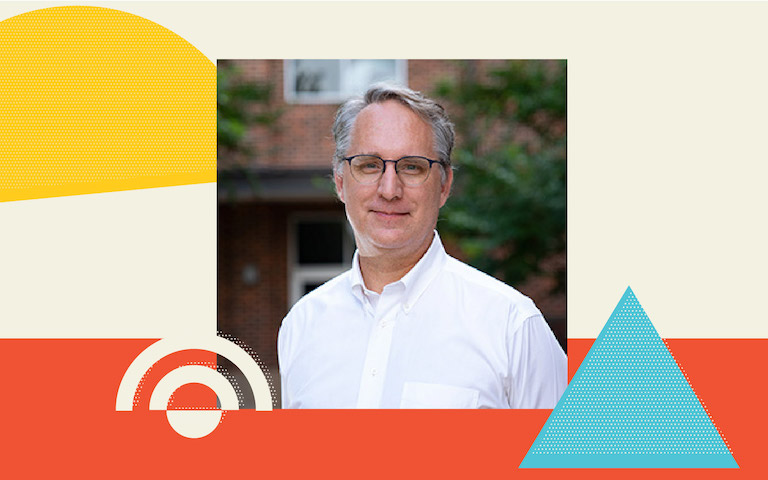
President, San Antonio Philharmonic
Brian moved to San Antonio to perform with the San Antonio Symphony as Assistant Principal Bassoonist in 1996. He has actively represented his colleagues as a long-time member of the Symphony Society of San Antonio board of directors. He was the prime mover in founding the MOSAS Performance Fund, which enabled the orchestra to return to the stage in the spring of 2022. For 10 years he served as Secretary/Treasurer of the American Federation of Musicians Local 23. Before joining the San Antonio Symphony, Brian was a member of the Ann Arbor Symphony and New World Symphony. He has performed with the National Symphony, Sydney Symphony, Houston Grand Opera, and many others. Growing up in Michigan, he holds a Bachelor of Music from the University of Michigan and a Master of Music from the University of Southern California.
Pier Carlo Talenti
Podcast Producer & Host
Until 2016 Pier Carlo Talenti was the director of new play development at Center Theatre Group in Los Angeles where he oversaw one of the country’s most vigorous new-play commissioning programs. Over 20 years he developed scores of new works for the theater by the some of the country’s most innovative theater artists, and his combination salon/playwriting group, the Writers’ Workshop, counts among its alumni/ae extraordinary playwrights who are also currently producing and writing TV’s most exciting shows. He is currently a resident of Hillsborough, NC, where he is pursuing his own creative projects.