Byron Au Yong Composes a New Kind of Leadership
Listen to the interview on Apple, Spotify, or your listening platform of choice. Captioned interviews are available on YouTube.
The views and opinions expressed by speakers and presenters in connection with Art Restart are their own, and not an endorsement by the Thomas S. Kenan Institute for the Arts and the UNC School of the Arts. This interview has been edited for length and clarity.
For more than two decades, composer and educator Byron Au Yong has created music that bridges performance, ritual and activism. His highly collaborative works have been presented by such varied institutions as the Seattle Symphony, BAM, the Smithsonian, the American Conservatory Theater and Nashville Opera. Among his many large-scale projects is his long partnership with writer and rapper Aaron Jafferis, with whom he created the “liberation trilogy”: “Stuck Elevator,” “The Ones” and “Activist Songbook.”
Byron is also Associate Professor and Director of Arts Leadership at Seattle University, where he’s reimagining arts education as a space of equity, imagination and community. His teaching encourages artists to consider leading beyond or outside institutions and to learn from one another as collaborators in liberation. His many honors include a Creative Capital Award, a Doris Duke Building Demand for the Arts Grant and a Sundance Institute/Time Warner Foundation Fellowship.
In this interview, Byron reflects on how his art and teaching are both rooted in listening, whether it’s listening through the feet to the language of trees to compose his newest work or listening deeply to students and collaborators to imagine new, more equitable forms of leadership.
Pier Carlo Talenti: You recently returned from, I think, your second residency at Bloedel Reserve, which has to be one of the most beautiful gardens in the world.
Byron Au Yong: Yes.
Pier Carlo: I have been lucky enough to visit. What were you working on there?
Byron: I’m working on a musical requiem called “Forest Aeternam.” One of the lyrics in the Catholic requiem Mass is “requiem aeternam.” During my first residency there in 2022, after the first day — because I went in thinking the project was called “Forest Requiem” — I realized, “Oh no, it can’t be. It has to be a forest eternal rather than rest.” It is eternal because the trees have been here way before humans, and they will continue after us.
The project is where people listen and sing with trees, and so I was there, happily entering tree time and listening and singing.
Pier Carlo: Will it eventually involve audience participation then?
Byron: Yeah, yeah.
Pier Carlo: Explain how that’ll work.
Byron: One of the things about the Catholic mass is the congregation participates. They sing along, they stand, sometimes kneel, sometimes sit. There are current things and contexts that are brought in from various people, so it is something that is participatory. How I’ve been working on this project is I have been working with different folks in woodland areas to engage in this practice because, as you may know, trees communicate through their roots, and so to listen with the tree, you’re actually not listening with your ears; you’re listening through your feet.
So I’ve been doing this practice of inhaling from the earth and exhaling back to the earth. In that way, we are grounded in such a way that we can listen through our feet. Elephants listen through their feet. If you look at an elephant’s legs and feet, they are like tree trunks. This is how herds of elephants are able to hear across long distances, because they’re actually listening through the earth.
Pier Carlo: So it’ll be a mass taking place in a forest?
Byron: Yes, and concert halls and churches, and within immersive installations.
Part of this project was prompted by me considering as a composer, “What am I doing? What is my practice? Why bother writing music now?” Because for me, music needs to have a function. There are over 2,000 musical requiems written, and so I thought, “Oh, I probably should contribute to this, but what would it be?” Since in the 20th century there were many war requiems, I thought, well, in the 21st century, it will most likely need to be about the climate.
Around the same time that I was hanging out more and more in woodland areas, I was taking care of my father. I helped care for him for the five months before he passed. My dad was someone who was born in the mountains in October 1941 to refugees, but he would not go outside. Part of it is because it was 2021, so it was the pandemic, but on the other hand, there was even more reason to go outside because no one was around. I would go outside, and I would bring back pinecones to him as a way to connect. I was also teaching online at the same time, and this also made me realize that not everyone has access to woodland areas and so that there needs to be immersive installation component.
Pier Carlo: How much research do you tend to do before a project like this?
Byron: A lot. I love research.
Pier Carlo: What was your favorite research project that was tied to a composition project?
Byron: I would have to say the works that are related to the natural environment are the ones that are most grounding. Although there is a project I haven’t been able to complete yet, I think I needed to do “Forest Aeternam” before I did this other project, which is a sea-level-rise project.
But I also want to talk about the trilogy that I worked on with writer Aaron Jafferis, because that one was a 15-year project that was interview-based. It was interviewing people who had been through traumatic events. While at the time it was difficult to hold the circumstances of the people we were interviewing, what they were carrying with them, I feel like the songs and raps we were able to write together provided both awareness and accountability as well as a deeper understanding of how complicated certain issues are, especially in the United States, such as gun violence prevention and immigration rights and labor and organizing. I’m very fond of that trilogy.
Also, when working with someone, a primary collaborator, over such a long period and then bringing in different people from a number of different areas to work alongside us, there are communities that are formed and that already exist that I get to learn from.
Pier Carlo: At what age did you decide you were going to be a composer?
Byron: 11.
Pier Carlo: Oh, OK! Did you compose something at 11?
Byron: Yeah, yeah. There are times when I don’t call myself a composer. I feel like I’m entering another chapter where I may not be calling myself a composer, but I started calling myself a composer at 11 because I started to notate the music. That to me is the craft of a composer, writing stuff down. But I was creating music way before then.
Pier Carlo: Oh, you were? You were just not notating it.
Byron: Yeah, correct. There were times in my life when I called myself a singer-songwriter. Coming back to Seattle, some people still introduce me as a performance artist because I did that when I was in my 20s. However I am or my work is encountered, that’s what people may continue to recognize me as.
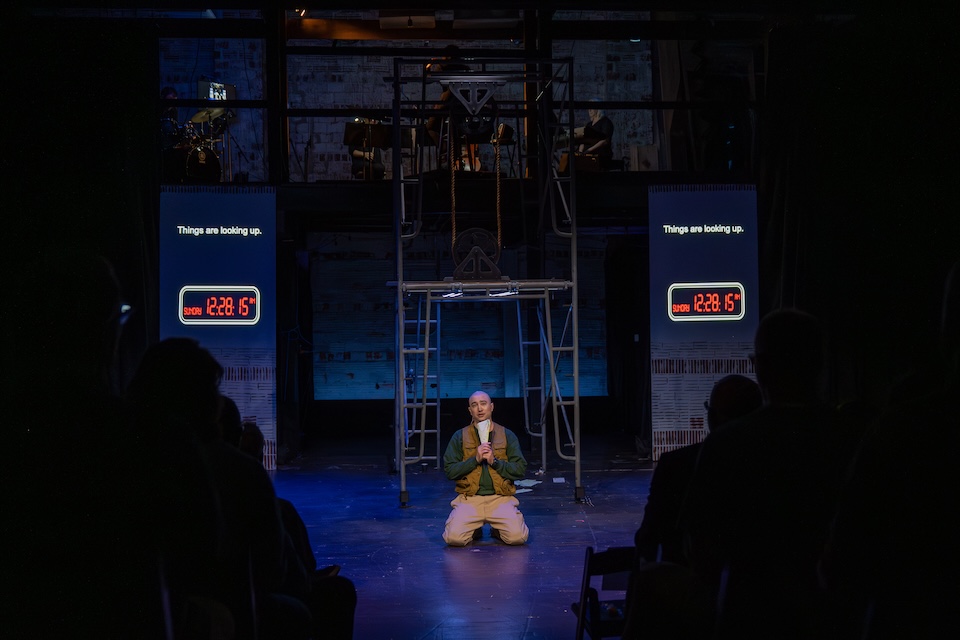
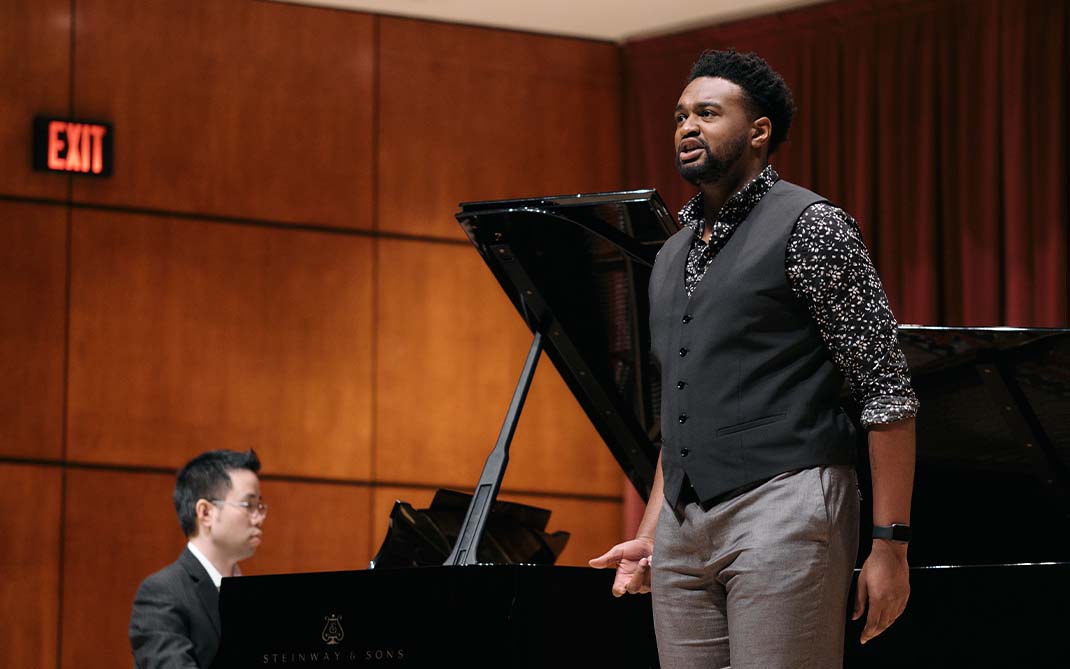
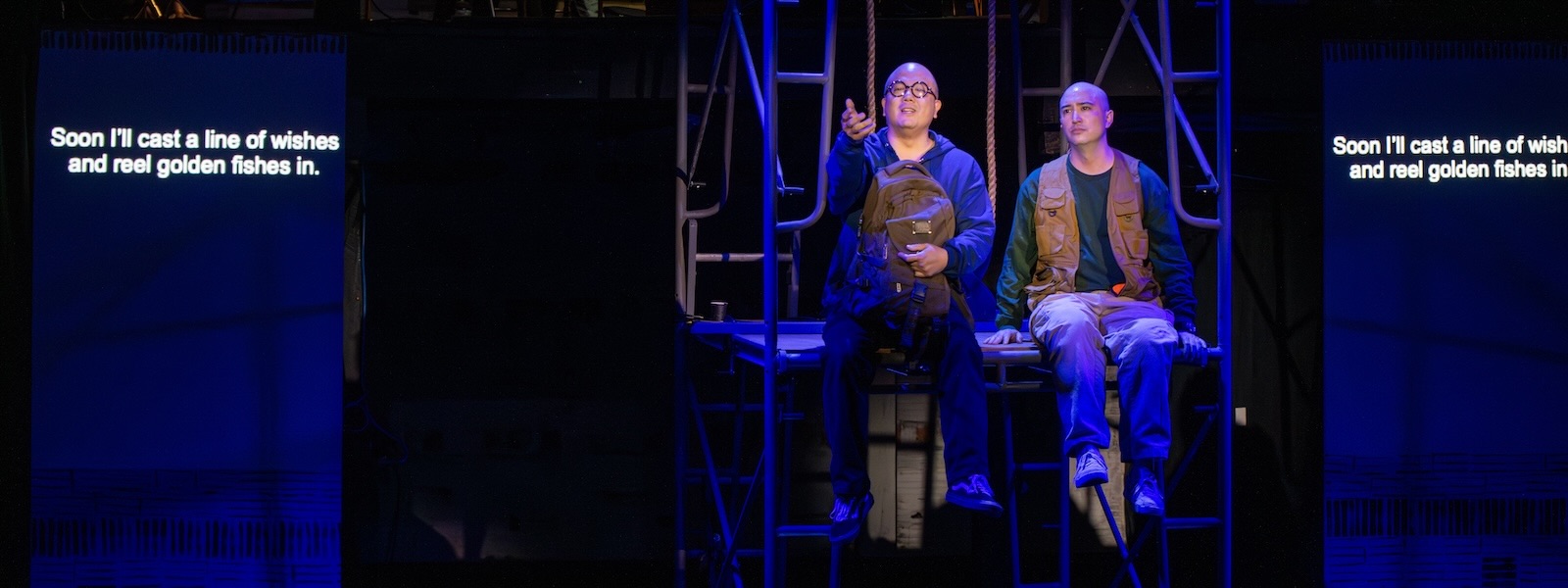
Allan Palacios Chan in the 2025 Knoxville Opera production of “Stuck Elevator.” Photo by Taryn Ferro.
Pier Carlo: You mentioned two things that really interested me about the way you work. One is that you believe that your music should have a function.
Byron: Yes.
Pier Carlo: And also that clearly you don’t like to work alone; you like to work in community. I’d love to know about how you discovered these two aspects of your artmaking, namely that you want your music to have a function and that you want to work in community as you develop a piece?
Byron: Music, for me as a child, was a way to comfort myself. I was an only son of immigrant parents who divorced, and they sent me away for a year when I was age 7, and so I was by myself. I was also … and I’ve heard this later, that children sing to comfort themselves. I always pay special attention to children who are singing because I was one of those kids. At first, it was made-up songs, and then I started to hear songs that I would then copy.
Then my aunt, who is a schoolteacher and was always looking for things for me and my cousins to participate in as kids, saw an audition notice for a musical that needed Asian kids. I think this is very common maybe for some Asian Americans. So, oh my gosh, “Asian kids are needed to sing.”
Pier Carlo: Was it “The King and I”? It’s always “The King and I.”
Byron: Yes! See? You guessed it. You totally know, right? So yes, barefoot in “The King and I.” It happened to be at a theater that was eight shows a week for two months, and then they cast me in “South Pacific.” Then I was in the boy choir, and I did that.
I think that this actually answers both questions. There was a function of music, which was to comfort myself, and then all of a sudden, it became within community because I was with other kids who were singing and part of a show and storytelling. I was taken out of school to be able to participate in these shows.
Later on, when I studied composition, there was a disconnect until I added ethnomusicology. Even though I’m an ethnomusicology dropout, I learned some crucial things from ethnomusicology because ethnomusicologists are always considering, what is the function of the music? What is the function of the music for certain communities? This is something that I also consider when I’m teaching various artworks. What is the function? Is the function to decorate? Is the function to be part of a ceremony or passage, whether it’s a wedding or burial? Is the function to teach, whatever that is?
Also, the only way I’ve been able to thrive as a musician composer is by being in community, even though I was taught to be by myself, either in a practice room or at a desk, writing. That, to me, was very lonely, and I was like, “No, I want to make music with people.” One of my composition mentors, Joël Durand, always came to my music rehearsals, and he would speak with me about how I interacted with the musical ensemble. I tended to do large musical ensemble works where everyone was moving around, the musicians were physically moving. And that was really important.
I know when I go into classical music situations now, sometimes musicians are scared to meet me, and I always think, why? Why would they be scared to meet me? Because I really like working with music ensembles.
Pier Carlo: Wait, you’re saying they’re scared to meet you because you’re going to make them move around?
Byron: Oh, well, maybe that, and also I feel like from observing some other composers, maybe they don’t work with ensembles in the same way.
Pier Carlo: You have collaborated with a really broad range of artists and with Aaron for at least 15 years. What is key to a fruitful collaboration?
Byron: Figuring out how to communicate about the work and knowing that there are different entry points into the work. And listening, listening really deeply. The cool thing about this collaboration is that we have also witnessed each other at our worst and our best. It’s like, “Yeah, that’s how it is. That’s who we are as young men.” And now, it’s like, “Oh, yeah, we’re much older, and so we don’t act out as much.” He would check me. I’d be in a workshop getting really, really angry, and because we know each other, he would be like, [laughing] “OK, calm down. Calm down. I know this singer is not right,” or whatever it is. And similarly, I would check him on things.
Pier Carlo: Well, after 15 years, I mean, it is a marriage.
Byron: Yeah, I don’t know. I guess it depends on how marriage is defined.
Pier Carlo: Well, in your case, it’s a marriage that it’s easy to take a five-year break from and come back. [Laughing] That’s nice.
Byron: Well, we’ll see, we’ll see. What happens is there’s a shorthand. It’s a partnership where we’ve developed a shorthand. I think one of the things about working together collaboratively, especially within performance, theater-making and music-making, is the number of revisions. We’ve figured out a way to do that quickly and meaningfully. Also, we can share initial drafts that are like, “I have no idea what this is.”
Pier Carlo: Right, and not feel any shame and embarrassment.
Byron: Yeah. Yeah, you have to be able to do that.
Pier Carlo: I want to talk now about where you are now at Seattle University, where you’re speaking to me from, and the fact that you’re Director of Arts Leadership. I love that there is such an MFA program there.
Byron: Yeah.
Pier Carlo: Can you tell me about when you decided to take the position? What did you think you were getting yourself into?
Byron: Oh, my goodness.
Pier Carlo: What did arts leadership mean to you at the time?
Byron: Arts leadership for me meant artists lead, which wasn’t the program at the time. And yet, in speaking with the founder and the director whom I replaced, Kevin Maifeld, who started the program in 2007 and directed until 2023, he … .
So this is the thing. He positions himself as a nonprofit theater administrator. He was managing director of the Seattle Children’s Theatre, which is what brought him to Seattle from Denver, CO, where he managed the Denver Center Theatre Company. I kept asking him, as I do anyone who’s in arts management or arts administration or arts leadership, “What’s your artistic practice? Did you play music? Were you a theater kid?” He would never answer until a year later. He said he was a clarinetist. There are so many cool clarinetists who are arts leaders. Ben Johnson, who’s running the Office of Arts & Cultural Affairs in Minneapolis. And Rob Bailis, the artistic director at Broad Stage, is a clarinetist.
Pier Carlo: Why do you think he wouldn’t answer?
Byron: Because that wasn’t his identity. Because he had to give it up. And this is the thing. School can be a harmful place for some people. I think, especially within the classical music world, it continues to be, as it should, an apprentice system, so if you have a primary teacher who is not going to support you, whether it’s composition or clarinet or whatnot, then you have to go elsewhere.
So he went into accounting and discovered he loved finances and then went that route. Years later, he became a nonprofit theater administrator, came into Seattle University to teach new courses and then was asked to start something to do with arts administration, management or leadership. So the interesting thing is he started a two-year MFA in arts leadership.
Pier Carlo: But not for artists.
Byron: Well, because when he started in 2007, they were people who wanted to fill certain roles at arts institutions in 2007. But as he was leaving, what he recognized was that students don’t necessarily want to be in those roles. They may want to start something new. Or they had been working at an arts institution and were like, “Yeah, something’s really wrong with the field.”
So when I came in as a finalist, because someone on the hiring committee was from nonprofit leadership, I spoke about the nonprofit industrial complex and how many arts organizations are within that and how there are many models that independent artists are choosing. I chose never to have a nonprofit, even though I have worked at nonprofit organizations. There is something inherent in it that sets certain things up to fail. Interviews are a two-way process, and so I was like, “Yeah, if you’re not going to accept this, this talk about the nonprofit industrial complex, then I’m the wrong person to lead this transition for arts leadership.”
Pier Carlo: But they said yes, clearly. They were open to a reinvention.
Byron: Yeah. The other full-time professor, James Miles, is a hip-hop educator. I didn’t know him. He has a TED Talk on hip-hop education, and I was a bit scared to meet with him, but I met with him and I learned that, oh yeah, he’s been in Spike Lee films but he is dedicated to education that is equitable and will not harm but will rather liberate and open up spaces for imagination and creativity. And so there are a number of things that we agreed upon early on about how we would shepherd students through a two-year MFA. One is that we would encourage them to continually make things and to open possibilities rather than direct them into certain positions.
Pier Carlo: As you said, the nonprofit industrial complex is really showing its cracks in recent years. What are you learning from your students and what are you also teaching them about what an arts leader looks like today? How should an artist lead in these times?
Byron: As I’ve recognized, the only way I can thrive as an artist is in community. Similarly, if nobody has your back as a leader, you’re in big trouble, right? So I’m really interested in distributed leadership. Our primary agenda for the incoming MFA candidates is to build a strong cohort. That’s it. “Yeah, we’re going to go through a lot of content really quickly and we’re going to figure out how to work with each other because the people you are sitting with right now are the people who are going to have your backs.”
Pier Carlo: How big is each class?
Byron: A dozen.
Byron: “You’re not going to be at the same institution, so you will — 10 years from now, 20 years from now, 30 years from now — be able to ask and have reality checks.”
Pier Carlo: With your cohorts.
Byron: Exactly.
Pier Carlo: You started in 2023, and so you have one class that’s graduated since you took over, that you’ve been with for the full two years.
Byron: Yes.
Pier Carlo: Do you have a sense of where they’re going to lead through their artistry?
Byron: The thing I know from being an educator for so long is, despite universities with their marketing talk about careers and so forth, we actually don’t know what the careers are. Like the role I’m in now, it wasn’t created until 2007, and I graduated with my MFA in Musical Theatre Writing in 2005. Who would ever think that an MFA in musical theater writing would lead to being Director of Arts Leadership? So I don’t think so much in terms of what the position titles you will have in the future are. We don’t know that.
But there is something about really knowing what your values are and what your capacity is and having a community to support you through that. So I don’t know. I am super excited though because I know some of them discovered ... . So for example, there’s a student who is a medium and was able to channel certain things. She ended up, as her MFA thesis, creating a podcast about other spiritual people. She came into the program as a theater artist and then discovered, “Oh, wait a minute.” There’s something absolutely connected to theater and is a path that maybe her ancestors went on that she is now getting to explore.
Pier Carlo: Finally, looking at the next 12 months, is there a project or performance that you’re really looking forward to?
Byron: Oh, yeah. One of the things I realized about full-time teaching is the art is also a full-time job. I’m really excited that there are two new productions of “Stuck Elevator” happening. The first university production is happening at San José State University, and then Opera Grand Rapids is also doing a new production. “Stuck Elevator” is so close to my heart because it’s the first of the trilogy that Aaron and I worked on, and it’s prompted by the real experience of an undocumented immigrant who is trapped in a Bronx elevator for 81 hours. [Laughing] So lighthearted musical operatic comedy.
November 26, 2025
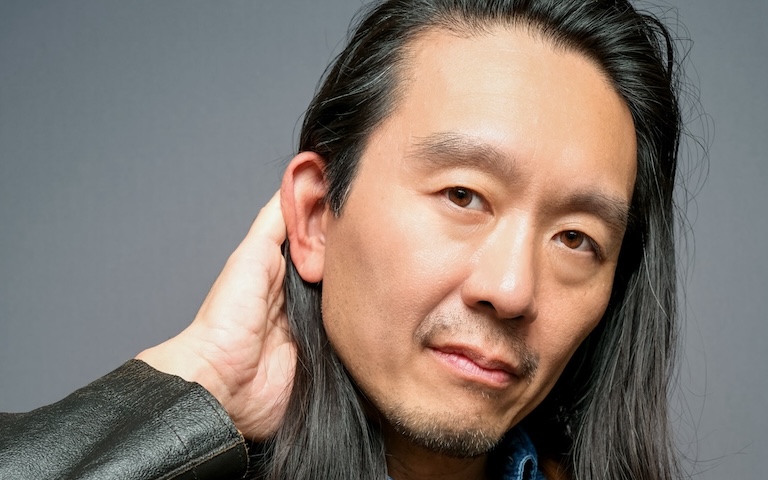
Byron Au Yong
Composer and Educator
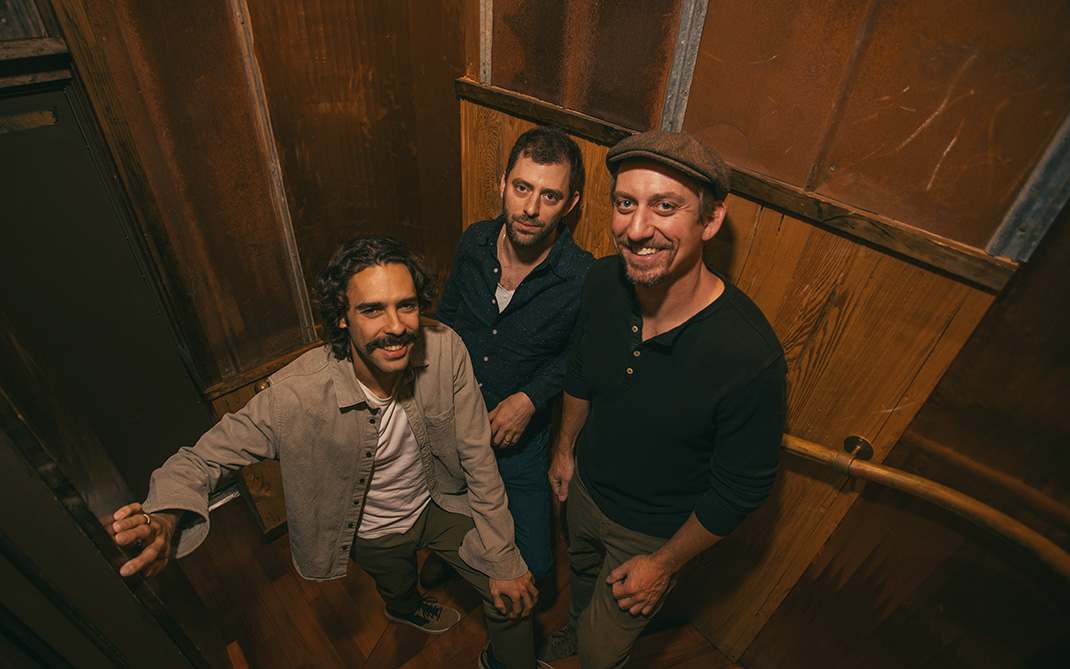
Composer Byron Au Yong actualizes new approaches in performance with immersive musical experiences Variety calls “intimate and existential, personal and political all at once.” His intercultural collaborations and site-responsive experiences span projects for choir, dance, ensemble, film, installation, and theater. Born to Chinese immigrants in Pittsburgh and raised in the Pacific Northwest, Au Yong’s upbringing informs his attention to how people gather to listen and connect with the places they call home. The Seattle Weekly notes his interdisciplinary works are “as exquisite and imaginative as they are unclassifiable.” Au Yong’s liberation trilogy co-created with librettist Aaron Jafferis, includes “Stuck Elevator,” which has been staged at venues such as the American Conservatory Theater and Nashville Opera, as well as “Activist Songbook” presented by Asian Arts Initiative and the International Festival of Arts & Ideas. “Turbine” premiered by over 80 moving singers along the Schuylkill River, was commissioned by the Leah Stein Dance Company and Mendelssohn Club of Philadelphia for the Fairmount Water Works’ 200th anniversary. The Huffington Post praises his collaborations as “audacious, compelling, and hugely imaginative.” Dedicated to education, Au Yong is an Associate Professor and Director of Arts Leadership at Seattle University. His honors include a Creative Capital Award, Doris Duke Building Demand for the Arts Grant, and a Sundance Institute/Time Warner Foundation Fellowship. He holds degrees in dance, music, and theater from UCLA, the University of Washington, and NYU. His next initiative is the musical requiem “Forest Aeternam,” where people listen and sing with trees. Photo by Gaku Shiroma.
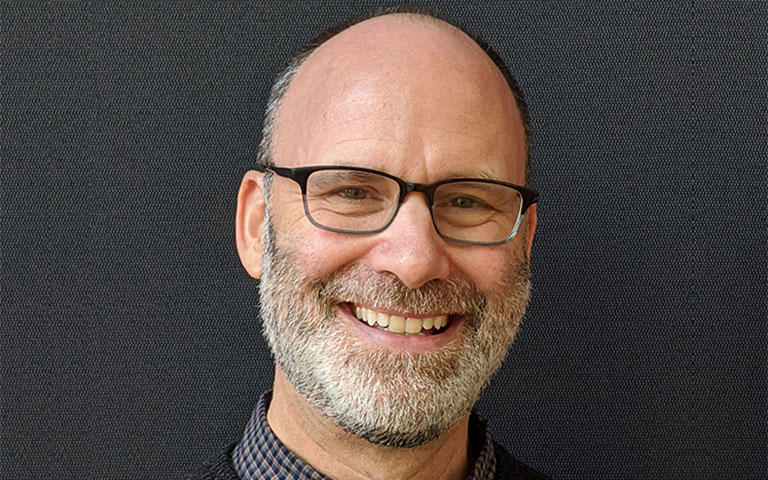
Pier Carlo Talenti
Podcast Producer & Host
Until 2016 Pier Carlo Talenti was the director of new play development at Center Theatre Group in Los Angeles where he oversaw one of the country’s most vigorous new-play commissioning programs. Over 20 years he developed scores of new works for the theater by the some of the country’s most innovative theater artists, and his combination salon/playwriting group, the Writers’ Workshop, counts among its alumni/ae extraordinary playwrights who are also currently producing and writing TV’s most exciting shows. He is currently a resident of Hillsborough, NC, where he is pursuing his own creative projects.