Immersive Theater Wins 21st-Century Fans: Artistic Director Graham Wetterhahn
Listen to the interview on Apple, Spotify, or your listening platform of choice. Captioned interviews are available on YouTube.
The views and opinions expressed by speakers and presenters in connection with Art Restart are their own, and not an endorsement by the Thomas S. Kenan Institute for the Arts and the UNC School of the Arts. This interview has been edited for length and clarity.
At a time when theaters everywhere are competing with an ever-expanding array of at-home entertainment and struggling to fill seats, some artists are asking not what plays to produce but how to produce them differently. Graham Wetterhahn’s answer was to found his own company, After Hours Theatre Company in Los Angeles. With a background that spans traditional theater, theme parks and digital media, he has spent recent years creating “immersive-enhanced” productions that invite audiences not just to watch a story unfold but to step directly into it.
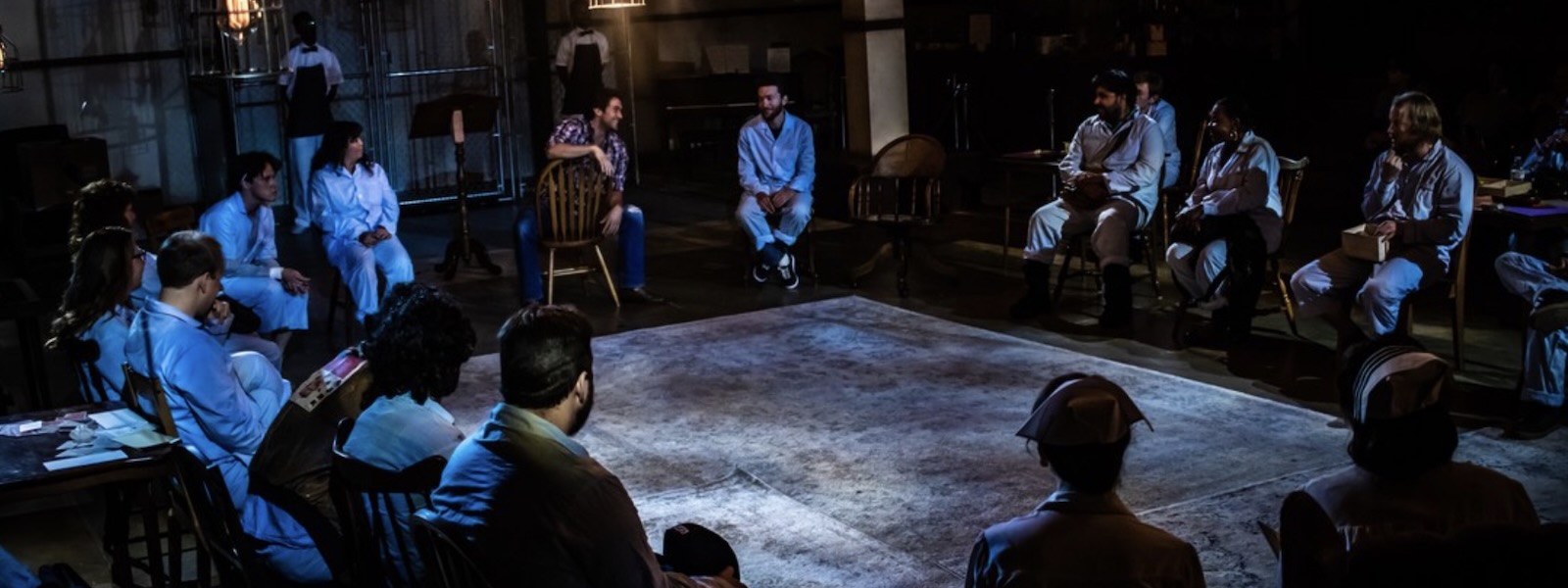
In After Hours’ 2018 production of “One Flew Over the Cuckoo’s Nest,” for instance, audience members were admitted to a fictional 1960s psychiatric hospital and cast as patients, free to explore hidden rooms and interact with characters for a full hour before the scripted performance even began. The production cleverly merged immersive design with a fully staged, licensed play, creating an experience that theatergoers of all stripes — and with varying levels of comfort with the notion of participation — could embrace. And it worked, selling out night after night and drawing in an audience that was overwhelmingly under 40.
After Hours has gone on not only to produce a broad array of successful immersive-enhanced productions but also to organize the Los Angeles Immersive Invitational, a collegial competition that brings together the city’s most adventurous immersive storytellers under one roof and gives them 48 hours to create a new 10-minute piece based on a single prompt. The L.A. Invitational just completed its fifth iteration, and After Hours is now producing Invitationals in other American cities.
In this episode, Graham shares why he believes After Hours’ hybrid experiences may hold the key to live theater’s future, how the company has built a sustainable — if still scrappy — for-profit model, and what his journey has taught him about turning casual eventgoers into passionate theater fans.
Pier Carlo Talenti: Given how much more work After Hours’ type of theater-making is than the typical stage production, I’d love for you to tell me about why all that work was worth it to you.
Graham Wetterhahn: Sure. There was the onboarding experience, the hour-long pre-show and then the 2 1/2-hour show itself. The onboarding and the hour-long pre-show overlapped of course, but —
Pier Carlo: So your designers designed not only the show but the experience beforehand. You had to have staff to man both rooms. It is like a small amusement park.
Graham: Yeah, I think we had something like 30. The cast is 16, and I think we had an additional 10 to 15 working on any given night, including our bar team.
Pier Carlo: Tell me about its success, because after all, you decided to do it again.
Graham: Yes. Let me explain why we did it first. In L.A. and I think maybe throughout the country — but I can only speak for Los Angeles — we were having this really weird trend. I don’t know if you remember the Museum of Ice Cream or comparable what I call selfie palaces, basically museums of something that you can take pictures in. This Museum of Ice Cream was selling out for months. It was just seven rooms where you could take pictures and I think you got a scoop of ice cream at the end, and that was selling out months in advance for $50 a ticket. There were all these amazing plays that couldn’t sell tickets to save their life, or if they could, they were having to extreme discount them for $10, $15, which is a totally unsustainable model. Not that $50 is that much more sustainable at this scale, but the point stands; it’s better than $10 to $15.
At the time, more traditional immersive experiences were starting to take off in L.A. at a smaller scale, and the going rate was a dollar a minute. We weren’t going to do that in a four-hour experience, of course. But it was, “Hey, what if we can” — I don’t want to say “trick people into seeing a traditional theater piece” but — “make it feel more like an event, make it feel more like a whole night out? Not just, ‘I’m going to see a play,’ but ‘I’m going to this cool thing, this cool happening.’” That was the impetus for why we did all the work.
We wanted to attract a younger eventgoer, somebody who would spend $1,500 going to Coachella on the weekend but wouldn’t spend $25 going to a play. How could we activate that audience or audiences that maybe wouldn’t choose to see theater at all while, of course, still appealing to traditional theater audiences?
Pier Carlo: So I’m guessing you must have activated that audience.
Graham: Oh, yes. Yes, of course. We had a very good response. I saw the statistics that 60% or 70% of our audience was under 40, which is pretty spectacular for L.A. theater, and we had really high audience-satisfaction ratings across all ages and demographics.
Pier Carlo: Did they tell their friends? Did the word of mouth get out?
Graham: Word of mouth on that show definitely got out. We extended four times. We would’ve extended longer if the venue would’ve let us, but they were having issues from a venue level, so we had to close the show.
Pier Carlo: What was the ticket price?
Graham: The typical ticket price was about $75. We even had a couple of pay-what-you-can nights. I would’ve charged more today, but at the time, it was $50 to $75 depending on if you were an acute patient or a chronic patient. That included no drinks or anything like that, which is different than a different model that we’re working with now that does sometimes include drinks.
Pier Carlo: Did that production pay for itself?
Graham: [He laughs.] The terrible theater question. That production did not quite pay for itself, but if we had been able to continue running it, it would’ve paid for itself. We essentially came within spitting distance of breaking even. But once again, we were able to support 30-plus artists in the process, not to mention all the designers.
We still work with that piece. For example — I don’t know if I can officially announce this — we are consulting with several theaters throughout the country who are looking to put up similar productions of “One Flew Over the Cuckoo’s Nest.” I think, as a calling card for us — and we still own all of our pre-show, all of the original IP that we created for it — that in the long run, it will definitely pay for itself. I know you probably want to hear, “Oh yeah, we made money hand over fist,” but it’s still theater.
Pier Carlo: You brought up owning your IP. I’d like to talk about the business side of After Hours. It is not a nonprofit, correct?
Graham: We’re not a nonprofit, and that is extremely unusual for Los Angeles in particular.
Pier Carlo: Tell me about creating a for-profit theater company in Los Angeles.
Graham: I think, when we started, the decision to not be a nonprofit was simply that we were too small. I wasn’t specifically mission-driven in the way that I think a lot of nonprofits are. Mostly, we were just too young. I started producing plays when I was 24, but they were traditional proscenium musicals. As we quickly started scaling up and moving into immersive, obviously, we had conversations about, “Should we become a nonprofit? It’s easier to take donations instead of going through a fiscal sponsor.”
We realized we wanted to stay really flexible because the way most companies in L.A. in the immersive scene are able to make money is to use their skills for what’s called a marketing activation. Film and TV studios or brands hire theater companies or agencies or whoever to build immersive worlds. Maybe you’ve heard of a very famous activation at South by Southwest eight years ago where they built the entire set of “Westworld” and had the audiences living in “Westworld” for a few hours. That’s a big version of it.
For example, we did one through an agency for an HBO show — I guess it was Cinemax but owned by HBO — called “Warrior.” For the premiere of that show, they rented out the oldest bar in Chinatown. It was a two-story bar, and we had 20 bilingual Mandarin- and Cantonese- and English-speaking actors, and we did a full 1890s gangster brothel kind of hangout thing. Then that culminated in a stunt show in which the actual stunt coordinators on the TV show went through both floors. It was just this really, really cool experience. If we were a nonprofit, we wouldn’t be able to take that kind of work, but in this case we were able to get hired by the agency to use our theater and immersive-theater skills and help build that world.
Pier Carlo: Since “One Flew Over the Cuckoo’s Nest,” what have been the top two or three lessons learned? What have you implemented now in your producing model that you learned through your first production?
Graham: Definitely always trying to design for all audiences, trying to make sure that we’re providing an excellent experience for all types of audience, whether they really want to engage or whether they don’t.
Pier Carlo: Do you take into account accessibility for people with disabilities?
Graham: As much as is physically possible in L.A. Of course, we have sign-language-interpreted shows. Pretty much everything we do is wheelchair-accessible when the space physically allows for it. We’re currently working on a project that has an actor in a wheelchair, and we were pretty shocked and horrified when we realized that while there are a number of spaces that are wheelchair-accessible for audience, there are zero that are accessible for actors and performers. The backstages aren’t accessible. Maybe there’s one or two, but they’re very expensive and not available to rent. It’s a huge systemic issue we have in Los Angeles that I was unaware of until we started this search, and I suspect it is a problem in a lot of places.
Another lesson we learned is how with a show that has so many different layers to it — the onboarding, the pre-show — the show itself breaks traditional theatrical organizational infrastructure. The director, in particular. There’s a couple different types of the directors. There’s what I like to call the classical musicians versus the jazz musicians. There’s directors that are really good at, “I have 12 days. I’m going to come in with my book of all my blocking done before I walk into the room and just execute.” Whereas, in this kind of show, a lot of it is almost devised. You’re really figuring out how the show moves throughout the rehearsal process. It requires a lot of trial and error. It requires a lot of flexibility, and things are going to get added and subtracted as we find whether it works or not. In traditional theater, previews are looked as times to lock in tech and try a couple of things. In immersive, we’re literally still building the show because the audience’s interaction with what you’ve built is part of the show.
For “Cuckoo’s Nest,” from week one to week two of previews, our entire pre-show changed, and how we were moving the audience within the show changed based on what we learned. You have to have that enthusiasm for experimentation and that stomach for changing and reacting to what everyone else is doing.
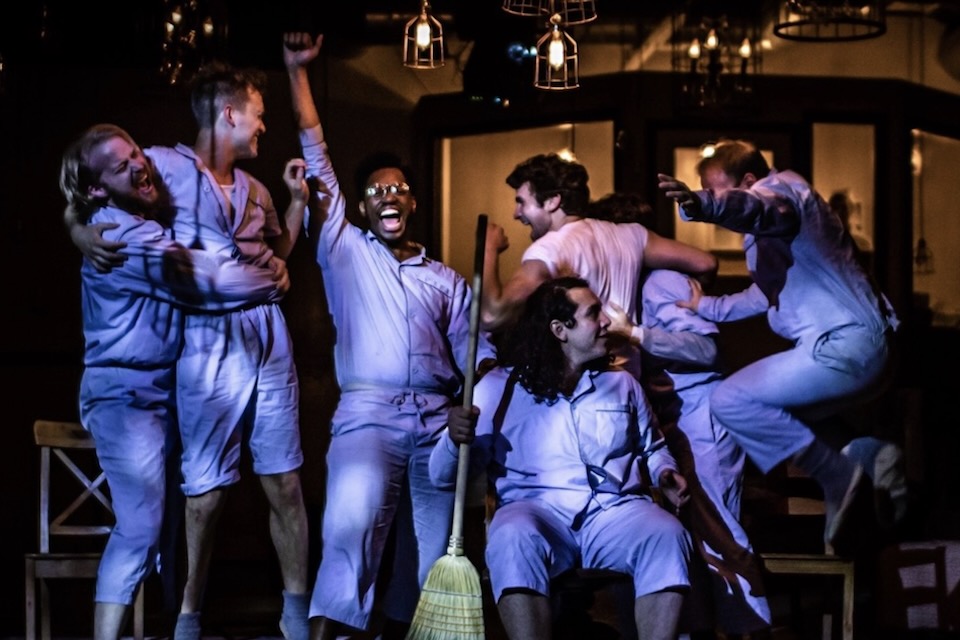
After Hours Theatre Company’s production of “One Flew Over the Cuckoo's Nest” Photo credit: KJ Knies
Pier Carlo: Have you considered commissioning someone to create a brand-new piece from the ground up?
Graham: Not only have I considered it, we’ve done it. This last year, we got a much smaller lab space in North Hollywood that we’ve been working out of. We’ve been doing what I call the “Dark Library” series. We’ve been taking, in this particular case, authors. The first iteration was an Edgar Allan Poe experience. Most recently, we did what was called “Dark Library Paris, 1925,” which I think is most like my aesthetic The audience was invited to a salon at Gertrude Stein’s house and to interact with the Fitzgeralds, Ernest Hemingway, Josephine Baker, a few characters that were loosely based on people of the time but were sort of unique characters. That was a 75-minute cocktail experience, where the first 15 to 20 minutes was open-world and then we had an hour-long scripted show that had abstract dance numbers, musical numbers, scene work and all, and the show comes with four cocktails served to you throughout the show, not full-size cocktails, but two-thirds, three-quarter-size cocktails.
Pier Carlo: A reasonable size.
Graham: Enough that people should theoretically be able to drive home, but we do encourage people to take an Uber.
Pier Carlo: What was the ticket price on that?
Graham: That price point was $75 to $125. We had an upgraded drink service, which came with the best seats and a couple of custom character interactions, and then the more general ticket just came with the basic cocktails, not upgraded spirits but honestly, they were still really good. We also serve them in glassware and stuff for the VIP tickets. But yeah, $75 and $125, and we’re able to run that twice a night. The audience size for that show is about 30, so it is smaller than for “One Flew Over the Cuckoo’s Nest,” but it’s a much lower-overhead show. These shows are the ones we’ve been able to have financial success on. We’re working on a whole series of these right now.
Pier Carlo: Is it just you don’t have to pay for the licensing? What makes them more successful?
Graham: No, it is not really the licensing costs. I think it’s also the size of the space. We’re working in a 1,000-square-foot space versus a 7,000-square-foot space. Depending on the show, I’m paying for anywhere from six to 10 people per night versus 30 people per night. When you’re doing a show like “Cuckoo’s Nest,” a 100-plus-seat plus show, some nights are going to be sold out, some nights are going to be half-sold. That’s just the nature of the game, unfortunately. But here, because of the size of the space, it’s pretty easy to stay consistently full, so we’re able to maximize revenue. Then, if we have a night that’s not selling, I can very easily cut it and move everybody to another night.
We found the overhead to be lower, the run costs are much lower and our ticket price is able to be higher. And it still feels like a complete evening. You know, four hours is a marathon; that’s a lot for a lot of people. The 75 minutes really feels good when you’re doing it. A lot of people would spend $60 to $80 for four drinks at a Los Angeles bar anyway, so the fact that you’re getting that plus a show is nice.
Pier Carlo: Is this your full-time job now?
Graham: [He laughs.] Yeah, it is my full-time job. I should say that I come from an insurance family. We have a family insurance agency, and so after I graduated from UCLA, I immediately went to work in the family insurance agency. I only interacted with my grandma and grandpa and my aunt and my father.
Pier Carlo: [Laughing] There’s a joke in there about the heir of an insurance family going into theater, but I’m not sure what it is.
Graham: Yeah, there certainly is. My sister did too, for whatever it’s worth. She lives in New York as an actress. I’m not an actor, and I never wanted to be.
Pier Carlo: So you had the day job when you started out?
Graham: I had the day job when I started out. I started producing when I was 23 or 24 years old because working in the bottom floor of my grandparents’ house, which they had converted into an office — it was actually quite nice — I wasn’t getting to meet a whole lot of people. My friends and I did theater in college. I was not a theater major in college, but we had a good student-run theater company at UCLA that I was very involved in, and we said, “Hey, let’s start putting together shows after work,” thus, the After Hours.
Pier Carlo: I ask because it’s pretty amazing that you’re able to support yourself through this venture. That’s rare in the theater world, right?
Graham: [Chuckling] Some months are better than others. Some months I’m glad to have the opportunity to jump back. The nice thing is, if I’m not, then I can go pick up some hours in the insurance agency, and they’re open to that. I haven’t needed to do that very often, maybe a little bit more during the pandemic. Yes, I’m very lucky I have the safety net. I have no false pretenses that I could totally do this without the help or support of my family.
Pier Carlo: I want to be sure that we talk about the Invitational.
Graham: Sure.
Pier Carlo: How many have you had up to now? You just completed one, right?
Graham: Yeah. The most recently completed one makes for our fifth Invitational. Four of those were in Los Angeles, and one of those was in Denver. Next year, we’ll be having one in New York as well as Los Angeles and maybe one or two other cities that we’re talking to. The New York one and the L.A. one are definite.
Pier Carlo: As if you didn’t have enough to do. What made you want to start this?
Graham: The start of it is actually a pretty fun story. When we did our “Last Five Years” production, which was what we call the multi-sensory experience — it involved a scent score and cocktail pairing; that was our first time playing with cocktail pairings in that way — we had two relatively well-known TV film actors who were both working quite regularly. I had to guess ahead of time how long it was going to be able to run, and I almost got it right. And then both of our two leads got booked on TV. We had understudies, and it was fine when one of them was off and the other one was on, but we had a situation where both of the leads were off.
Pier Carlo: Classic L.A. theater story.
Graham: Very L.A. theater problem, yeah. We’re like, “OK, we can’t really sustain the show for another three weeks with just our understudies,” who were excellent, but the ticket sales are for the lead actors.
So we said, “Well, we have the space for another two weeks. What can we do with the space?” Fortunately, I had about a month’s notice, so it wasn’t like we were doing this in a week. I said, “Well, what can we do in a week? We can’t do a full production, but maybe we can do a 48-hour film festival kind of thing.”
I reached out to a gentleman named Noah Nelson, who runs a publication called No Proscenium, which is the premier immersive-theater publication, at least in Los Angeles and New York. They also have something called The Immersive Experience Institute, which is their nonprofit advocacy branch. He was interested in helping me build it up, and so we both collectively invited some teams.
The first year, we just had four teams participating in the little theater space that we had. We subdivided our main playing space in two. We had another group in the dressing rooms, and then we had a fourth group in a small 20-seat black box that was attached to our larger space that we rented for the weekend. That’s how it started.
Out of that festival, out of those four pieces, three of them became full-length pieces and one of them toured.
Pier Carlo: Wow! That’s incredible.
Graham: We had a really, really high percentage of success with that first festival. Also, a couple of the teams collaborated and created a totally original work unrelated to the festival piece.
We were both really, really encouraged by that response. There just wasn’t anything like it. This is true for theater as well as immersive theater, namely that it is really hard to find community. When I was a 24- or 25-year-old producer starting out, I didn’t have a mentor; I didn’t have anyone to talk to; I didn’t have peers that I knew how to reach out to. I was just sort of an island, and that’s unfortunately a pretty common story.
I think the Invitational has really done a lot to allow immersive companies to get together at least once a year. Whether you’re participating or just an audience member, it still becomes a lovely community weekend. It allows people to share styles. A lot of artists will find new collaborators and just have a moment to check in and talk and learn from each other, which I think is a really, really valuable idea exchange, particularly in these mediums that are so diverse. Because in immersive theater, you have companies that are dance-based companies; you have companies that are more game- and puzzle-forward companies; you have companies that are theater improv-comedy-focused companies; you have some that are more tech-focused. Bringing all of these different types of disciplines under one roof is really, really exciting.
Pier Carlo: Five Invitationals in, what are some new ideas that you think are being developed in the field?
Graham: Five Invitationals in, what we’re learning and what I think has been happening is that we’re seeing a lot more collaboration, a lot more artists jumping between teams. One of the things that’s great about the Invitational is it allows people to experiment with things. If a company is really set on a specific style, it’s really hard to deviate from that style in a full production successfully. It gives teams a chance to workshop new structural concepts that they can see be implemented in the actual work.
I’d be lying if I said immersive theater wasn’t hit extremely hard by the pandemic for understandable reasons. Theater was hit hard. Immersive theater was hit doubly so because of the nature of what immersive theater is, having to be so up close with audience members. But I think you see a pretty good high volume of work. You see a lot of cross-contamination of ideas. You’re seeing a lot of companies that maybe were known for one thing starting to deviate and implementing other styles. I think that’s the biggest thing that I notice.
In turn, we do also invite a lot of the larger traditional theaters, like a Snehal Desai at Center Theatre Group or a Danny Feldman at Pasadena Playhouse, as well as other mid-sized theaters in Los Angeles. You’re starting to see these companies, who are very, very, very hesitant to embrace immersive — and I can tell you a really good story about that in a few minutes — start to implement non-traditional components into their shows. I’m not going to say they’re immersive, but maybe they’re dressing their lobby in a way that they wouldn’t have before or having some fun performance art pieces in the courtyard. In Pasadena Playhouse’s case, they ripped out all of their seats and did a couple of more dance or immersive-style shows. I won’t take credit for that at all, but this isn’t something that you were seeing five or six years ago, pre-pandemic.
Pier Carlo: OK, tell me the story you were going to talk about.
Graham: Sure. In 2018 I started a live-streaming studio from my house, the second bedroom of my condo at the time. It went live in 2019. I had a friend who was a pretty successful YouTuber. He and his brother had a channel with a couple of million followers, and he and his brother had a falling out, so they had stopped doing YouTube. A few years later, he found me through a mutual friend and said, “Hey, I’m looking to do live-streaming. This is where a lot of YouTubers are now going, into the live-streaming space.” So we started basically a digital cabaret space on Twitch with the support of Amazon, who owns Twitch, which was really nice.
He and I ultimately had very different raison d’êtres. I’m always about breaking down the socioeconomic and geographic barriers of theater. One of the reasons I gravitated towards immersive theater is because I wanted to try and find new audiences for the live performance medium. In this case, I was like, “Wow! We can be having audiences from” — and this is true — “New Zealand and the Netherlands and Singapore and the UK and Michigan all together, talking to each other, sharing ideas together.” We did a reading of “The Importance of Being Earnest,” and it was really interesting to look at them and how they were breaking down that art through their own unique cultural lens and sharing that with each other. It was free on Twitch.
I ended up speaking on a panel they did in L.A. They had a festival, and they invited three emerging artistic directors and three legacy artistic directors, people who had been doing it for a few decades, and had us all speak on a panel. At one point in the panel, I talked about the democratization of performance, how we can have branching narratives and audience engagement in the theater creation process. I wasn’t suggesting by any means that we were replacing theater; this was just an additional way to engage audience and get people interested in the medium. It was a very lovely conversation, and I had a good time doing it.
Then at the end of the conversation, the organizer of the festival — not the moderator of the panel — says, “You five, I love what you’re doing. Keep it up. You,” pointing at me, of course, “I don’t understand what you’re doing. You are a danger to theater and the panel.” No time for rebuttal, no chance for rebuttal. The panel was over.
Pier Carlo: This was public?
Graham: Public, oh, yeah. Completely public. It was the best thing she could have done for me, for sure. It was funny because six months later, live theater couldn’t happen and the only thing that could happen was live-streaming. I did not rub it in her face, nor do I want to, of course.
Pier Carlo: Yeah, who wouldn’t want to be painted as the enfant terrible? Good for you.
Graham: Thank you. It actually got me a little bit of work after that, which was very fun.
Pre-pandemic, when I talked to rights houses like MTI and Concord about trying to get licensing for the shows to do digitally, someone would literally laughed me off a call. Now, of course, they’re all offering live-streaming options for their licensable work. It didn’t help me six years ago, but it’s nice to know that I wasn’t totally crazy.
Pier Carlo: Lastly, looking out at your creative schedule over the next 12 months, what are you particularly excited about?
Graham: A couple of different things. There’s the “Dark Library” series that we’re working on, of course. The next production, we’re going to be doing remounts, a more expanded remount of our Dark Library, Poe. We have a few more of those in the works, things like Jane Austen, H.G. Wells.
We’ve been building out that series, and we’ll hopefully then be able to tour and license. I’m working on four or five different plays and musicals that are all original development that could play off-Broadway or on Broadway and hopefully will incorporate certain immersive or non-traditional elements.
I should say that I believe that immersive is is not just a genre, it is also a design category, so that any production is capable of incorporating immersive or non-traditional element or just a way to make the experience more engaging for an audience member. In the Dark Library series, we talk about the combination of theater and hospitality. I don’t necessarily say, “I’m doing this immersive play.” I say, “I’m doing this play, and I treat immersive like any design category.”
July 23, 2025
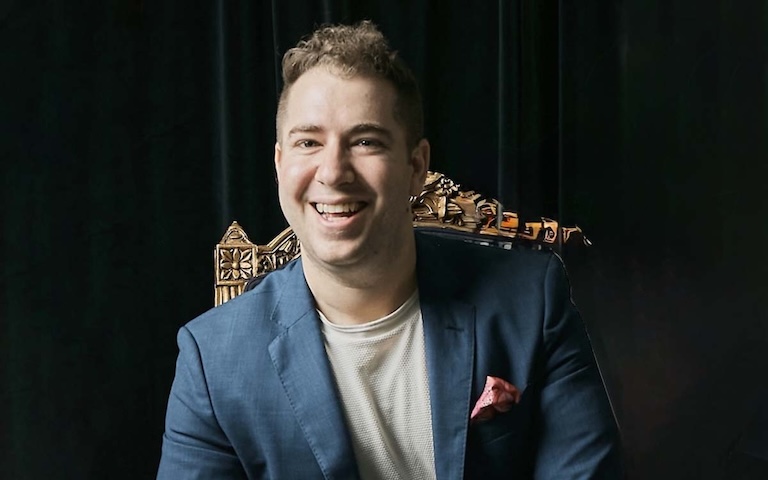
Graham Wetterhahn
Artistic Director
Graham Wetterhahn is a multimedia producer, director, and consultant focused on creating new styles of theatrical performance. He is the founding Artistic Director of After Hours Theatre Company, an award-winning LA-based production company specializing in narrative-driven immersive, interactive, and event-based entertainment. Most known for his “immersive-enhanced” productions of classic plays and musicals such as “One Flew Over the Cuckoo’s Nest,” “The Last Five Years,” and “The Tempest” he became the youngest Ovation Award-nominated producer in history - receiving the honor three consecutive years. He is the founder of The Immersive Invitational, a first of its kind 48-hour festival and incubator for new immersive theater, and co-founder of digital production company Pixel Playhouse which has garnered more than half a billion views on YouTube.
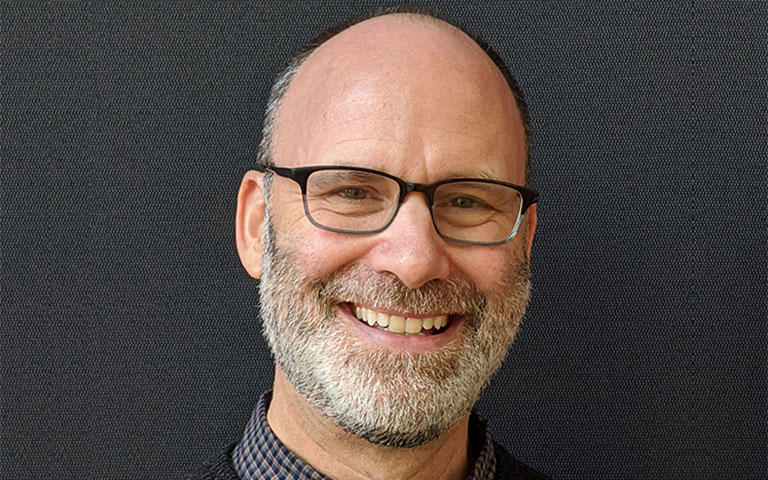
Pier Carlo Talenti
Podcast Producer & Host
Until 2016 Pier Carlo Talenti was the director of new play development at Center Theatre Group in Los Angeles where he oversaw one of the country’s most vigorous new-play commissioning programs. Over 20 years he developed scores of new works for the theater by the some of the country’s most innovative theater artists, and his combination salon/playwriting group, the Writers’ Workshop, counts among its alumni/ae extraordinary playwrights who are also currently producing and writing TV’s most exciting shows. He is currently a resident of Hillsborough, NC, where he is pursuing his own creative projects.