
Rebuilding Ballet on New Terms: Ja' Malik
Listen to the interview on Apple, Spotify, or your listening platform of choice. Captioned interviews are available on YouTube.
The views and opinions expressed by speakers and presenters in connection with Art Restart are their own, and not an endorsement by the Thomas S. Kenan Institute for the Arts and the UNC School of the Arts. This interview has been edited for length and clarity.
As artistic and interim executive director of Madison Ballet, Ja’ Malik is taking real risks. And they’re paying off. He talks leadership, contemporary programming and how the company is growing audiences while others struggle.
Ja’ Malik is just wrapping up his fourth year as the artistic director of Madison Ballet in Madison, WI, but his path to leadership has been shaped by decades inside the field. For 25 years, he danced with a broad range of renowned companies, including Cleveland Ballet, North Carolina Dance Theatre, BalletX and Ballet Hispánico, performing a wide range of classical, neoclassical and contemporary repertory. Trained at the Joffrey Ballet School as well as at the Alvin Ailey Dance School and holding a BFA from The New School, his artistic voice draws equally on rigorous classical technique and socially engaged contemporary practice. He also continues to serve as the artistic director of Ballet Boy Productions, an organization he founded in 2007 that provides young men of color access to classical and contemporary ballet performing opportunities and that also offers training and mentoring.
Since arriving in Madison, Ja’ has led a period of significant artistic and organizational change, and the results are more than encouraging. At a moment when many ballet companies nationwide are grappling with shrinking audiences, Madison Ballet is growing its own with returning and new audiences, responding to programming that places contemporary work alongside the classics and reflects the community it serves. Six months into his tenure, Malik also stepped into the additional role of interim executive director, guiding the organization through a demanding transition with a small staff and limited resources.
In this interview, Ja’ reflects on the risks involved in reshaping a regional ballet company, from extending dancer contracts to rethinking programming and institutional structure. He also speaks candidly about leadership during the in-between phase of change and the emotional, physical and ethical demands placed on artists and arts leaders alike.
Pier Carlo Talenti: When you laid out your vision to the board of Madison Ballet, you were really putting yourself on the line. The risks were huge. Weren’t you scared?
Ja’ Malik: Oh, I don’t mind. I love that. That’s what excited me the most. I’ve always loved puzzles. I think that’s why I got into ballet.
I had done other forms of dance, I had dabbled in acting and things like that, and I didn’t feel challenged. Then when I got into a ballet class — I can still remember my first class — I thought it was the most challenging thing I’d ever experienced. And I love that. The second thing that I loved about it was there was no talking. [He laughs.] I come from a large family. I’m one of seven siblings, and I’m the middle child, so you can imagine with three younger, three older, there’s a lot of noise. So I loved that it was silence and it was hard work and it was discipline that was being taught. I’ve always grown up loving a challenge, so while it did seem daunting and challenging, I saw the potential.
Also, the great thing that they did in the interview process was they also had me meet community leaders from Madison, from different arts sectors — from the theater, from the opera, from the children’s theater, from the museum. So I met with all these people to understand, “What is going on here? How is the art scene here?”
Pier Carlo: Yeah, that’s important, to get the cultural temperature of a town.
Ja’: Exactly. And so that all inspired me. It’s actually a very rich arts culture here. We have an amazing symphony. We have an outstanding chamber orchestra. We have an amazing theater company. We have two theater companies, as well as a couple of modern dance companies and a children’s theater, so it’s bountiful here as far as the arts go. I just wanted to make sure that this was a place that would maybe not understand where I was going with ballet right away but would eventually get there. And I think we’ve done that.
Pier Carlo: Looking back, what do you think the riskiest or craziest decision or change you made at the company was? And did it pan out?
Ja’: The biggest risk? I think taking dancers from a 10-to-12-week contract to a 30-week contract is a big risk. Can their body sustain it? They’re not used to that. But the ones that stayed and the ones that were on board for the change have done wonderfully. They’ve thrived. They’ve changed their technique, they’ve changed their artistry, they’ve changed their approach to learning choreography and actually being choreographers. So that risk paid off because, like I said, I saw the potential there.
Pier Carlo: And you’re actually able to build a corps de ballet, whereas with just eight weeks of work, you can’t, right?
Ja’: No, you can’t. And not with guest dancers. You have to have dancers here every day working together, getting to know each other, moving, as you said, as a corps. So it was a huge risk.
I think the second biggest risk was the programming that I was presenting to Madison. I wasn’t quite sure where the temperature was. Was it a classical-based city that wanted to see classical ballet and story ballets, or was it more of a contemporary city that wanted to see new works and maybe even see the classics presented in a new way? In my first season and a half, we did a varied mixed-rep program where we did “Paquita” mixed with brand-new contemporary work.
What we did was we started surveying our audiences after each show and asking them for honest feedback, and what I got back was they were excited to see the classical ballets and they thought they were lovely but they were most excited about the contemporary repertory that we were doing. That gave me an inclination that we can actually utilize this and build this community up to be a repertory company that doesn’t have to focus on “Cinderella,” “Swan Lake,” and so forth and so on. We could actually do new works, be new voices and be a reflection of the communities that we serve.
It’s been going great so far. But that was a big risk at first, the programming that I did.
Pier Carlo: What do you think your biggest artistic success has been since you took over? Is there one piece in particular where you thought, “Oh, this really exemplifies what I wanted to achieve with this company”?
Ja’: Oh, yes. A couple years ago I did a brand-new ballet called “Hallelujah Junction” to the music of “Hallelujah Junction” by John Adams. It was on a mixed-bill program with the second act of “Giselle.” That’s what really let me know, “OK, this is the direction we need to go in.” They thought “Giselle” was lovely and wonderful, but I mean, it sounded like a rock concert when we took the curtain down for “Hallelujah Junction.” It was a standing ovation, it was woots, it was hollers. It was so loud in there. My rehearsal director turned to me and he was like, “Wow, that’s a hit.”
It was actually the first time for me as a choreographer that I felt I had every element for what I envisioned from the outset. Costumes, lighting, dancers, music, everything that I envisioned was finally onstage. I think that’s what the audience really responded to. It is one of my favorite ballets that I’ve created, and the audience absolutely loved it.
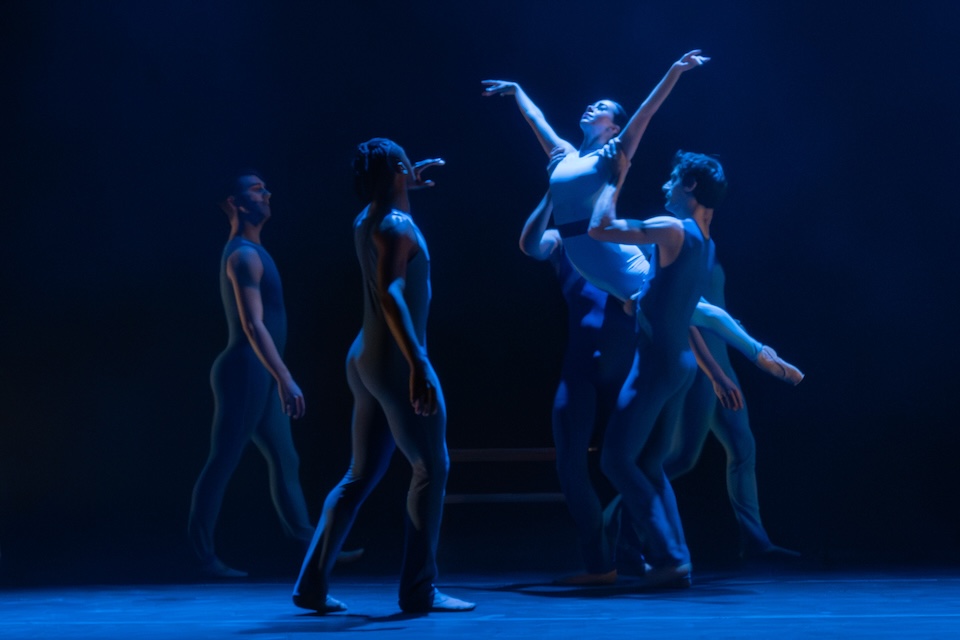
Madison Ballet, “Hallelujah Junction,” Photo: Matt Ulrich
Pier Carlo: I’d love to hear about how you assembled those elements to make exactly what you wanted in your company.
Ja’: By that time, I had been here for a year and a half, almost two years, so I definitely felt like I got the company up to a technical level that they could deal with my choreography, which is physically demanding, emotionally demanding on both ends. I felt like they were at that level.
I had met a lighting designer named Julie Ballard, who was amazing. I met her when I did a ballet for Charlotte Ballet in 2022, and we clicked right away, so I knew I wanted to keep her around and utilize her as much as I could. I collaborated with her immensely on the lighting. I created a scenic design myself, so that element was there. Then I got super fortunate that one of the dancers in the company is also a costume designer, and she’s fabulous. Her name is Fernanda Yamaguchi, and she did the costumes. So all the elements came together.
The music I had been sitting on forever, because of course I’d seen Peter Martins’ version of it and fell in love with that music and always wanted to choreograph something to it. But I felt when I was younger, I didn’t have the skill to do it. I finally felt like I was at a place as a choreographer and as an artist that I could really approach the music and bring something different than what Peter Martins did while respecting this music and showing my love and appreciation for this music
Pier Carlo: You are also artistic director of Ballet Boys Productions, so this is the second company you’re heading. In this current position, what do you think your biggest leadership success has been, if it’s different from your artistic success?
Ja’: I mean, the leadership has been ... . So unfortunately, I did have to step into the role of executive director at Madison Ballet as well as artistic director after my first six months here.
Pier Carlo: Yeah, two more-than-full-time jobs simultaneously.
Ja’: Yeah. And that’s a whole challenging conversation maybe for another time.
Pier Carlo: No, no, it’s for this time.
Ja’: [He laughs.] It was jarring. Six months into my tenure here, my executive director decided it was time for him to move on because quite frankly — and he was honest with me; we had that kind of relationship — he was burned out. He got the company through the pandemic, and I saw the wear and tear on him.
We were also dealing with a lot of changes that needed to happen. Going back just a little bit, it’s one thing to speak about the changes you want to make and how we’re going to do it and it all sounds wonderful as a board and as an executive director when you’re hearing it, but it’s quite different when you start having to do the work. I will say that the board that we have now and the small staff that we have now are the people that have really put in the work and believe in the vision that I have. And we work diligently to make this happen.
Stepping into the role of executive director and artistic director, that brought on a whole new plethora of challenges and obstacles and things to overcome, so I think the biggest thing for me in my leadership was that I was able to transition us through that without having any layoffs, without having any financial difficulties. I think that’s been the biggest thing that I’m most proud of, that I’m balancing it while it might be hard.
And it is hard because we have a very small staff. It’s me, my rehearsal director … . I also run the school here, just to put that out there. So there’s a school, there’s the company, and I have a rehearsal director who’s also the school principal, and then I have an operations associate. That’s it. So when I say executive director, I’m doing development, marketing, outreach, artistic, running the school, and we’re still here and we’re thriving.
Pier Carlo: But there’s only so long you can do all of that.
Ja’: Oh, absolutely. And we’re all aware of that. The board is aware of that. We are looking for an executive director. We are looking for a marketing director and a school director as we speak because what we’re doing right now is we’re maintaining, but in order for us to grow, which is the ultimate goal — this is the end of my fourth year here, going into my fifth — it’s time to start another five-year strategic plan and really set out some strong ambitious goals for that. And we need to have a staff and a crew of people that are ready to do that. We’re aware of that and they’re aware of that. I’ve voiced that I need this; this is what has to happen. I am glad I’ve been able to successfully do all these roles, but I told them and they understand that this is not sustainable.
Pier Carlo: I love that we’re talking about that transition because on this podcast, I’ve talked
to a lot of arts leaders who are changing things but we always kind of talk about
the before and the after. The in-between we don’t really talk about.
I’d love to hear whether you have any advice about dealing with that in-between and
the actual point of transition.
Ja’: I think you have to be someone ... . I mean, I wouldn’t have taken it on if I knew I couldn’t do it.
Pier Carlo: Why did you know you could do it?
Ja’: Because like I said at the beginning, I love puzzles. I love solving things, so that’s all it was to me. It was a way to figure out, “OK, this is the puzzle we have. It’s all scattered out. How do I put all these pieces together and make it work with what we have?”
I’m also very honest. If I’m at a point where I am absolutely burned out and I can’t do it, I express that to my rehearsal director, I express it to the board, I express it to my other staff member, and we find ways in which maybe they can step up and take on this and take on that. Some people on the board are willing to step in and do some things. I’m fortunate in that part that I’m very honest about our needs and what I need so I don’t get to the point where it’s just complete burnout and I’m walking out the door.
I think the biggest challenge with any transition is just maintaining yourself. You have to maintain your mental, you have to maintain your spiritual and your physical. I’ll never sacrifice those for any organization. I think it’s important. There’s a huge conversation on mental health for dancers now, but it’s also for the artistic-staff side. Because a lot of people see the beauty onstage, they see the dancers, and they have no idea the tremendous amount of work and how much sacrifice it takes behind the scenes to make these performances happen, to make those outreach shows happen, to make the school run. So I advocate for arts leaders also, that we are human beings.
I tell my dancers and I tell my staff, my favorite thing to say is, “Allow me some grace [laughing] because I’m only human. I know I seem superhuman because I’m up here doing 14 different jobs and staying up till 2 or 3 in the morning to do grants and things like that. When you see a mistake on the program or you see a mistake on the schedule, don’t come in attacking.”
Because especially in the beginning, there were moments — I’m very honest — there were moments where I snapped because I was like, “It has to be this day.” I would walk away and I would come back and I would apologize. There were very few moments like that, but those few moments were my human side. That was the side that was at its limit, and I now try to be conscious of that and realize when it’s coming so I can take myself out of it and have a moment. I’ll either go to therapy or I’ll go to the gym or go for a run or do something to replenish my spirit.
Pier Carlo: You said something about when you were creating your own company, that not only were you asking more physically demanding things of your dancers but also emotionally demanding. I loved hearing that. I don’t often hear artistic leaders talking about the emotional demands they place on their artists.
Ja’: Yeah. I grew up in a crazy kind of world. I grew up at the Joffrey Ballet School in New York City right before they moved to Chicago and for three years after they moved to Chicago, so I was brought up in the true Joffrey Ballet idiom. Then on the flip side of that, I would do all of my morning classes at Joffrey, and then I would take my college courses at The New School during the afternoon. Then mid-afternoon to evening, I would go to Ailey. I was on scholarship there. So I was going to two different schools at the same time while going to college. Well, my parents made me go to college because they were like, “We’re not supporting you if you don’t go to college.” [He laughs.] So that’s a whole other story for another day.
College was in the middle of going to these two schools because I had had only ballet training prior to college. I have a strong classical base of technique, but then I also grew up in the tradition of Ailey where Mr. Ailey had a saying: “Dance came from the people and should always be delivered back to the people.” And there was Ms. Jamison, who was always like, “I don’t want to see robots on stage. I don’t want to see cookie-cutter dancers. I want to see who you are. What are you going to tell me through your spirit through dance?” She was a firm believer in “I can make the audience learn things about themselves without ever saying a word.” That stuck with me. I think all of that, with the classical technique of Joffrey, seeped into my choreography. I feel like it’s an amalgamated blend of form and emotion.
Then also one of my biggest inspirations is Ulysses Dove. Watching his interviews
and studying his works and actually getting to learn some of his ballets, it is that;
it is the form and the emotion that I’m most interested in. I want to see humans on
stage. I want to see stories. Whether you’re telling a story of classical ballet —
“Giselle,” “Swan Lake,” “Sleeping Beauty” — or a contemporary ballet, there’s a story
there. There might not be a plot, but there’s a story there because you’re a human
being and you have something to say.
So that’s the emotional side of the demand that I ask of the dancers, to not just
give me the steps but to go further. Show me who you are, show me what your reaction
and what your feelings are to this moment, to this music, to this idea.
Pier Carlo: Speaking of your career track, you took a break from dancing, correct?
Ja’: I was an executive director for a fashion retail company for two years.
Pier Carlo: I’d love to know what part that played in bringing you to where you are now and why it was important.
Ja’: It was necessary. I wouldn’t be here if I didn’t do that.
Pier Carlo: Tell me more.
Ja’: At the end of my career, when I retired, I had gone into trying to be a choreographer full-time, and I found it extremely difficult. I had done a wonderful work in New York City and had this amazing review in the Times where Roslyn Sulcas, the reviewer of The New York Times for this particular show, said I was “a choreographer to watch.”
Pier Carlo: You would think … . That’s the dream review.
Ja’: That’s the dream review. I’m on a program with Justin Peck — we’re both presenting work for the first time in New York City — and Emery LeCrone. There were three other choreographers, and I’m the one out of us that got that mention. I thought, as everyone in my life thought, “Oh, you’re about to get calls, and you’re about to become a choreographer, a real choreographer with a viable career.”
I got not one call. I sent my work out to 100 places, exactly 100. I had one response back asking me to create a hip-hop ballet.
Pier Carlo: No!
Ja’: And I had never done hip hop in my life. I was disheartened to say the least, and I said, “I love this artform too much to start to hate it. “So I said, “I’ll just take a break,” and I took a break.
First, I started in fitness. I became a personal trainer, and then I became a manager of a billion-dollar corporation, TSI. I became a manager for that within two and a half to three years and did nothing with the arts. I wouldn’t go to shows, I wouldn’t talk about dance, I wouldn’t talk about anything that had to do with the arts. I needed a full removal from that life. And that continued. I lived in D.C. while I worked in this fitness company.
Then what happened was a former friend of mine in New York City was on the board of this company that was looking for an executive director for their organization and asked me, because I was putting feelers out there that I wanted to move back to New York, if I wanted to interview for it. I interviewed for it and I got it, and I really enjoyed it. I did that for two years.
Then in 2018 going into 2019, I got a call from Dance Lab New York. It’s an amazing organization that does a plethora of things through engaging choreographers and giving them opportunities. This was at the start of the lockdown where we were all on Zoom. He asked me if I wanted to do something with the organization on Zoom. He explained that I would be at home on my camera, and they hire six or seven or eight other dancers and they’re at different places all over the world in their homes.
Now, I had never used Zoom before, [he laughs] definitely never used it to create a ballet before, and I was like, “I don’t know. I haven’t choreographed in like three and a half, four years. I don’t even know if I want to venture back into it.” He had seen my work, and he remembered me, which was lovely, and he said, “Well, just take a few days and think about it.” I slept on it for like two days. And then I just thought, “Here we go. It’s another challenge; it’s another obstacle. Here’s something that might be fun. If it’s fun, then great. If it’s not, then hey, you tried.” So I said, “Yeah, I’ll do it. I’ve never done anything on Zoom, so I just want to warn you.” And he was like, “It’s fine, it’s fine. We’re all learning at the same time.”
That was the first thing that got me back into the arts while simultaneously still being executive director for this fashion retail company. I would do my day job, and then I would switch from that computer and go onto my personal computer, log onto Zoom and start creating. It all came rushing back, how much I loved this artform, how much I love choreography, how much I love working with dancers and being artistic. And that’s something that was not happening in my “newfound career.” I wasn’t finding that same passion. It was a lovely job. It paid me very well, which was amazing. Coming out of being a dancer, it was an amazing-paying job, but I’d rather do something where I’m making less money but I’m passionate about it.
So it became a no-brainer after that. I was like, “I’m ready to get back into this.” Then the wheels started turning, and I got a commission from UNCSA to do something on Zoom. Then my good friend Andrea Long, who was teaching at Boston Ballet, spoke to the director there, and they asked me to come and create a ballet on Boston Ballet School. At first it was via Zoom. Then towards the end of it, we actually came out of the lockdown, so I was actually able to go there for the performance, and we were able to do it outdoors. Everything just kind of started moving in the right direction to get me back into the arts.
Pier Carlo: When did you create Ballet Boy Productions?
Ja’: I started that in 2007 when I joined Ballet X. At first it was just mentoring. It was just a means to give young men of color a possibility for mentorship, because that was something that I severely lacked in my career. I made a lot of mistakes and burned a lot of bridges that are now repaired. I made a lot of mistakes because I didn’t have that kind of mentorship. I didn’t know how to navigate and how to be a professional dancer. I didn’t go through a trainee program. I got hired into Cleveland Ballet when I was 16 as an apprentice, and it just kind of kept going.
Pier Carlo: It sounds like you were learning the dance, but there was something about playing the game, the interpersonal skills that you didn’t.
Ja’: All of that, all of that. I didn’t know anything about taking care of my body. I didn’t know anything about, like you said, interpersonal relationships, how to act in a room with a choreographer, how to retain stuff, come back the next day and be ready to move on.
Pier Carlo: Well, at 16, who knows?
Ja’: Right. I didn’t know any of that. And nothing in training had prepared me for that, and, like I said, I didn’t have anyone to talk to about this stuff. “What the hell is going on? What am I doing?” So a lot of my career was, “Go figure it out, go figure it out, go figure it out.” It was a bumpy road; it was a bumpy career. I’m lucky that my talent kind of got me by, but definitely I could have gone a lot further if I had had some mentorship in my life, I believe.
So I wanted to create an opportunity for young men of color to have that. It was myself that started it, and I would reach out to other professional ballet dancers and ask them if they would be mentors for guys and male-identifying dancers. It was really great, and then that slowly turned into, “Well, I could use this as a way to also give them performance opportunities.” I started choreographing on them and then started doing shows, and we did outreach and we did this and that. It just grew out of the necessity of giving back and giving people things that I thought I needed when I was a young starting artist.
Pier Carlo: Given what you’ve just told me about getting that amazing New York Times review and being the one choreographer whose only offer was a hip-hop job, it sounds like for a black choreographer, there are still some roadblocks.
Ja’: Hurdles. Yeah, hurdles for sure. That’s another reason why I was happy to be able to take this position because I said, “Now I can really do some work.” I find it so fascinating being on the other side now, dealing with budgets. We have a very small budget in comparison to a New York City ballet or PNB or SFB or Boston Ballet, these huge companies with these huge budgets. Since I’ve been here, I have brought in 90% new choreographers, Black, white, Latino, Asian, everything that you could think of. Seventy percent of them have been females because I still feel like there’s a lack of female choreographers in ballet.
So I’m like, if I’m able to do this on my small $1.5 million budget with my staff of three people … you know what I’m saying? If I’m able to do this, there’s no reason why a company with a budget of over $20 million can’t do the same thing. It’s literally not that hard. You literally can go on Instagram, YouTube, and you can discover a world of choreographers that are ready for the opportunities to create. I don’t want to take away opportunities from Justin Peck or Christopher Wheeldon or any of them. We all deserve to have our work shown, but the playing field needs to have diverse voices. It needs to reflect the world we live in, I believe, and there’s no better way to do that than to give those opportunities.
I’m so grateful that I’m in a company where I’m able to do that. And I’ve stood by that. I still stand by it. We have an all-female-choreographers program coming up in April that is a true, diverse program. And I’m so proud of that. I’m just proud of all the work that I’ve been able to bring in here and give choreographers opportunities that I knew I needed and deserved, and I’m not afraid to say that. It sounds cocky. I don’t really care. I deserved and still deserve opportunities to create. This is just based on reviews, [laughing] which I don’t read, but others read and they get back to me.
Pier Carlo: Reviews and your long experience, diverse experience.
Ja’: And as my one friend said, “You’re not creating crap.” She literally says that to me every other week. She’ll call me —
Pier Carlo: [Laughing] That is a best friend’s highest compliment, actually.
Ja’: I know. And let me tell you, this is a person of very high standards. I mean, she danced for New York City Ballet for years. She danced with Dance Theater of Harlem as a principal dancer for years. Her standards are extremely high. And she said, “You’re not creating crap. Your work is actually good and beautiful and needs to be seen.”
So I’m still fighting for myself as a choreographer to have those opportunities to create on larger companies and global companies. But I’m doing my part here at this little company that I have to at least put a dent in the landscape.
Pier Carlo: Now you’re going to be coming back out to North Carolina, to UNCSA in the spring, creating a new work. I understand you’ll be working with both the contemporary students and ballet students, is that right?
Ja’: I hope so. That would be great.
Pier Carlo: What are the challenges of mixing students who have been trained in different disciplines?
Ja’: I don’t have any challenges in that area because of what I said earlier, because I don’t view dance as one or the other.
Pier Carlo: What about the students when they face their challenges? How do you work with them?
Ja’: Oh, I push them the same way I pushed the company. [He laughs.] I tell dancers this all the time, even my dancers: You have to stay open, open to the possibilities. I think that’s important, especially in this career because whether we want to admit it or not, ballet is lagging behind in the artforms. Our audiences are dwindling. I think the reason why is because we’re not stepping up to the times. We’re not adjusting to the times. So I tell dancers the same thing: “Don’t have an idea in your mind that you’re only one kind of dancer. If you love dance, you have to open yourself up to everything if you want to be in this artform.”
I think walking into a studio, working with different choreographers, is the perfect way to test that, to expand that, to add things to your toolbox that you had probably never even thought of. I think as long as dancers come into the studio with an open mind and a readiness and willingness to work, the work kind of just creates itself in a way. There’s no roadblocks. But when they come in with a wall built up and an inability to want to learn something new or even take a chance on something new, it will never work.
February 18, 2026
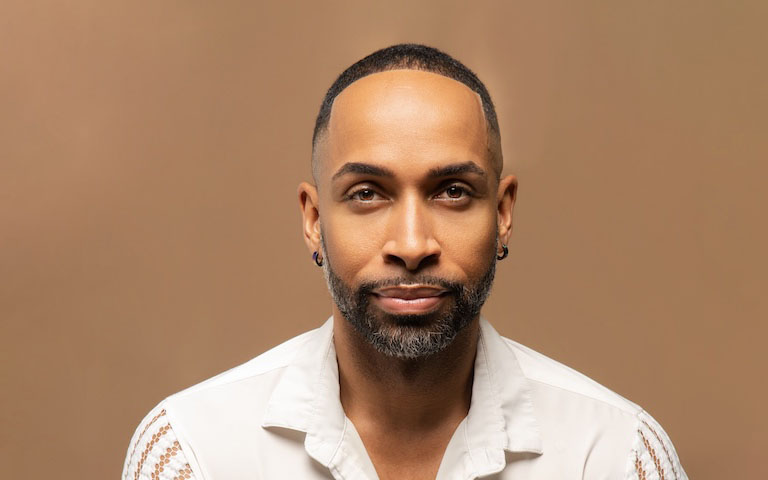
Ja' Malik
Artistic Director, Madison Ballet
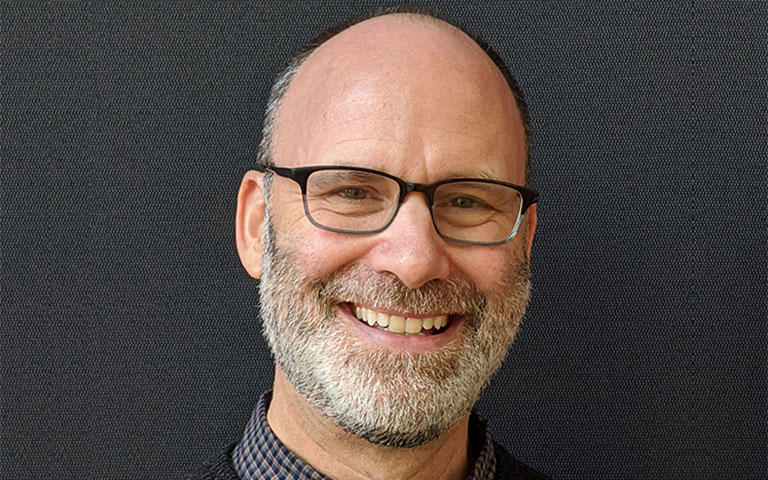
Ja’ Malik is the Artistic Director of Madison Ballet, where he brings a bold, inclusive vision that bridges classical ballet tradition with contemporary relevance. A former professional dancer with a 25-year performing career, he has appeared with companies including Cleveland Ballet, North Carolina Dance Theatre, BalletX and Ballet Hispánico, performing a wide range of classical, neoclassical, and contemporary repertory. Trained at the Joffrey Ballet School and holding a BFA from The New School, Ja’ Malik’s artistic voice is shaped by both rigorous classical technique and modern, socially engaged movement practices. As a choreographer, his work is known for its musicality, emotional clarity, and commitment to storytelling, often centering themes of identity, humanity, and connection. His choreography has been presented by ballet and contemporary companies, festivals, and educational institutions across the country. Since assuming leadership at Madison Ballet, Ja’ Malik has led a period of artistic renewal and organizational growth. He has expanded the company’s repertory with works by internationally recognized choreographers, commissioned new creations, and deepened community engagement through accessible performances and partnerships. Under his direction, Madison Ballet continues to strengthen its role as a cultural leader in the region, balancing artistic excellence with a commitment to equity, access, and innovation. Ja’ Malik is also a passionate mentor and advocate for the next generation of artists, dedicated to fostering diverse voices and ensuring ballet remains a living, evolving art form. Photo credit: Lexia Frank
Pier Carlo Talenti
Podcast Producer & Host
Until 2016 Pier Carlo Talenti was the director of new play development at Center Theatre Group in Los Angeles where he oversaw one of the country’s most vigorous new-play commissioning programs. Over 20 years he developed scores of new works for the theater by the some of the country’s most innovative theater artists, and his combination salon/playwriting group, the Writers’ Workshop, counts among its alumni/ae extraordinary playwrights who are also currently producing and writing TV’s most exciting shows. He is currently a resident of Hillsborough, NC, where he is pursuing his own creative projects.