
Conductor Jessica Bejarano Wields a Bold Baton
Listen to the interview on Apple, Spotify, or your listening platform of choice. Captioned interviews are available on YouTube.
The views and opinions expressed by speakers and presenters in connection with Art Restart are their own, and not an endorsement by the Thomas S. Kenan Institute for the Arts and the UNC School of the Arts. This interview has been edited for length and clarity.
To call conductor Jessica Bejarano an outlier in the American orchestral world is a mild understatement. Not only is she female at a time when there are still astonishingly few female conductors of professional orchestras — according to Women’s Philharmonic Advocacy, in the 2024-25 season, only 20.8% of concerts by the top 21 orchestras in the U.S. were conducted by women, and today only one of the 25 largest American orchestras has a female music director — but she is also Latina and lesbian. When Jessica Bejarano steps onto the podium, therefore, she doesn’t just conduct; sporting visible tattoos — her favorite conductor Tchaikovsky is prominently featured on her right forearm — and projecting a down-to-earth warmth and grit she learned from her immigrant mother in working class East L.A., she redefines what leadership can look like in the orchestral world.
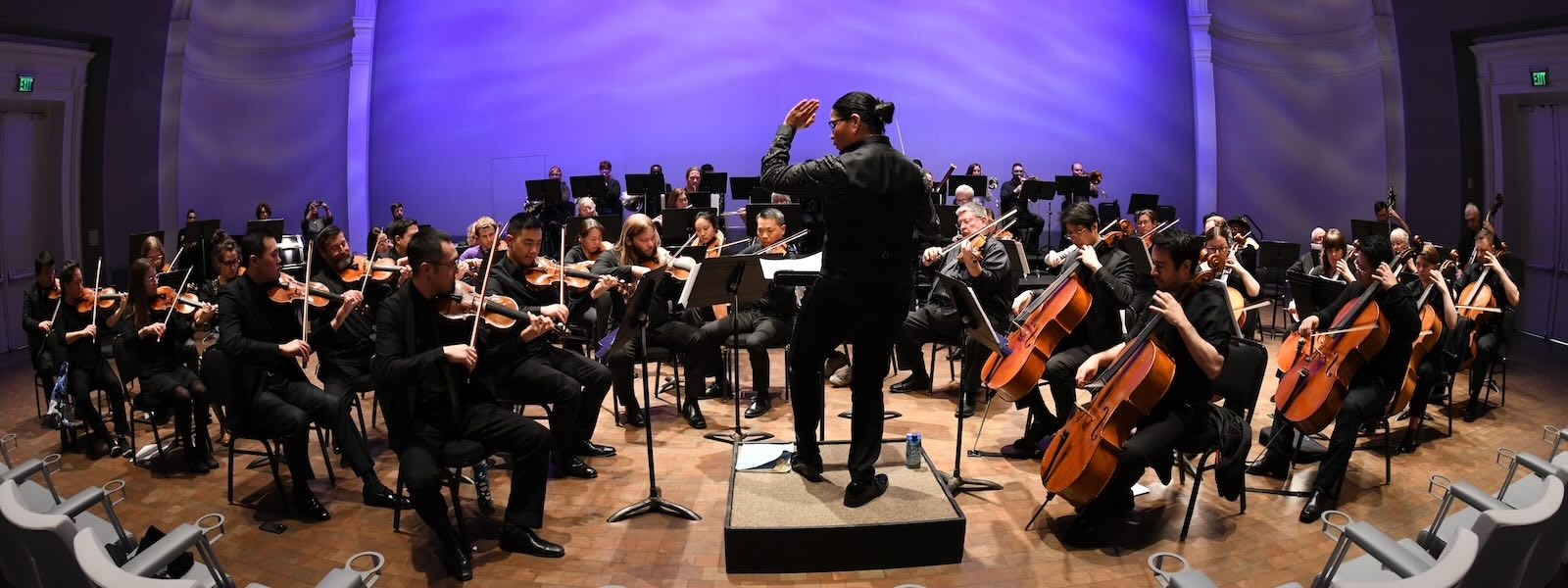
By 2019, Jessica was already building a solid resume, leading community orchestras in the Bay Area as well as accepting freelance conducting gigs around the world. Continually faced with the glacial pace of change in the classical music world, however, she took a leap of faith and founded her own ensemble, the San Francisco Philharmonic. The SF Phil’s mission is to center diversity, equity and inclusion not just as a tagline but as a lived experience for musicians and audiences alike. In the last six years, under her leadership, the SF Phil has collaborated with everyone from Grammy-winning composers to local rap icons, while also offering masterclasses for emerging conductors and commissioning new works by underrepresented composers.
In this interview, Jessica shares the winding, impassioned path that led her from East L.A. trumpet player to visionary conductor and founder. She discusses how she built the SF Phil from scratch — including funding its first concert out of her own savings — and how she continues to push the boundaries of what a 21st century orchestra can be.
Pier Carlo Talenti: Even before the pandemic, the notion of founding a new classical music ensemble was daunting. What made you certain you should do it?
Jessica Bejarano: I grew up in a very poverty-stricken part of East L.A. It was a very minority community with a lot of immigrants. Our high school was among the top 10 high schools in the country at that time with the highest statistics of teenage pregnancy, dropout, murder, incarceration, so the symphony, the ballet, the opera, that was not part of the culture, the school system or our family outings. That was not part of our lives. Far from it.
We did have marching band. We had concert band, and we had jazz band, but as far as the symphonic, orchestral —
Pier Carlo: You played in those, right? What was your instrument?
Jessica: Yes. My instrument was trumpet. I started in fifth grade on trumpet, but after high school, I knew that I wanted to pursue a career in music. I wanted to become a music teacher, so my next step was to go to college, and I went to Pasadena City College in Pasadena, CA. To retain my scholarship, I had to play in three ensembles, so I signed up for the wind ensemble and the jazz ensemble. And my friend, who's a fellow trumpet player, said, "Join the orchestra with me." I was like, "What's that? What's orchestra?" and she was like, "Just come with me." I signed up for orchestra.
I remember that first rehearsal like it was just yesterday. We were unpacking our instruments, and there was a plethora of string players in there and the woodwinds, the brass, the percussion. We were getting ready to rehearse this composer, and this piece was called Beethoven's Symphony No. 5. Never heard of it. We were also getting ready to rehearse “Dona Nobis Pacem,” which includes a large chorus by Ralph Vaughan Williams. I remember sitting in that ensemble, that configuration with that repertoire and thinking, "This is so foreign."
But after that first rehearsal, I was blown away. I was absolutely blown away, and I went to Tower Records after that rehearsal, and I bought as many classical CDs as my arms could hold. I went home that evening, and I listened all night into the break of day. I remember literally crying, thinking, "This is beautiful. This is gorgeous music. This is a beautiful artform. Why have I been deficient in this for the first 18 years of my life? But I have it now and I'm not going to let it go."
It was just like that music was always in me. The love of that repertoire was always in me, and the switch was flipped on now, and I was going full throttle with it from that point on.
Pier Carlo: So you also had to catch up not only musically but also culturally, because the classical music ecosystem is very much its own culture. You also kind of had to break in in that way, right?
Jessica: I did, I did. The other fascinating thing, besides the music itself, was learning about these composers and their stories and the history and where in the world it happened and why it happened.
My musicians and my audience members know that I'm a Tchaikovsky everything. I'm a Tchaikovsky scholar. I wrote my master’s thesis on Tchaikovsky. I went to go study him in St. Petersburg, Russia.
Sometimes I get asked by women or people of color, "Why you, Jessica? Why are you supporting dead white men? Why are you using this platform to support their music?" And I talk about Tchaikovsky. You see a dead white man, but Tchaikovsky was also a gay man living during an era and a time in Russia where it was difficult to be himself. He couldn't walk down the street and love openly. He couldn't marry the man he loved. He couldn't have a public relationship. So Tchaikovsky, that yearning, that anguish, that hurt, that anger, that depression, he poured into his music. It's in his music because that was his vehicle of expression. So when they ask me, "How and why do you support these guys?" I'm like, " There's more to the color of the skin. He suffered. He suffered a lot."
And you think about Beethoven. He was completely deaf by the end of his life. He suffered a lot as well. So they're not just dead white men. These are human beings that used music to really pour out their torture, their soul, their experience.
Pier Carlo: How did you pivot from playing the trumpet to wanting to have a conducting career?
Jessica: As a kid in middle school, I was always put in leadership positions. I was the trumpet section leader, so I would conduct little sectionals. In high school, I was the drum major, so I was conducting up in the stands during football games on the 50-yard line. Basketball games, you name it. Then, when I went off to college at the University of Wyoming, I was a drum major for the University of Wyoming, and I was also the music director of the pep bands. I was always in a position of conducting and leading, and it was natural and it was fun.
Pier Carlo: [Laughing] You were that student. I know that student.
Jessica: That was me. That was me. Back in the day we were called nerds, but now we're called cool.
Pier Carlo: That's right.
Jessica: My love for orchestra and the repertoire is symphonic music, and then my natural innate leadership abilities and my love of leadership and leading and conducting, the two just kind of melded when I was at the University of Wyoming, and I was just like, "Oh, this is what I'm going to do."
I had to take a course in conducting as a music-ed major, because that's what I was as an undergrad, and if you're going to be a music teacher, you have to know how to conduct your ensemble. So we would take a course in basic conducting. When I took that course, I fell in love with the art of conducting. I remember asking the orchestral professor if he could give me private lessons, and he agreed. This was not even part of my curriculum, but once a week I would go to his office, and we would score-study. He would teach me how to score-study; he would teach me baton technique; he would teach me rehearsal technique. From there, it was just like, “OK, well, I am going to join the Conductors Guild because I want to go to workshops and conferences.” And once I graduated from my undergrad, I was just like, "OK, I'm going to become a conductor."
It was just very natural, very organic. I didn't think about it twice. I didn't look up the history of women in the field. I didn't look at the statistics, none of that.
Pier Carlo: [Laughing] It was probably good that you actually knew less.
Jessica: Exactly, exactly. I knew nothing, other than I loved it, I wanted to do it, and I was going to do it. I jumped in headfirst, and boy, oh boy, I realized shortly after that that it was going to be a very, very difficult journey. It's still a very difficult journey, but when it's fueled by passion, it really does pull you through and up.
Pier Carlo: What were the major hurdles that made it really difficult in those early years?
Jessica: When I went to grad school, I had an orchestral professor and a choral professor. It was the same situation where I was taking private conducting lessons every week and then every week I would get to conduct the orchestra. Some people call it tough love, but when you're conducting an orchestra and the professor just humiliates you in front of the orchestra and minimizes you, it becomes really, really difficult. It becomes demeaning, really. I was trying to figure out, “Is this tough love, or is this the way I'm supposed to be treated, or is this happening for all the wrong reasons?”
Pier Carlo: Was he or she treating other students like that?
Jessica: There were only two of us. [She laughs.] Short answer, no, not at all. Not at all. It was a master's program, so there was a first-year student and a second-year student.
During one of our private one-on-one conducting lessons, he stopped the lesson and asked me if I was serious, and I said, "Serious about what?" He's like, "Are you serious?" And I was like, "About what?" And he pointed at me from head to toe and toe back to head. "Are you serious about becoming a conductor?" I said, "Yes, absolutely. I'm dedicated. I'm passionate. I want to do this. I'm all in." And he proceeded to say, "Well, then go back to your country, because it's not going to happen in mine."
It was shocking. It took a minute to register what he just told me. I remember going home that day. I didn't even finish the rest of my classes. I just went home and stared at a wall forever, thinking academia is supposed to nurture you and prepare you for the real world and if this is the way academia is treating me and my pursuit of becoming a conductor, how is the real world going to treat me as a conductor? I remember briefly thinking, "I'm done. I give up. I don't want to do this. It's too hard." But then a second later, I was just like, "No, this is your passion. This is your dream. This is your life, and this is what you want to do, and don't let anyone take it away from you."
I had to learn how to take a no and turn it into a yes, how to take a negative and turn it into a positive, how to take a negative experience and use that energy to catapult me even further than I thought I could go. It would motivate and inspire me to do and become more and to continue on this path. It's been interesting to have these barriers, but these barriers are some of the things that have made me the strong person that I'm today.
Pier Carlo: Even before the pandemic, running an orchestra was already a challenging thing to do. Why was it important for you to take on the challenge of founding your own philharmonic?
Jessica: My journey as a student, as a musician, as a patron, as a conductor have all played into why I built the SF Phil. Going back to the story that I just told you about how the professor treated me, I knew that I didn't want to be a part of that. I wanted to be the solution. Going out into the world, I wanted to change that energy, the way that people that look like me were treated. It doesn't have to be a thing that happens to anybody beyond me anymore. It needs to stop. It can be a positive experience, but in order for it to be a positive experience, I have to be proactive and help to change that culture and that environment. Same thing when I went to Europe. Sometimes how musicians treat you when you're on the podium was not always the best or most welcoming if you were a person of color or a woman.
I used to direct an unnamed orchestra. I grew the orchestra in musicians to the point where we had a waitlist. I grew the musicianship of the orchestra to where we were really bringing in very powerful players. I broke attendance records of audience acquisition, broke records of donations ever given to the orchestra. And this orchestra had been around for over 50 years. There was a lot of news media around us. PBS did a story on us; Telemundo and The Today Show did a story on us. The board thought that I was trying to turn a community orchestra into a professional orchestra and that I was doing something bad and changing the culture of an organization.
I was just like, "Why is it difficult for a woman to do what they do and be really great at it but have it be looked at as a negative? All these things are changing in a positive direction because I'm really good at what I do, not because I'm trying to change the culture or the mission statement of the orchestra.” That was really confusing, that you're a woman, you can't be good at what you do, and if you are, there's an ulterior negative motive behind you.
Pier Carlo: So the feeling was that you were overstepping your bounds? Is that what it was?
Jessica: I think that I was growing the orchestra so rapidly in so many different ways — and it was getting a lot of media attention as well — that I think it overwhelmed the board. They didn't want it to change. They didn't want it to grow. They didn't want it to have this international visibility through the media.
The other things that I've experienced too is, I went to a professional symphony concert, and I asked an usher, "Where's my seat?" I showed him my ticket, and instead of helping me, they just looked at me and they said, "Don't you know your alphabet?" And I was like, "Oh, dear God. How horrible. You're supposed to help your patrons, not minimize and diminish them.”
I've been to other professional companies, where I was sitting in a box, and this woman said, "Excuse me, you're in the wrong place." I'm like, "No, I'm not." She's like, "This is a box. This is box seating." I'm like, "I'm very aware." She goes, "You need to show me your ticket, or you need to leave." I'm like, "I don't need to show you anything." And she's like, "If you don't show me your ticket, I'm going to call security." I was like, "Please do." And she did. She called security, because I'm sitting in box seating. The seats were like $1,000 a seat.
Security came and asked me what was going on. I'm like, "I don't know," and he's like, "Can I see your ticket?" I showed it to him, and he looked at this older woman and said, "Yeah, she belongs here." She tried to rip my ticket out of his hand because she wanted to see it for herself, and I grabbed it back out of his hand, and I was like, "You don't need to see my ticket. He already confirmed that I'm fine here, that I do belong here." The usher just told me, "Enjoy the show," and I was like, "Yeah, thank you."
Pier Carlo: Oh my God, you encountered a symphonic Karen! That's the most dangerous kind.
Jessica: Yeah. Yeah. It was the ballet, but still. She was sitting right in front of me, and as soon as the show started, she put on her big hat so I couldn't see around her hat. It's just these experiences, where it's just like, "This is horrific."
I was tired of that, and so I was just like: "I'm going to create an orchestra where it's OK to be me, where it's OK to look like me, where it's OK to have people look like me, sound like me, come from where I come from and be in these spaces, whether you're an audience member, a musician onstage, the conductor on the podium or a board member, where you can be and look like me and be in any of these spaces and be welcomed, be embraced, be respected, and feel like you belong there."
A lot of organizations wave banners of diversity, equity, inclusion, and that is amazing, but how do you implement diversity, equity, inclusion? How do you really, really put that into effect within every corner of your organization, including your ushers, including your audience members? For me, it was important to build that.
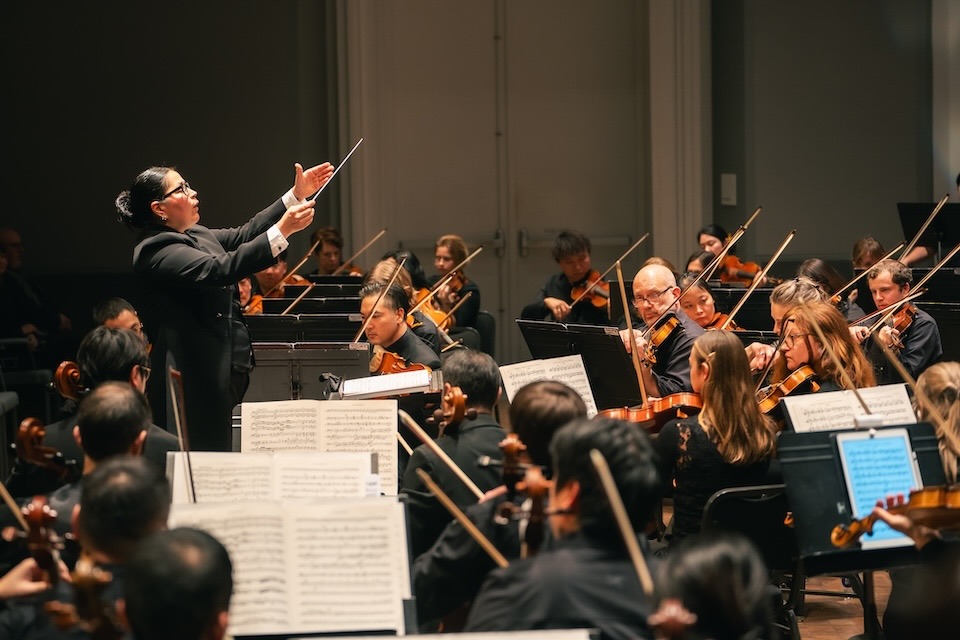
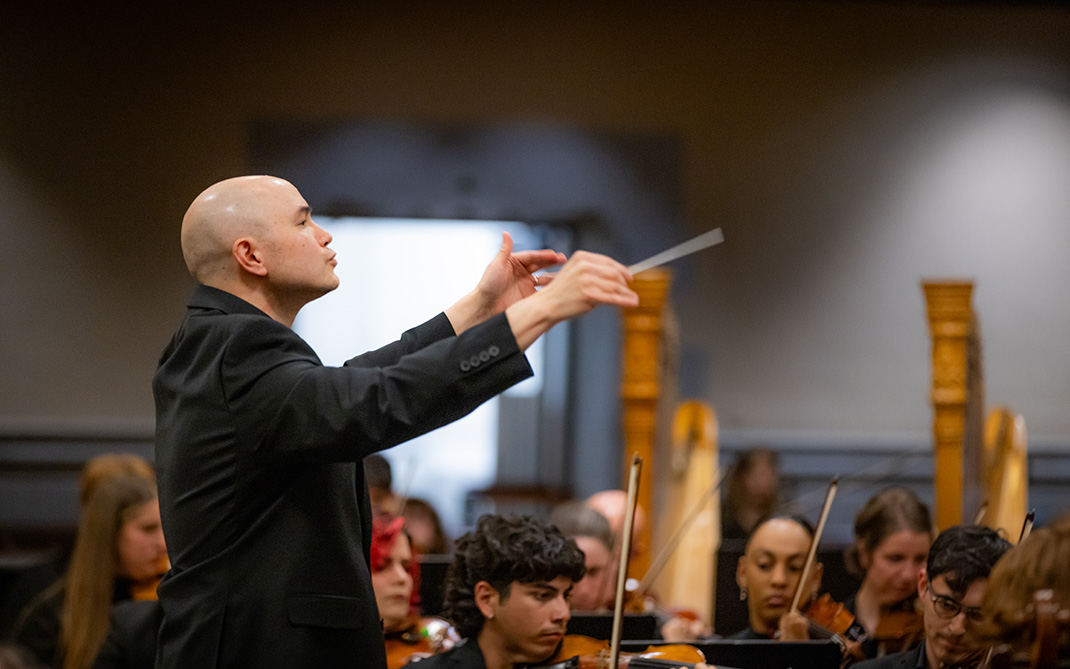
San Francisco Philharmonic conducted by Jessica Bejarano
Pier Carlo: So tell me how you built it. What were the building blocks that you put in place to make sure you reached that goal?
Jessica: I had just finished conducting at the Bulgarian State Opera in Stara Zagora, Bulgaria. On my flight back to San Francisco, I told myself, “OK, you know what? I'm just going to build my own orchestra, and it's going to be really about the implementation and celebration of diversity.” By the time I landed in San Francisco, I had a blueprint of like, “OK, I’ve got to get the musicians, I’ve got to get a venue, I’ve got to pick repertoire. I have to find a board of directors.” As soon as I hit ground, I called all my good friends who are musicians or administrators in the music world, and I was like, "Hey, I want to build an orchestra." And they were like, "Let's do it."
Pier Carlo: Oh, they were all in!
Jessica: Yeah, my friends were all in on it, and each friend I picked had a certain strength. One was a designer, one was a writer, a few were musicians, a couple others were educators. I just picked a variety of people with a variety of strengths. We sat around at a bar, and we designed a logo together, and off we went.
It was a lot of administrative leg work, pulling it all together from the venue, from the librarian work, from sourcing the music to sourcing the musicians. I have a following of musicians here in the city, but I don't have a huge, huge following of professional musicians in the city here in San Francisco. I just started talking to people and asking them if they were interested in joining the Philharmonic and if they had friends that they could bring. The word just started tumbling and snowballing out into the musician world, and that's how I was able to bring in the musicians. If you do good work as a conductor, if you're a great leader, people will want to follow you, and so I was lucky enough to source a lot of great musicians.
It was a blind endeavor for all of us. I've never built an orchestra from the ground up. Just like when I jumped into the idea of becoming a conductor, I didn't know anything. I didn't know the statistics. I didn't know what it was going to be like. Same thing with building my orchestra. I didn't know what to do. I didn't read a book. I didn't take a course on it. I just jumped in and figured it out along the way. It's a lot of work, and you have to be 100% dedicated. Every day you have to do something to grow it, to continue to build it. I went from being a conductor where all I did was conduct all the time to now I'm an administrator 80% of the time and then whatever time I have left at the end of the day, then I get to score, study, play the piano, and off to rehearsals I go.
Pier Carlo: Are you able at this point to pay your musicians and to pay yourself as the executive director?
Jessica: I am the volunteer executive director. It's a volunteer position until we have the budget to hire an executive director, so I just volunteer and do all the e.d.’s work. No, I'm not a paid executive director, never have been. I'm a music director, conductor, and I'm given an honorarium just per concert as a director.
I founded this orchestra back in 2019, and our first concert was February 3rd, 2020. The turnaround from the thought of the orchestra to actually being onstage was just a few months. It's really unheard of to start an orchestra that quickly.
Pier Carlo: That's incredible.
Jessica: Yeah. One of the things that an orchestra needs is funding, and so that first concert, I paid for everything out of my pocket, everything out of my savings.
Pier Carlo: Really?
Jessica: Yeah, it all came out of my savings. And let me tell you, it was the best money that I've ever spent on anything. I didn't spend it on a car; I didn't spend it on a vacation; I spent it on building an orchestra, and it was amazing. It was the best investment ever.
From there, we've been able to slowly and gradually build the financial side of the SF Phil, but that is still a side of us that we are constantly working to fortify, especially now that a lot of grants are being taken away. With the NEA things that are happening right now, a lot of grants are being pulled. It's a really tough time for orchestras as far as funding, but it's an area that we need to work even harder at.
As for my musicians, some of them are professional musicians, so they are paid, but they're paid per service. Then there are other musicians who are semi-pros. Let's say, for example, they went to Juilliard and have a doctorate in violin performance, but they work for Google now. So that's the other half of my orchestra. They tend to volunteer their artistry. We have a good balance of the two.
Pier Carlo: You mentioned something that brings me to my next question. The climate in the country, especially around federal funding, is very different from when you started the Philharmonic. Given that diversity, equity and inclusion are really front and center in your mission statement, I'm wondering what it's like for you and your board to keep to that mission statement in today's climate.
Jessica: I mean, it's our mission statement. It matters to us now as much as it did day one. Our work centers around that. It is the heart of our mission. Right now, we're working on a few projects to really amplify that. We're working with a female composer on the East Coast to get one of her works premiered.
At first, I had to build the sound of the SF Phil in an audience space, and it was easier to do that with the music of Beethoven, Bach and Brahms. But now that we have really cemented who we are in the music world, we want to get female composers in there.
Pier Carlo: And do more new work and actually commissioning. That's amazing.
Jessica: Right. Then we've also done concerts with Andre Nickatina, who is a local rap legend here in the city. We did a concert with him two years ago, and right now we're in talks about doing another joint concert. The cool thing is that this concert is going to have a Bruce Lee theme. Bruce Lee is from San Francisco. We hired this Grammy Award-winning composer from L.A. to rewrite some of Bruce Lee's cinema music and some of the rapper's music. Then there's going to be a video montage over the orchestra of different clips of Bruce Lee's life and/or his cinema, and then on the side of the walls, there’s going to be this psychedelic light show. There will be a lot of different stimuli all wrapped around a rapper, a Grammy Award winner and Bruce Lee.
This is the project that we're working on. Talk about diversity! We're bringing in the rapper and his following, we're bringing in Bruce Lee and the Chinese community and we're bringing in the SF Phil and our community. We're going to just meld all these people and bring them into the concert hall and have them all sit in the same space and enjoy his concert, right in front of them.
Pier Carlo: And the dream, of course, is that the audiences will fall in love with the other performer, in other words, that your Philharmonic audience will fall in love with the rapper and the rapper's audience will fall in love with you guys.
Jessica: Exactly, exactly.
One of the things that the SF Phil has also done is, in the past two years during the summer, we built an international conducting masterclass. We brought in this famous maestro, Donald Schleicher, and we accept 16 conductors from around the world to come do a week-long workshop with the SF Phil. During the day, we get guest speakers, administrators from the symphony, the ballet, the opera, who talk to them about the administrative side of how they work with the conductor or what they look for in a conductor when they're hiring. We bring in concertmasters of these big orchestras to talk about how they work with a conductor and what they want to see in a conductor. Then Maestro gives them conducting and score-reading lessons during the day, and at night, they get to conduct the SF Phil. It's a week-long program that I designed with a fellow conductor.
This was to have the SF Phil offer something other than just concerts. This a platform for these young conductors to work with the famous maestro, learn and hear these wonderful talks from these big-name musicians and administrators from these major orchestras here, to get to conduct an orchestra, a great orchestra, and get podium time and hone their skills. From the past couple of years, quite a few of these conductors have really catapulted their careers into other big orchestras.
The fact that we also do that in addition to making music for us is just as important as these concerts because it really, really helps. It gives back, and we're helping these young conductors become the next generation of conductors, which they will be. And some already are.
Pier Carlo: I noticed that the Philharmonic has not yet announced its next season, but I'm wondering if you can give me a sneak peek.
Jessica: Yes. We are gearing up for our fall opening concert on October 4th here at the Herbst Theatre. The big piece on the bill right now is Beethoven Triple Concerto. The Beethoven Triple Concerto is with Cordula Merks on violin, who's the concertmaster of the S.F. Ballet; John Wilson, who is the pianist for the San Francisco Symphony; and Amos Yang, who's the associate cellist or assistant principal cellist of the San Francisco Symphony. So that's the big bill. I need to finish the programming around that concert, but I think it's going to be an all-Beethoven concert. I think we're possibly going to add Beethoven Symphony No. 5 and a Beethoven overture.
And then for our December concert, we are doing the Bruch Violin Concerto in G minor with Wyatt Underhill, who is the associate concertmaster of the San Francisco Symphony. The other piece on that program is TBA. We have not figured out the rest of that repertoire quite yet. We also have it in the works in January to do the Mozart Requiem with the San Francisco Choral Society. I am so inspired by requiems and choral works, and so I reached out to the director of the San Francisco Choral Society, introduced myself and said, "Let's work together. Let's figure out a project." So it looks like we'll be doing the Mozart Requiem at the end of January. And then the S.F. Choral Society is possibly doing the “Dona Nobis Pacem” by Ralph Vaughan Williams.
Pier Carlo: Which was one of the first things you conducted!
Jessica: One of the first pieces I conducted, yeah. They have invited me to be the guest conductor for that. That's in November. So we have something in October, November, December and January, and then the rest of the season is still TBA. We have our concerts in March and then our concerts in May.
Pier Carlo: Wow, that's a really full season.
Jessica: Yeah, yeah, yeah. And things are on the horizon. Big announcements are going to be made very, very, very soon; we're just kind of finalizing some details. If people go to SFPhil.org, they can find all that information very soon on our upcoming concerts.
July 11, 2025
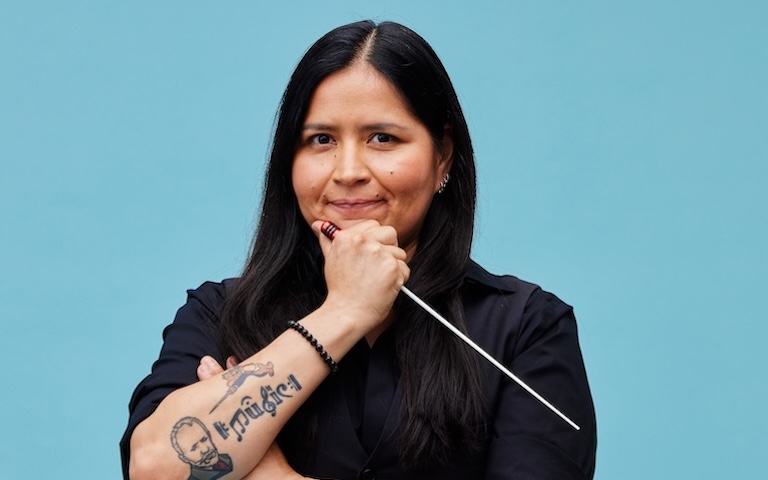
Jessica Bejarano
Conductor
Jessica Bejarano is the Founder and Music Director of the San Francisco Philharmonic, Cover Conductor with San Francisco Symphony, Curator and Scholar in Residence with San Francisco Opera, board member of the Association of California Symphony Orchestras (ACSO), board member of the International Conductors’ Guild and Keynote Speaker for Stanford Health Care 2024-2025. In 2019 Jessica was the first woman in history to guest conduct the American Youth Symphony in Los Angeles. She was also the featured guest conductor and clinician at the San Diego State University’s Women in Music, Diversity and Leadership Conference. In January 2018, she was one of twelve female conductors selected from around the world to attend and conduct at the International Women’s Conference in New York City. During that same time Jessica was the resident conductor of the University of California Santa Cruz Symphony Orchestra. In 2022, Jessica was the guest conductor of the Kansas All State Orchestra, leading a 200-piece student orchestra through rehearsals and performance. Jessica has guest conducted the Classical Symphony in St. Petersburg Russia; Urbino Summer Orchestra in Urbino, Italy: Philharmonie Orchestra “Mihail Jora” Bacau, Romania; Ruse National Philharmonic, Ruse, Bulgaria; Bohuslav Martinu Philharmonic Orchestra, Czech Republic; Antonio Soler Orquestra, San Lorenzo de Escorial, Spain; Falcon Symphony Orchestra, Falcon, Venezuela and various orchestras throughout the United States.
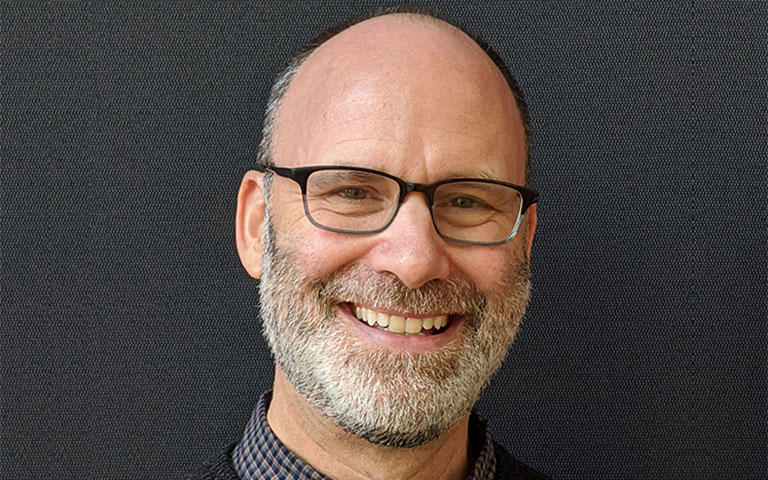
Pier Carlo Talenti
Podcast Producer & Host
Until 2016 Pier Carlo Talenti was the director of new play development at Center Theatre Group in Los Angeles where he oversaw one of the country’s most vigorous new-play commissioning programs. Over 20 years he developed scores of new works for the theater by the some of the country’s most innovative theater artists, and his combination salon/playwriting group, the Writers’ Workshop, counts among its alumni/ae extraordinary playwrights who are also currently producing and writing TV’s most exciting shows. He is currently a resident of Hillsborough, NC, where he is pursuing his own creative projects.