Choreographing First-Gen Stories: Alfonso Cervera and Irvin Gonzalez
Listen to the interview on Apple, Spotify, or your listening platform of choice. Captioned interviews are available on YouTube.
The views and opinions expressed by speakers and presenters in connection with Art Restart are their own, and not an endorsement by the Thomas S. Kenan Institute for the Arts and the UNC School of the Arts. This interview has been edited for length and clarity.
Alfonso Cervera and Irvin Gonzalez, two of the founding members of Primera Generación Dance Collective, both grew up in Southern California households where dancing was a vital part of family life, though neither was encouraged to pursue it professionally. Alfonso’s first training was in ballet folklórico, a form he embraced as a child largely thanks to his own curiosity and insistence. Irvin, inspired by early seasons of “So You Think You Can Dance,” taught himself pirouettes in secret in his parents’ garage. Both men eventually studied dance at UC Riverside (UCR), where they also first came out to their families, not only as queer but also as dancers. UCR is also where the two met and began their life partnership.
It was during graduate school that Alfonso and Irvin, along with fellow dancers Rosa Rodriguez-Frazier and Patty Huerta, realized the creative power of coming together. Each brought a unique movement background and a shared desire to explore and celebrate their Mexican American identities on the concert stage. The resulting collective, Primera Generación, now almost ten years strong, continues to challenge conventional notions of contemporary dance with work that is joyous, confrontational and often intentionally messy. That messiness is key. The collective embraces the concept of “desmadre,” a Spanish term that can refer to disorder, exuberance or both as both a choreographic strategy and a call to reflection and social change.
In this interview, Alfonso and Irvin, now professors at The Ohio State University in Columbus, OH, discuss the origins of Primera Generación Dance Collective, how they’ve navigated nearly a decade of creative collaboration and why their messiest pieces are often their most meaningful. They also reflect on what it means to be first-generation artists in the Midwest today and how they hope the next generation of dancers can shape the collective’s future.
Pier Carlo Talenti: Tell me how you started Primera Generación Dance Collective. At what point did your colleagues, Rosa and Patty, become involved?
Alfonso Cervera: I think it was in grad school. I believe Irvin was already in his first year of grad school, and Rosa was in her second year, about to graduate. After I’d finished undergrad, I had traveled to San Francisco. I was doing all these festivals, and I just happened to come back to Riverside, and I was just asking myself the question, “What do I do now? What do I do now as a dancer? What do I do now as an artist?” Also as an individual artist it was hard to make money and to thrive off of doing something very specific in terms of fusion forms or anything dealing with Mexican identity, I thought.
It wasn’t until I saw Rosa’s dance piece, her MFA thesis, which was a conversation about her Mexican identity and banda and how she was navigating what it meant for her to be in place of other non-Brown people that I was really inspired. Having been in grad school right after, in my first year, I was just reflecting a lot. Patty was also in her second year, about to graduate. So essentially we all met in grad school, but we were all dealing with this question of how does our Mexican American identity take up space? How do we reclaim space? How do we reclaim our identity? And each one of us was tackling it very differently. It was really inspiring to me to see that we all share something in common but we all channel it differently through a specific dance form.
Pier Carlo: What were the different dance forms? What was each one of you exploring?
Alfonso: Obviously we all were sharing the same vocabulary of modern dance, but for example, Patty is, in my eyes, a super-professional in salsa, cumbia and bachata; Irvin does quebradita dancing; and Rosa does banda dancing versus me who does ballet folklórico. We all have dabbled in each other’s forms, but we’re each very specific in what we’re able to offer to the collective a little bit more. So it was really nice to see that as four separate individuals.
During that time, I was already teaching in L.A. At the time it was called CMDC, Contemporary Modern Dance Cooperative, I believe. I don’t think that that entity exists anymore. What was really nice is that they offered space for those teachers to share work, and they had offered me an invitation to share work as a soloist originally, and probably because of grad school, I wasn’t really feeling too inspired as an individual, so I kind of took a risk and I pretty much asked Rosa, Patty and Irvin, “Hey, we’ve never been in a space together. Essentially, we’ve never collaborated. Would you guys be interested in coming together to make a short work?” Luckily they all said yes, and so it was kind of like a trial. We weren’t necessarily Primera just yet.
I just remember we were in the studios at UCR, rehearsing maybe only six or seven times, and we made our first piece that we called “Cambio.” It was a mixture of improvisation and partnering and a lot of talking in terms of going back between stories and what does it mean to fuse these forms already together a little bit more. We performed it for the first time at CMDC, and we all felt alive and really inspired.
Part of our process is coming to dinner and chit-chatting, and so I think we were having kind of our little exit conversation out of that performance. I think we all at that point asked the question or agreed what would happen if we actually came together and became a non-hierarchical collective that is sharing space, sharing ownership, sharing directorship, sharing ideas so that there’s not just one leader. Ever since that point in 2015, we’ve stayed together, and we’ve continued to build work. Rosa and Patty have been there from the start, and I’ve just been lucky to have found some really beautiful people, beautiful minds and beautiful artists and scholars in their own way. It’s been, I think, a nice honor just to share space with them throughout these many years that we’ve been together.
Pier Carlo: You mentioned a non-hierarchical way of running the company and also that each of you have different specialties, so I’d love to talk about if there were growing pains as you came together as a company. In other words, how difficult was it to find a common language and also to reach consensus?
Irvin Gonzalez: I’m so glad that you brought up that question because I think it speaks to the nuances that exist within Mexican American communities and identities. I think oftentimes it’s sort of seen as a monolith, but just us four in a room together was demonstrative not only of the very different experiences that we had growing up but also the commonalities that we found ourselves in. I think it was in finding those commonalities that we were able to overcome growing pains.
We’re going to celebrate our 10-year anniversary soon, and those growing pains still exist to this very day. That has to do with the fact that we’re continuously growing up together. When we started off, Fonzy and myself were in our mid 20s, Rosa was in her late 20s, and Patty had just turned 30. Now we’re all in our 30s, Patty’s heading on toward 40s, and so we’re also entering consistently different versions of ourselves, different moments in our lives that ask us to work differently with each other. What we wanted and what we were striving for when we first got together shifts and changes, and a lot of that has to do with how we’ve developed tools for conversation over time — as Fonzy mentioned, we met sometimes at restaurants and dinner tables — how we go back to those tables to have leisure and rest with ourselves and sit with ourselves and just talk before we go back into the studio. It’s really come to us relying on those common connections and common ways of being that remind us why we came together in the first place.
We came together in the first place because of wanting to put Mexican American storytelling on the concert stage during a period in contemporary dance in Los Angeles when that wasn’t a main thing or a big part of the landscape, and that’s still something that we do. We just end up shifting and doing it in different ways. While we were doing it a lot in performance before, now we might be doing it through curation because there’s a new generation of beautiful Mexican American artists coming in. Or we’re doing it through fundraising, or we’re doing it through podcasts. [He laughs.] Definitely growing pains, I think, are always going to be part of the collective because we will always find new versions of ourselves and new approaches to what it means to make Mexican American art and be Mexican American. I think at this point we’ve also come to a space where we’re embracing the growing pains.
Pier Carlo: For those of us who haven’t been lucky enough to experience one of your pieces in person, I’d love it if you could describe a recent or older piece you created together that you think best embodies the collective’s aesthetic admission.
Irvin: Yes. It’s both an exciting question and a very difficult question at the same time, and not in an egotistical way where we’re like, “Oh my gosh, all of our work is amazing,” but [laughing] all of our work is amazing because we just connect to it. When you generate stuff as an artist, it feels so intimate and personal.
Fonzy mentioned earlier that coming together and crafting “Cambio” was our first work, and I think that was the first time that we found home with each other. That piece is really reflective of us coming together and decidedly making a movement and putting that out into a public space for others to witness. Cambio means change. That moment too of creating “Cambio” was also us coming together not only realizing that we wanted to tell Mexican American stories on the concert stage but also that we wanted to create social change through art. We also realized that there was a very activist aspect to what we were doing by calling for change, and that solidified what our mission was. Our mission became about telling not only Mexican and Mexican American stories on the concert stage but also highlighting injustices that our communities were facing.
Then that became such a foundation for the rest of the work that we do. I always say that “Cambio” walked so the rest of PGDC’s pieces could run, and so I always attribute “Cambio” as very much one of our defining pieces.
Pier Carlo: In other interviews as well as on your own website, you describe desmadre or messiness as being a fundamental component of your work. Can you describe a piece of yours that embodies how you use desmadre in the making of your performances?
Irvin: We have a piece called “Nifu Nifa,” which loosely translates to “not this or not that.” There’s a moment where we’re comedically performing this what we call a commercial, selling you these decorations for Cinco de Mayo. It’s playing off stereotypes that we’ve grown up with. There’s an aspect of auto-exoticization to it, and the audience is sort of laughing with us until it slowly unravels and they realize that we’re building this entire section off stereotypes that are placed on Mexican and Mexican American bodies. That laughter slowly turns into reflection, and now we’re sort of sitting with ourselves, looking at each other, and we’re switching to a different affect and a different way of being with each other.
I think that’s partly how we work within PGDC, engaging desmadre to consider how we are all implicated but also called to social change in different ways. That doesn’t always mean that we’re coming in asking the audience to be at fault for something but that we’re calling in the audience to see how we can work on making things better together. That is just a reflection of how we see that multiplicity in desmadre, which comes from us engaging with the term colloquially in our Spanish conversations. Because sometimes you can use the word desmadre to highlight something good. You can say, “That party was a huge desmadre,” or really amazing, or your mom can come into your room and say, “ That room is a desmadre. It needs to be cleaned up.” I think that’s what we’ve always enjoyed about the word, that it could mean different things depending on how you’re using it and how you’re engaging with it.
Pier Carlo: What aspect of your work is really specific to your experience as first generation?
Irvin: We’re bringing in our lived experiences that are an amalgamation of these different dynamics that we’ve had to straddle as first-gen folks. That is growing up speaking Spanish in our households. In my example, I didn’t learn English until I was 8, and so there’s something about the bilingual aspect of not just speaking but how we house that within the body growing up. We didn’t just learn English and Spanish, but eventually we also had cumbia and modern dance coming from a Merce Cunningham lineage in our bodies.
Within that, we were looking at how that was performed onstage, how we code-switched on stage, how certain aspects are open to some audience members and other aspects are open to all audience members. We wanted to really put that into movement to see how the body moves because of the bilingualism that exists within it, whether that is through oral language or through body language. We wanted to showcase the fact that we were navigating our parents’ migration journeys and we were also carrying the burden of their American dream imposed on us. I think that proximity to just being first-gen is such a unique experience.
Pier Carlo: You both also teach and so have regular access to the next generation of artists, including the next generation of first-generation artmakers. What are you hearing from them about what it takes to get them to buy a ticket to something, especially if it’s something they don’t yet know well?
Alfonso: I think our students are living in a very different time. Irvin and I are now located in Columbus, OH at The Ohio State University, and I think it’s a different type of conversation for our students now. Part of what I’ve seen a little bit more and have witnessed is I remember going to school and there was a little bit more of a, I guess I would say, demand for us to go see dance, to go see shows consistently as part of your practice and as part of being a dancer or choreographer, and I feel like that has changed a little bit more because of accessibility or being able to purchase a ticket.
Pier Carlo: Although as a student, you can usually get steeply discounted tickets, right?
Alfonso: Yeah, but still sometimes our students are managing other jobs while trying to go to school the whole time.
Pier Carlo: It’s still a burden, yes.
Alfonso: Yeah, it’s still a little bit of a burden. So I think I’ve seen a little bit more of that shift a little bit here in Columbus.
In terms of them seeing our work, I think something that Irvin and I have done is to have open studio rehearsals, allowing our students to be a part of that or using our technique classes or whatever we’re doing as a sharing of what we’re also doing outside, so it doesn’t feel separate but it’s all intertwined as to what we’re doing as teachers and as artists a little bit more. I feel that it has opened our students up in terms of possibilities of how one can see themselves in relationship to their identity and what contemporary dance means.
I think sometimes it’s a little difficult to get certain people in the seats and see the work that we’re doing because they feel like they won’t connect with it. But I think for me at least the work isn’t like the way that we imagine contemporary dance to be seen all the time. It’s challenging that norm. I feel that our students can see that possibility and see what you can do with all these different modalities of what you’ve grown up with and your lived experience, that your lived experience is your art, it is your artwork. That is what sets you apart from the person next to you.
Obviously, there’s crossovers with that, but I think once you have those conversations, it allows you to see art differently. It maybe allows you now to go witness different types of dance pieces as well. Maybe you’re not always going to go see the ballet, but maybe you’re going to go see a different type of Latine artist who is talking about nostalgia and border crossings. What does that mean for you as a person who’s witnessing? And maybe you know other people who have found similar connections or storylines within that message. Or non-message, because sometimes it’s abstracted.
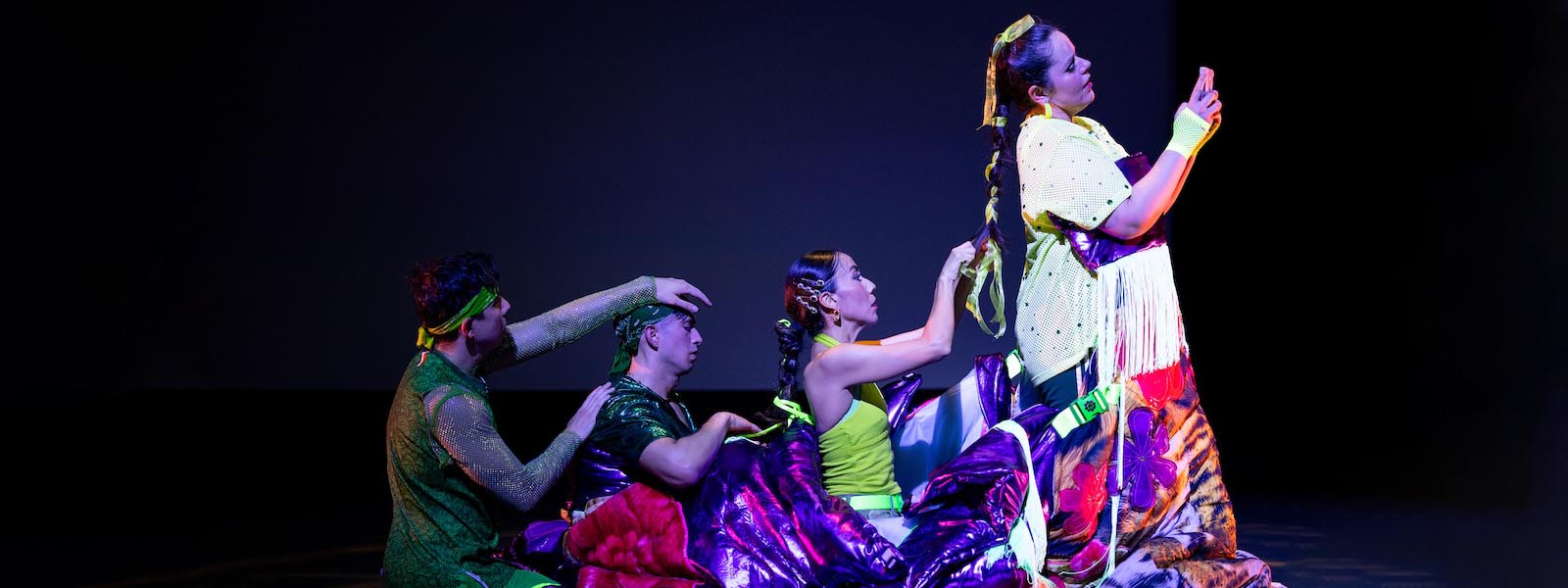
Primera Generación Dance Collective, “NOStalgia POP," Photo: Angel Origgi
Pier Carlo: You mentioned living in the Midwest now. At this point, you must have met other first-generation Midwestern Mexican Americans. [Alfonso and Irvin laugh.] Is there a little bit of a culture shock there? What have you learned from that particular demographic that you might not have known before, or is there a commonality just in general?
Alfonso: I’ve worked at different institutions, so each time I go, it’s been a shock for me, especially having lived in California and having started creating work there where a large portion of the demographic are Mexicanos, Latine. When I first left, I was like, “Oh, how does my work translate to this space and to these people?”
Right now in Columbus, OH, it’s been interesting because we have what we call here the Center for Latin American Studies, which is a group of professors who work in their different mediums. I think that’s been a really central focus point of grounding us in terms of how our work can be seen and building connections and networking with them.
Pier Carlo: That’s an institute at the university?
Alfonso: It’s a little department, I would say.
Pier Carlo: I see.
Alfonso: But as for our students, it was a little bit of a surprise or a shock because I would never know that most of them are mixed-race. A lot of them have some Latine background, but as they would say, they’ve never needed to use it or felt comfortable, I guess, speaking Spanish or understanding why they would need to do that, because I think it was the code-switching for them living in the Midwest. They just acknowledged a little bit more of the white perspective because that’s what was going to help navigate them a little bit more.
Irvin: Within that too, I think it also just speaks to working with first-gen students in general, because I think the beautiful part has been seeing the ways in which being first generation in different parts of the country shows up differently. It also just reminds us that even within the proximity of working in the same studio in Southern California with our collective members, there were already so many differences that those differences become much more vast across the country. It was a beautiful reminder too, coming to work in the Midwest, that Latinidad is not a monolith. The ways in which Latinidad is constructed in somewhere like Columbus, OH is very different from growing up in Southern California next to the border, and so it was nice to see that play out in conversations.
I’ve always been a proponent of the ways in which communities come together to help strengthen and embolden identities. There’s something in us coming together and encouraging students and those students encouraging us to continue to rebel and dive into the nuances in our identities and use that as platforms for artmaking that has been really generative and beautiful. Because we’ve also come across other first-gen students with different cultural backgrounds. Their parents might be from the Czech Republic, and so what does it mean to engage those aesthetics in your movement and how can we encourage you to make that a central part of your artmaking practice?
It’s been really nice being in the Midwest and engaging in those conversations because it also allows us to grow in our own definitions of what being first-gen artists is.
Pier Carlo: What’s next on your plate? What are you excited about? What have you yet to do?
Alfonso: I think you would probably get four different answers if our other two members were here as well. Speaking for myself, something that I’m really hoping to start with the collective again is to perhaps build, I think, a new full evening-length work. What that is yet, I don’t know, but I think that’s exciting for me because we always start with kind of an “I don’t know what it’s going to be yet,” and the play and the messiness happens on its own. I’m really excited to see what it means for us to get back in the studio again in the upcoming year, especially because we’ll probably be entering a different era for ourselves.
But another thing for me that I think I do want to continue doing with the collective is to continue touring a little bit more. Irvin’s been sharing a little bit more about, what does it mean to bring on other first-generation dancers or artists to be like a mini PGDC or to take up our space? And what does it mean to dance and share space with other dancers who are maybe going through a similar journey? That is a conversation and a movement conversation I’m excited to have, just to see where that goes for us, because I feel like that would be the new pathway, the new trajectory of how Primera continues to exist. Can it exist if it’s not us four, and how does that continue to mold and how does that continue to thrive in its own way to open pathways for perhaps other people a little bit more?
Irvin: As for me, I feel like I am excited to do it all. I want to do it all, [he laughs] and I guess what I mean by that is we’ve really dived into different aspects of what being an artist is, but even 10 years into the game is still such an early-career moment for us that I’m curious to see where we take our curational skills, where we take our choreographic skills, where we take our fundraising skills.
A lot of that has to do with continuing to be a part of and perform within different institutions across the U.S. I think while many doors have been open for us, there’s still a lot of inequity within the artistic landscape, and I think just with our new administration, we’re also seeing shifts in funding, shifts in grant support, and so I’m curious to see how that’s going to impact Black and Brown artists in the U.S.
Our collective is dedicated to the Latine artists that came before us. I grew up hearing about Asco through textbooks, or I grew up seeing people like Rosie Herrera and CONTRA-TIEMPO on YouTube, and so there’s something really beautiful about continuing to form a part of that legacy of Latinidad and badass Latine artmakers. I want to be able to do that through all the different skills that we engage with in our collective.
June 25, 2025
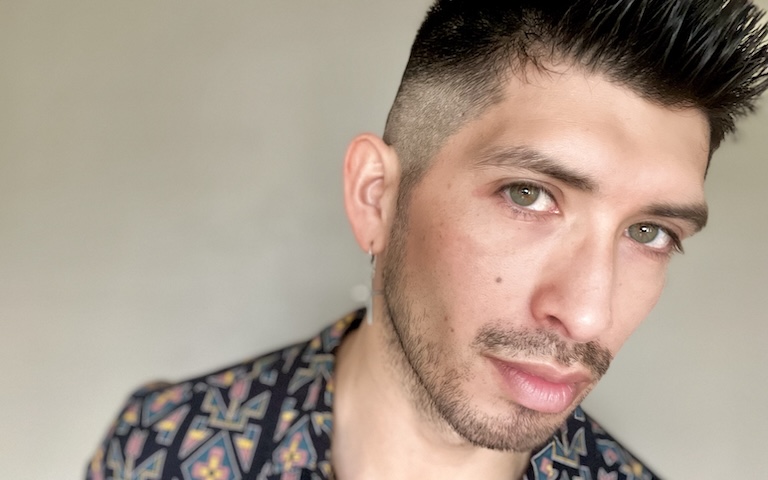
Alfonso Cervera
Co-founder, Primera Generación Dance Collective
Alfonso Cervera (he/él/they/elle) is a first-generation Queer Mexican American performer, educator, curator, and activist. His work is grounded in the intersection of cultural tradition, embodied memory, and radical futurity. Cervera specializes in bridging Mexican Ballet Folklorico, Afro-Latine social dance, and contemporary aesthetics through a hybrid methodology called Poc-Chuc. A Yucatec Mayan dish that is metaphorically reflective of his layered choreographic approach. His technique, Poc-Chuc, fuses concert and social dance as a pedagogical, technical, and choreographic tool that centers Queer and Latinx embodiment. His practice reimagines folklorico through queerness, satire, and joy, proposing new forms of movement-based resistance and liberation. Cervera is a co-founder of Primera Generación Dance Collective, which was named one of Dance Magazine’s 25 to Watch in 2025. He currently serves as an Assistant Professor of Dance at The Ohio State University, where he mentors emerging artists and expands curriculum through Latinx-centered methodologies. His work has been supported by the Artist Trust, Greater Columbus Arts Council, National Endowment for the Arts, California Arts Council, and other national and international organizations. His performances and research have been presented across the U.S. and internationally, with a focus on community engagement, storytelling, and the archiving of Queer Mexican American dance histories. Whether on stage, in the studio, or in community settings, Cervera builds bridges between ancestry and futurism, always centering multiplicity, hybridity, and cultural visibility.
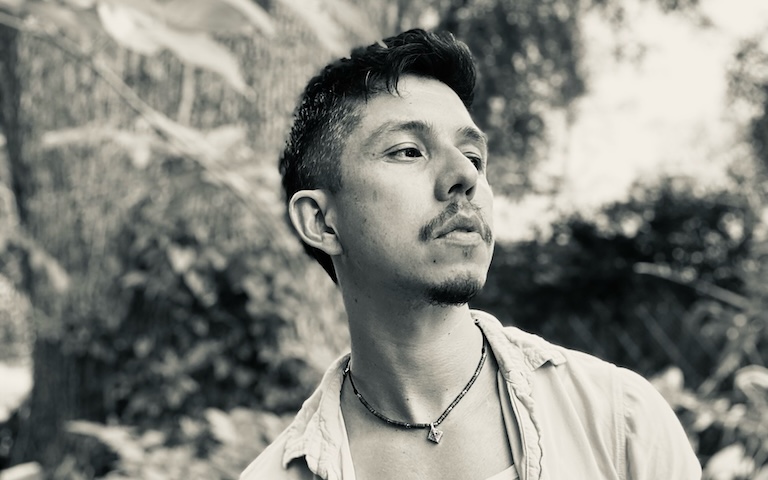
Irvin Manuel Gonzalez
Co-founder, Primera Generación Dance Collective
Irvin Manuel Gonzalez (he/él/they/elle) is an artivist, scholar, community organizer, and Assistant Professor at The Ohio State University. Gonzalez’s research examines how immigrant, queer, and working-class Latin American social dancers navigate hegemonic forces through feeling and creativity, with a focus on how dancers construct transborder affective topographies of home. His current research project theorizes how maneras de ser (ways of being) expressed through Mexican/Mexican American quebradita dancing can offer innovative approaches to prison abolition, migrant activism, and transnational belonging. As an artist, Gonzalez grounds his work in rasquachismo—a working-class Chicanx sensibility—developing strategies and collaborations that challenge conventional uses of materials, connections, and identities. Gonzalez has had the honor of presenting work at Dance Studies Association conferences, Redcat (LA), HIGHWAYS Performance Space (LA), Kennedy Center for the Arts (DC), Bootleg Theater (LA), Dance Mission Theater (SF), Human Resources (LA), Judson Church for Movement Research (NYC), Odyssey Theatre Ensemble (LA), El Teatro Campesino (CA), CounterPulse (SF), and most recently at Critical Resistance in Oakland, CA Gonzalez’s writings have been published in El Camino Real, Theatre Journal, Dance Research Journal, and several edited volumes. Gonzalez is also a founding member of Primera Generación Dance Collective, which has received the National Endowment for the Arts Award and was named to Dance Magazine's 25 to Watch in 2025.
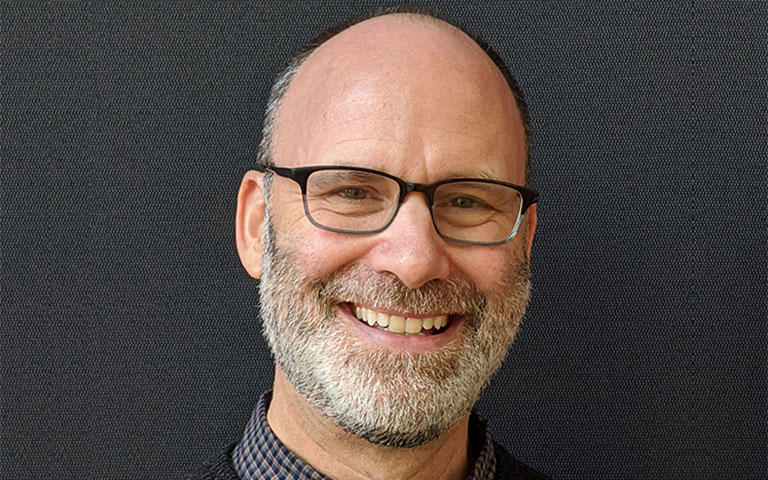
Pier Carlo Talenti
Podcast Producer & Host
Until 2016 Pier Carlo Talenti was the director of new play development at Center Theatre Group in Los Angeles where he oversaw one of the country’s most vigorous new-play commissioning programs. Over 20 years he developed scores of new works for the theater by the some of the country’s most innovative theater artists, and his combination salon/playwriting group, the Writers’ Workshop, counts among its alumni/ae extraordinary playwrights who are also currently producing and writing TV’s most exciting shows. He is currently a resident of Hillsborough, NC, where he is pursuing his own creative projects.