Wellspring of Change: Shanai Matteson on Art and Place
Listen to the interview on Apple, Spotify, or your listening platform of choice. Captioned interviews are available on YouTube.
The views and opinions expressed by speakers and presenters in connection with Art Restart are their own, and not an endorsement by the Thomas S. Kenan Institute for the Arts and the UNC School of the Arts. This interview has been edited for length and clarity.
Few artists have woven their creative practice so seamlessly into the fabric of their home place as Shanai Matteson. A visual artist, writer, community-based researcher and environmental-justice organizer, Shanai works in northern Minnesota’s rural Aitkin County, where she was born and raised. Her projects — whether they take the form of printmaking, collaborative public art, documentary storytelling or social gathering spaces — are grounded in reciprocity, ecological care and the conviction that creativity can help repair the frayed relationships between people, land and water.
Over the past two decades, Shanai has co-founded and led some of the region’s most inventive and socially engaged cultural initiatives. Her celebrated Water Bar has invited thousands in her community and around the state to “belly up” for a free tasting flight of water while discussing water equity and environmental health with scientists, activists and even policymakers. Her mobile mine-view platform, Overburden/Overlook, offers overlooked histories and community perspectives on the extractive industries that have shaped the Iron Range. And her newest collaboration, Fire in the Village — co-led with Anishinaabe artist Annie Humphrey — bridges Native and non-Native communities through art, music and the radical act of gathering around metaphorical and literal shared fires.
In this interview, Shanai reflects on what it means to create art that belongs to a place and its people, how frontline activism reshaped her approach to community organizing and why persistence matters more than perfection. She also shares lessons from years of linking art, science and public policy and explains why, in her corner of rural Minnesota, tending to one another may be our surest path to a more just and sustainable future.
Pier Carlo Talenti: I know you’re currently on the road. Where are you speaking to me from?
Shanai Matteson: Right now, I am parked in a pickup truck that is pulling my public art sculpture in Minneapolis. I’m on the south side of Minneapolis.
Pier Carlo: Tell me about the sculpture that you’re pulling.
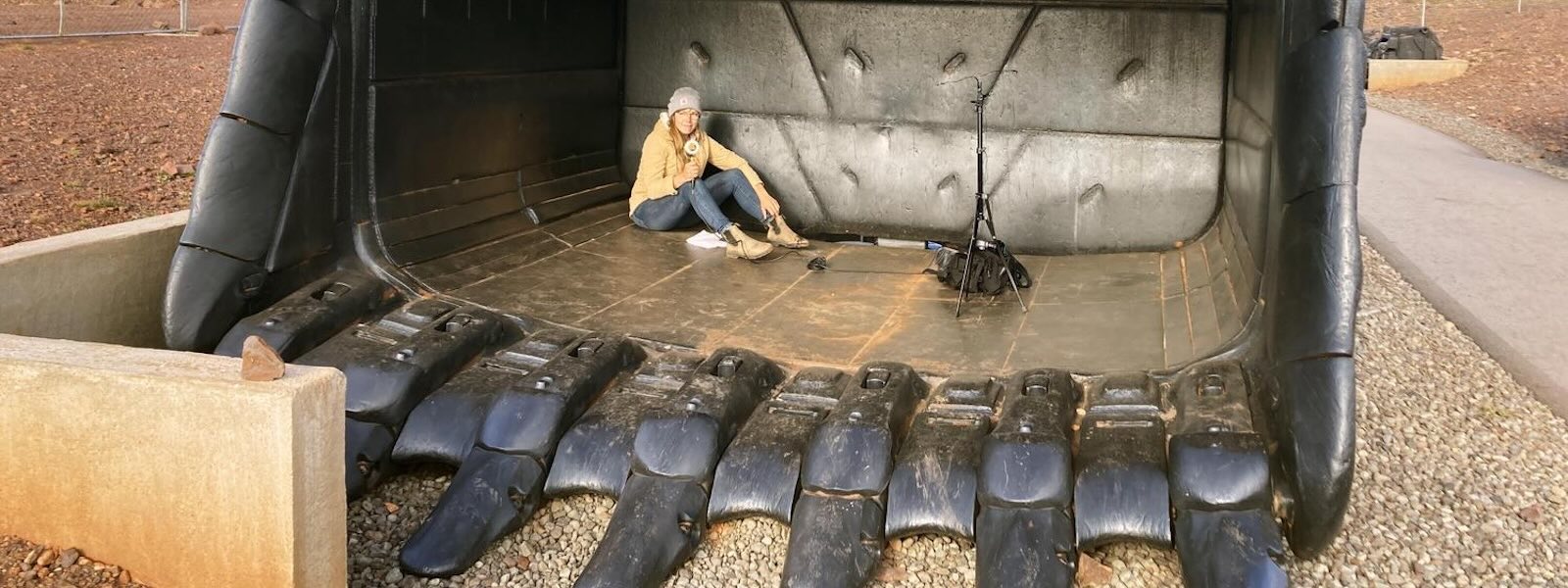
Shanai: This is part of a project that has been multiple years in the making. I call it Overburden/Overlook. It’s a mobile mine view, and it’s also a platform where we talk about lots of different things related to art, culture, community organizing and politics. It’s on a flatbed trailer that I pull behind a truck, and then I can host these pop-up conversations wherever I take it.
Pier Carlo: How long did it take you to develop that mobile aspect of the project?
Shanai: That aspect of the project really grew out of a couple of years of research and development work with a collaborator, Roopali Phadke, who’s a social scientist. She and I were working on a project together up on Minnesota’s Iron Range, looking at the impacts of mining on environment but also on community, economy, culture. After having multiple art workshops and talking circles and focus groups with community members there, we developed this project that was an overlook for the overlooked, a way of talking about the stories, the connections to mining that don’t get put on official memorial sites.
If you drive across the Iron Range — and I assume other mining impacted communities — you see these platforms that invite you to climb up and have a commanding view of the landscape. Usually there’s a plaque that tells you how much ore was extracted and what it was used for, which is usually about building cities or supporting military infrastructure or economic infrastructure. Those plaques rarely tell you the impact that that mining had on the labor force or some of the social histories. It doesn’t usually tell you about how that mining impacted clean water or women, for instance. Those were some of the threads that we encountered during that research that then became part of the project itself.
Pier Carlo: So you created a metaphoric platform to discuss these things that people see on the plaque on the literal platform.
Shanai: Yeah. I bring the project around and I talk about some of my ways of doing this work, but then I also have tour guides who are members of the community where we are — part of the project is to engage local guides — and so they’re telling the stories that are overlooked. They’re sharing their memories of the landscape and the changes to the culture and to the community that have come from extractive industries like mining. I’ve also used the platform to talk about other types of things too, but it was developed as a mine view to talk about mining.
Pier Carlo: Since your work is so closely intertwined into the fabric of your community, to the people and its resources and its ecology, I’d love it if you could describe where your home is, what it looks like, what the people are like.
Shanai: I grew up in rural Aitkin County, which is a county in north-central Minnesota. It is geographically one of the larger counties in Minnesota. I grew up in a town called Palisade, which has about 140 people in it. Many of them are my family. [She laughs.] That’s the town where my mother was born and raised, where my grandmother was born and raised, and where my great-grandmother and her husband settled, so my family’s been in the community for a number of generations.
It’s a very wet place. It’s on the Mississippi River, and the Mississippi River and protecting water have been a big part of my work because the place I grew up is so water-rich and the ecology is very abundant. I think when people think of swamps and wetlands and lowlands, they think of these lonely places. And it’s true that the population in Aitkin County is very sparse. It’s considered a frontier county by the state of Minnesota, which means that the population density is so low that people there face unique challenges in regard to access to healthcare or other services, but it is in fact a very abundant ecology and the life there is really incredible.
It’s also Anishinaabe treaty territory, which is something that I didn’t really understand or realize growing up but have since come to some understanding of through my relationships with Indigenous artists and activists. It’s in 1855 treaty territory, and Anishinaabe people retain their inherent rights to hunt, fish and gather in the territory.
Pier Carlo: And that’s been true since 1855?
Shanai: Yeah, that was in the 1855 treaty.
Pier Carlo: One of the few treaties that, apparently, we didn’t break.
Shanai: Well, some of the activist work that I’ve been a part of in the frontline struggles around the Line 3 oil pipeline or around the proposed nickel sulfide mine in Aitkin County, for example, really makes it clear that although that is what is written into the treaties, those treaty responsibilities are not being upheld by our United States government and Anishinaabe people are still struggling for their inherent rights to be recognized and honored. A big part of a lot of the work that I do is really trying to understand for myself and also encourage others to understand what it means to be a settler, what our relationship is to treaties and to treaty lands and also how to be accountable, how to join in and be a part of those struggles.
Pier Carlo: I don’t know the history of the pipeline. What was the outcome? Was it built?
Shanai: It was built. It was built very, very quickly. As a result of the urgency with which they built this pipeline, there were a number of ecological impacts. The pipeline company, Enbridge, ended up puncturing several aquifers along the pipeline route, which meant that groundwater came welling up and was essentially lost into rivers and streams. They ended up fracking out, which means while they were drilling underneath rivers like the Mississippi and the Willow River, they spilled drilling fluids into the underground streams and aquifers and some of that came bubbling up to the surface. There were a number of those kinds of impacts.
They also faced a lot of resistance. It was a pretty big movement of people coming from all across the country to stand with Anishinaabe protectors to try and stop the pipeline. Although the pipeline wasn’t stopped and it was built, I think that a lot of ... I know I personally learned a lot about arts-and-culture-and-community organizing in a rural community like that.
Pier Carlo: Can you give me examples of what you learned from that experience?
Shanai: One thing I learned was that it’s a really difficult situation when you have a movement that is comprised of people who are primarily coming from somewhere else for a short period of time in order to participate in action. And then you have a local community, Native and non-Native people, who have been living there, who live there all year, who live there all the time. And the disruption of the construction itself. There were also thousands of workers who came to the community from all over the country.
That was really challenging for local communities. I don’t think there was much organizing done in advance of that to try and involve local community members or to try to build movement on the ground so that local people who might be opposed to the pipeline or opposed to rampant extraction, opposed to police abuses of power, would be invited to participate. I don’t know quite how to describe it, but I learned that I want to be involved in long-term organizing. I don’t want to be going from place to place and to communities where I don’t know the ecology and I don’t know the local people. I want to be working in a place where I’m building relationships locally, I’m helping to identify local leadership and I’m encouraging local organizing. For me that was the big takeaway.
Most of the people who were involved in the Line 3 movement left the community after the pipeline was built, and I think that was also really hard for those activists and organizers who stayed in the community because they suddenly were very isolated and alone again.
Pier Carlo: Abandoned.
Shanai: Yeah, feeling very abandoned. And so I decided I would stay and get more engaged. I started doing other types of community organizing in order to get to know more of my neighbors and build up some longer-term mutual aid type of networks in the community.
Pier Carlo: Which is a tremendous amount of work, so how does it fold into what you think of as your own artistic practice?
Shanai: I think my artistic practice has always really been about connecting with local places and stories and using the tools that I have available to me as an artist to try to bring some of those stories to the surface, to amplify overlooked or absent narrative and to try to create spaces where people can connect with each other and can learn their own creative power or understand how participating in arts-and-culture projects builds a different recognition in a community. I think more than anything, all of the work that I had done with the Water Bar Project, with some of this research on the Iron Range with media and storytelling, I brought that home, and I’ve been working to try to put those tools and strategies into the hands of local artists and organizers.
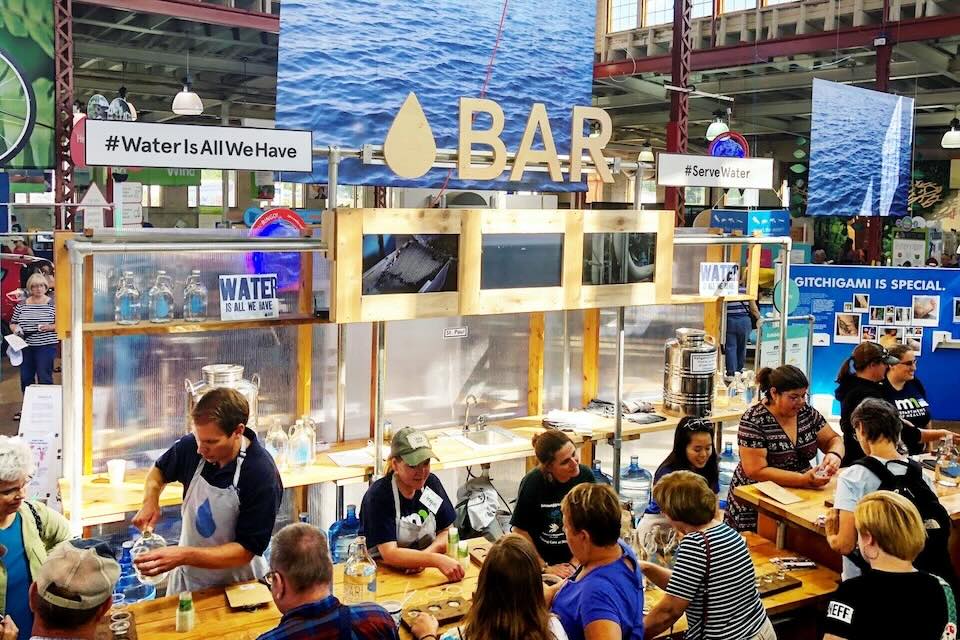
Water Bar at the Minnesota State Fair
Pier Carlo: Well, you mentioned the Water Bar, so I want to make sure we understand exactly what that is.
Shanai: The Water Bar Project started in Minneapolis when my collaborator, Colin Kloecker, and I were like, “What can we do to get people to understand that they are intimately connected to the Mississippi River?” And we thought, “OK, what if we took water directly out of the river and we put it through a filtration system and then we created a little speakeasy where we served that filtered water to people and had conversations about what’s going on with the river, about the impacts of pollution or upstream industry?”
Then we started talking to scientists that we knew and people who were involved in water issues and we shared this idea, and they were like, “You know that the City of Minneapolis already does that. That’s what your tap water is.” [She laughs.] And I was like, “Whoa.” I think I knew that Minneapolis got its drinking water from the Mississippi, but it never occurred to me that that would be something to organize around.
Pier Carlo: The fact that you didn’t know that means most Minneapolitans did not know as well.
Shanai: Yeah, over time, I came to realize most people don’t know where their water comes from. They think that they turn on the tap, and if they’re fortunate enough, if they aren’t living in a place where the water infrastructure has been decimated — I’ve also come to realize that there’s a lot of those places — clean water comes out and you don’t really need to think about it. Or you don’t trust the tap water, and so your drinking water comes from a plastic bottle that you buy at the store. Most people don’t really get much deeper than that.
And so we started to think of the project as a platform where people could be offered free drinking-water samples gathered from different communities and the menu for the Water Bar would tell you where that water was gathered from, which municipality or spring or well, and whether it was groundwater or surface water as well as the name of that surface water source, like the Mississippi River or Lake Superior. We would just offer that to people in a similar way to coming up to a bar and ordering a tasting flight, and then while they were tasting, we would have all kinds of conversations. The conversations would really meander based on what water we were serving, but also who we had behind the bar.
Initially, I was thinking we were the bartenders. Artists. But pretty quickly we learned that it was much more powerful to have other people behind the bar serving the water, like geologists who could tell us about groundwater, activists who were fighting for clean water in their communities, people who had really interesting professional connections to water. We started to think of the bartending aspect of Water Bar as almost its own community space where we would learn together. We started partnering with different organizations to do these water-bartender trainings where we would do night school for bartenders that involved learning about the sources of water and the contaminants and the risks and the stories of the people who are impacted by all of that.
I think over the course of the last eight years, Water Bar itself has served thousands of people. We ended up doing a Water Bar at the Minnesota State Fair, where we served 25,000 people each year for three years.
Pier Carlo: Wow, so you’ve got a mobile setup.
Shanai: Yeah, we ended up having a mobile setup. We ended up developing a pop-up kit that is still being used by other organizations. We ended up opening a storefront space for a couple of years where we had a Water Bar that people could come and visit, and we used that as a studio and community-gathering space. Then we inspired a number of municipalities across the country to open their own Water Bar projects. The City of Philadelphia has a Water Bar that’s based on our work. The City of Minneapolis has used some of our strategies in their own education and engagement. We ended up joining the U.S. Water Alliance and working with water advocates across the country to try to develop ways that arts-and-culture strategies can help encourage education, engagement and empowerment around water equity.
Pier Carlo: Do you get a sense that the communities or the people that have been able to enjoy the Water Bar have been able to effect policy change, that they’re writing to their representatives, that there’s a groundswell of change perhaps?
Shanai: I think that that has happened in some cases, but I think the other way that policy change happens through projects like Water Bar is that we actually got the policymakers to step behind the bar.
Pier Carlo: Oh, great.
Shanai: And that was not something that I had planned. When we initially started the project, I thought artists would be behind the bar, but we ended up having our governor, Tim Walz, and lieutenant governor, Peggy Flanagan, actually step behind the bar at one point during a pop-up that we did in collaboration with the Minnesota State Public Health Department. We invited policymakers to step behind the bar and be in a role of literally serving their constituents water and to listen to the stories that people had, not just about how they had experienced a water crisis but also how they did not trust the government to protect our health in a lot of cases. A big part of the conversation is, “Why do we not trust our tap water?” One reason is that in a lot of cities and a lot of communities, you can’t drink the tap water because the infrastructure has been so underfunded and it hasn’t been cared for. And there are these deep disparities.
Pier Carlo: Like in Flint, MI, and I’m sure there’s plenty of other examples.
Shanai: Yeah, Flint is a great example. There’s also a lot of communities, a lot of Native communities across the country on reservations where the infrastructure has not been funded. That’s a very intentional way that the United States government has kept Indigenous people in that position of precarity. There’s a lot of that.
By putting policymakers behind the bar, we are involving them in a different way in understanding their work, and I do think that that has led to different changes. And not just policymakers but also the people who work for those public agencies, the organizers who work for advocacy groups. It has given them a very different way of connecting with community. I think that’s where the power is of these projects.
Pier Carlo: Under your name on your website, you’ve listed four nouns: art, ecology, care and community. I want to talk about self-care. How do you make sure you build self-care into your practice?
Shanai: I saw that question on your list. [She laughs.]
Pier Carlo: And you were like, “Oh… .”
Shanai: And I’m like, “Oh.” This is the part where I have to admit that this is a growing edge for me. This is hard for me.
Pier Carlo: I’m glad I asked it.
Shanai: It’s one of those things where I know that this is important, and I talk about it to other people a lot, but I think like a lot of mothers and a lot of artists and activists, I do end up giving more of my energy to these community projects than I return to myself sometimes. And it means that I have experienced burnout.
At the end of the Line 3 struggle, I was burnt out. I had a really, really hard time, and a lot of my relationship suffered as a result of that. And I wasn’t alone.
Pier Carlo: Well, especially since the project did not end the way you wished. It must have been crushing.
Shanai: Right. It was, it was. And I know that there was a lot of trauma involved in those environments and spaces as well. It takes intention and healing following those kinds of ruptures, and I’m still learning how to do that for myself.
I do think that some of my relationships with artists and activists who I think of as mentors have really encouraged me to not give up. Even if I fail to do that and I crash out, I just have to remember that there are things I can do to bring myself back. Some of the things that I do when I am sensing that I need that kind of self-care is being in nature, remembering my connection. And not just going out into the wilderness, because I really don’t believe in nature as something that is separate from us, but remembering that I can cook food together with my kids; I can spend time outside; I can notice the feeling of the sun on my face and listen to the wind in the trees. This is all stuff that will help bring me back into the present moment when my mind is racing or I’m thinking about the next thing that needs to be done.
So really, really trying to carve out more of that type of time for myself. And then remembering that my relationship with my children is really a source of healing and inspiration for me, and to really just honor them.
Pier Carlo: What advice would you have for an artist in a rural community somewhere else in the country who thinks, “Oh, I should do a version of the Water Bar,” or, “I should do a version of the Overlook/Overburden mines project”?
Shanai: In all of the projects that I do, like Water Bar or this mobile mine view, I work with so many people. I collaborate on them, and so by the time they come to life, I never think of them as mine. I think of them as if they belong to the people. And so if somebody hears about one of these projects and wants to replicate it, change it, do it in their own way, I encourage that 100%. Nobody needs to reach out to me to ask for my permission. Hopefully I’ve put enough out into the world that will help them learn something, that will help them do that. And I also love to see when people do those things. I get photos sometimes, like, “Hey, I’m doing a water bar over here.” And I love that. So I would say that about those projects.
But the other thing is, don’t underestimate the power of your artwork and your community work to help other people imagine new worlds. Because I think that in addition to the dismantling of government, to the fearmongering that’s happening right now in all of our places, there’s also this dispiriting discouragement, this idea that nothing we do matters, that we’re not going to be able to fight these monsters. I think that losing hope and not imagining a different world is what is going to stop us from creating it. We can’t create something different if we don’t even imagine it.
Artists and culture bearers and people who create spaces for that, they are the ones who have to help us imagine a different direction. I think that is really, really important. And it’s hard. So persistence, not perfection. I think about how many times I’ve tried things that didn’t work. Early on when I was doing this kind of arts organizing work, I would get really down. I would crash out every time I had an event. Even if it went well, I would feel this feeling of like, “Oh my God, that didn’t go the way I imagined it. That person didn’t show up. There weren’t that many people there.” I was running around instead of being present, and I would get really down on myself.
But over time, I’ve really tried to let go of those kinds of judgments and just be in the space and know that it’s not perfect. Nothing is perfect, but you’re showing people a different way of doing things, and you’re giving them a chance to be in that space. Over time, I have seen it transform not only individuals but also relationships and communities. People get braver, they get more connected and they start to understand that the resources and tools that we need are here. We just need to figure out how to access them, and we need to be brave enough to use them, even when there are all kinds of signals telling us that we can’t do that.
Persistence and showing up. Just showing up for your community and, like you were saying about self-care, showing up for yourself too. And making sure that you’re not giving everything at the expense of some of the core relationships that you need to survive and be well.
Pier Carlo: Lastly, looking at over the next year, if it doesn’t send you into a panic [laughing], is there any new project or ongoing project or event that you’re particularly looking forward to?
Shanai: Yes, I am excited about the work that I’m doing with Annie Humphrey at Fire in the Village. I didn’t talk much about that, but Annie is also an artist, a mother, a grandmother. She’s Anishinaabe from the Leech Lake Reservation, and she is a student of John Trudell, who was an Indigenous poet, philosopher, musician and artist. She’s really carrying John’s legacy forward, and she’s helping the next generation of Native and non-Native artists and activists really come into their power. I’ve been working really closely with Annie to figure out how we bridge the Native and non-Native communities in our rural region, which is not just Aitkin County but also Anishinaabe territory across Northern Minnesota.
We’re going out, and we’re doing a lot of pop-ups. We’re doing printmaking, we’re teaching art and music, but we’re also always demonstrating a different way of gathering. We call it Fire in the Village because it is that fire that we all tend to both within ourselves and as a community that is like a light in the darkness. If we all tend to our little fires, then we can go over here and recognize, “This is what’s happening in this community, and this is what’s happening here and this is how we support each other.”
I really feel like that is one recipe for how we are going to survive the collapse of capitalism [she laughs] and the emergence of something that is hopefully much better, much more caring, much more place-based and aware of its dependency on the earth and the water and the animals and other people.
August 27, 2025
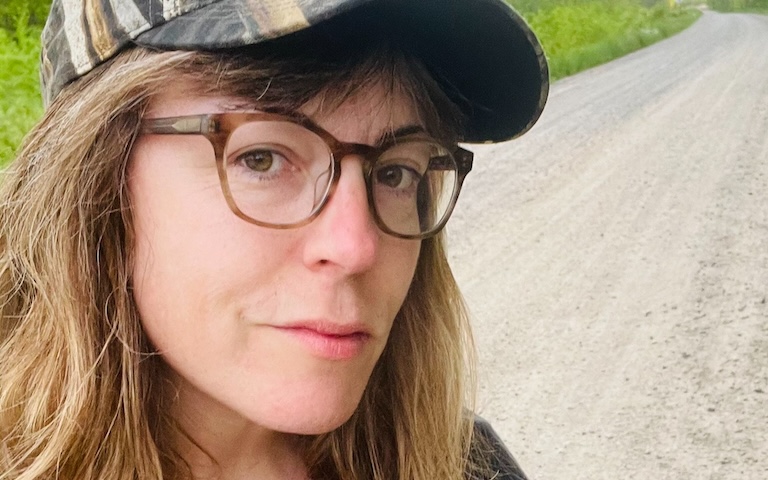
Shanai Matteson
Artist, Writer, Educator, and Organizer
Shanai Matteson (she/her) is a public artist, writer, educator and cultural organizer. She lives in rural Aitkin County, Minnesota, where she grew-up. Shanai is one of the founding artists of Fire in the Village, an arts and cultural organizing collective based in Anishinaabe territory, or northern Minnesota – as well as the public art projects Water Bar and Talon Mine Tours. In her leadership roles, Shanai works with organizations and communities to imagine and develop social spaces, engagement strategies, campaigns and collaborations at the intersection of cultural wellness, community health, and social justice. As an artist, she creates multidisciplinary art and storytelling projects that are rooted in place and purpose. Her work focuses on climate justice, honoring treaty responsibilities, and the power of nourishing relationships and creativity in rural places.
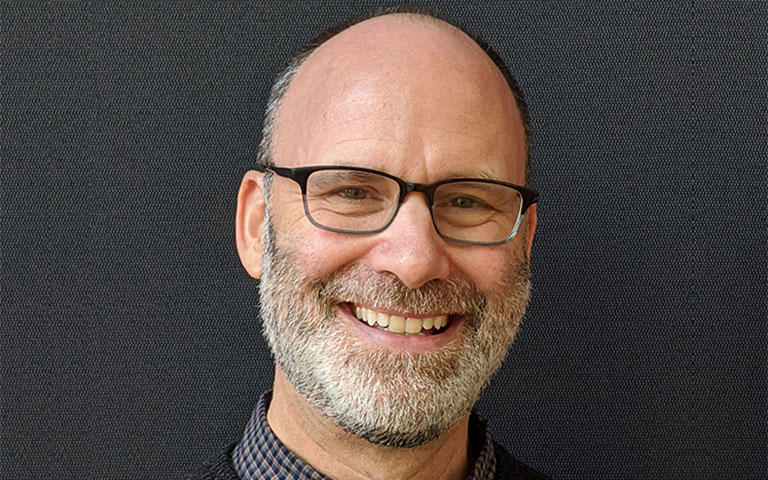
Pier Carlo Talenti
Podcast Producer & Host
Until 2016 Pier Carlo Talenti was the director of new play development at Center Theatre Group in Los Angeles where he oversaw one of the country’s most vigorous new-play commissioning programs. Over 20 years he developed scores of new works for the theater by the some of the country’s most innovative theater artists, and his combination salon/playwriting group, the Writers’ Workshop, counts among its alumni/ae extraordinary playwrights who are also currently producing and writing TV’s most exciting shows. He is currently a resident of Hillsborough, NC, where he is pursuing his own creative projects.