
Inside and Outside the Box with Sherrill Roland
Listen to the interview on Apple, Spotify, or your listening platform of choice. Captioned interviews are available on YouTube.
The views and opinions expressed by speakers and presenters in connection with Art Restart are their own, and not an endorsement by the Thomas S. Kenan Institute for the Arts and the UNC School of the Arts. This interview has been edited for length and clarity.
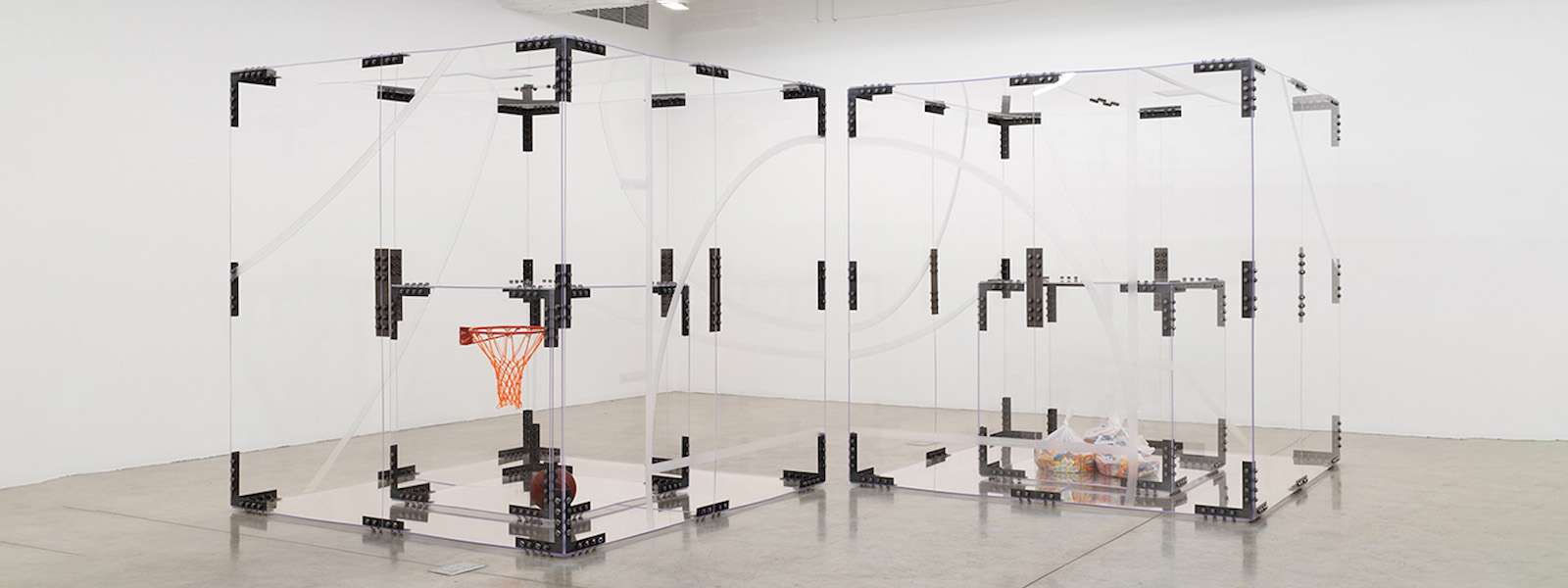
When artist Sherrill Roland returned to grad school at University of North Carolina at Greensboro after nearly a year in jail for a crime he didn’t commit, he found himself haunted by the invisible weight of his experience. Determined to confront how incarceration had reshaped his body, psyche and place in the world, with the encouragement of artist Sheryl Oring, who was then on faculty, he turned that burden into "The Jumpsuit Project," a performance in which he wore an orange prison uniform on campus every day for a year. The project soon expanded beyond the university to public spaces across the country, where Roland sat inside a 7-by-9-foot square of orange tape, an echo of a prison cell, and invited passersby to step inside and talk with him, transforming uncomfortable encounters into moments of shared reflection and empathy.
In the years since, Roland has become one of the most prominent conceptual artists in the South, translating that raw act of endurance into a studio practice that explores the architecture of confinement, the language of data and the humanity hidden within systems of control. His work, which is now in the collections of major museums including the Studio Museum in Harlem and the North Carolina Museum of Art, asks how objects and numbers can embody both memory and freedom.
In this interview, Roland speaks about the fear and necessity of donning the orange jumpsuit, the emotional toll of transforming personal pain into public conversation, and how his practice continues to evolve toward accessibility, dialogue and compassion.
Pier Carlo Talenti: What were the first interactions with the public like when you first put the orange jumpsuit on at UNC Greensboro?
Sherrill Roland: It took a while. My social media platform on Facebook had a “Jumpsuit Project” attached to this MFA thesis project, and it went live the first day of school. But I couldn't wear the jumpsuit the first day of school because the university caught wind of this project, because I’d explained it to them in my statement of purpose. I wasn't hiding it from the university per se, but they caught wind of it and they red-flagged my enrollment. I said I had been incarcerated, and so they checked my application, and they were like, "But you didn't check that you've been convicted." I was like, “Legally I don't have to do that because I'm exonerated. Which is all in my statement of purpose. The motivation of why I wanted to do the project is that I had been taken out of school, wrongfully incarcerated, and now I'm exonerated and want to do this work.”
And so they read it, but then they just triple-checked, “Are you lying?” And I was like, "No."
Pier Carlo: They just saw the word incarcerated, and all the red flags went up.
Sherrill: [He laughs.] Yeah, so the university put me through a number of additional third-party background checks.
Pier Carlo: Oh my god, it must have felt like being back in court for you.
Sherrill: Absolutely. Absolutely. Me in conversation with an entity, not a person, you know? There was not a person I could be angry with, or it felt like there wasn’t anybody directly speaking with me. It felt like this invisible, huge system. We asked the right questions. There is a registration deadline that needs to be met by every student, and since this third-party background-check notification came after the first day of school, it limited my window. The university had no control of the speed at which this third party could give them the information that my background check had cleared. If that information didn't come before my last day of registration, they would make no exception for me to get enrolled.
So the first two weeks of school was just waiting for this background check to do the thing that I'm telling them, the truth that nothing should come up. But it also brought up interesting questions about my past as a youth. They were like, "Well, this isn't really about the thing you're talking about. If anything is on your record, they could use it against you as saying you're lying.” Or something like that. So it got really interesting. But nonetheless, my background check came the day before the deadline and cleared, and so the next week, the third week of school, I finally put on the jumpsuit.
That morning, [laughing] it took me a while to do it. It's one thing to say it; it's another thing to do it. I’d been saying it, and it had been building, and then we went through this thing with the university that put a little damper on the mood or team morale but more so underlined the motivation of why it was necessary for me to do this.
I put on the jumpsuit early in my studio. I drove to campus in regular clothes, went to my studio, changed into the jumpsuit and walked out to the atrium of the building. It was really early, like 9:00 a.m. or something. It was just one of those metaphorical game-day things where you can't sleep the night before, so I was up early. And Sheryl came, which wasn't planned. She showed up for me and was like, "I just couldn't let you walk out here by yourself on the first day." She showed up for me, and she walked with me on the first day on campus, me wearing that orange jumpsuit to the library.
It was so eerie. Class was in session, so nobody was out there. We were walking through a beautiful fall morning in Greensboro, NC, slightly crisp, light, foggy type of feeling, with the sun breaking through the trees. Very picturesque, empty, vacant campus, because everybody's in class. Then as soon as we get to the backside of the library — that's huge pillars and columns and marble columns past the statue of the Lady Spartan — one person walks out of the library as we're walking up the steps.
This gentleman — he's an older white gentleman —just gives me the weirdest up-and-down look. He's really close to my body. It's not like he really has to pass me shoulder by shoulder because there's nobody around us, but because of the stare and I guess the shock of him seeing me in the suit, he's just walking straight towards me. And he just gives me the deepest up-and-down profile look. I'm looking at him, but he's not seeing me eye to eye. He's just seeing me from feet to face, looking at what I'm dressed like. I turn as I pass him, and he's still turning as he passed me, and then he just continues to look and then just walks off.
And I was like, "Jeez, that was really intense." We really just could have bumped shoulders. I looked at Sheryl and I'm like, "Did you just see that? That's the one person, the first person we see? It just got really intense." And then she was like, "Yeah, I saw that." And she's like, "You know what else is funny?" I was like, "What?" She was like, "I know him, and he knows me, and he didn't even see me standing right next to you." And that was the beginning. [He laughs.]
Pier Carlo: So you got just a tiny taste of what was going to hit you the more people saw you.
Sherrill: Yeah, and that was the first one. It was just like, “Oh, wow. This is about to be it. This is about to be quite the year.”
Pier Carlo: In “The Jumpsuit Project,” was there a particularly memorable interaction with a member of the public that felt particularly insightful in some way about something you hadn't thought of?
Sherrill: Yeah. This project has been really profound to me and to my practice. I've had a lot of visits from many different communities, but I think the one instance that always comes up to me when people ask me about one that I remember the most is a happening that never happened.
I had the opportunity to do this project outside of the Los Angeles Contemporary Exhibition space, LACE. They had a space that's on Hollywood Boulevard, I think, with the stars. I was outside of the facade. It was a few-days performance, but each day was six hours or something like that. I would just stand out there in that orange-duct-tape perimeter and just interact with people on the street. The very first day, I got all kinds of reactions and participants.
Pier Carlo: Hollywood Boulevard is its own thing.
Sherrill: Yeah, I'm right up the street from the Chinese Theater and Transformers and Spider-Man, and then I'm the guy in the orange jumpsuit. And this is an international type of street; everybody's coming from all over to see this. So language and perception. And even in the local context of Los Angeles, orange jumpsuits aren't a thing; it's more blue. And I learned all these other things just speaking with the public out there.
At the end of the first day, there was a lady who stopped by, and I spoke to her. I saw her just standing outside of this space, and I said, "Hello, there's a sign with information. Usually there's no information — it's just me — but this explains my project and why I'm out here.” She was hesitant to speak about her experience of why she's interested in my project. Then I was like, "If you can't stay today, I'm here tomorrow." If there's people around, sometimes people just don't want to share too much.
Pier Carlo: Of course.
Sherrill: So I was like, "You can come back tomorrow. I'm here tomorrow," and she was like, "Cool, yeah, I'll think about it.” And I was like, "All right." The next day, it was early and nobody was out there, and I saw her pull up and she came back. I was like, "Oh, wow, you came back!" We chatted a little bit, but I could tell she was in her mind of consideration of whether to speak. To speak, she had to step inside the box, and she was just hesitant, standing at the perimeter edge. Then she started to cry, and then she just walked away. She got in her car and drove off.
And that was always … . I'm just presenting an opportunity to talk about this stuff. She just passed and saw me on the street, and it ended up being what it was, maybe not what she thought. As an opportunity to share whatever she was dealing with, she entertained it at least for two days, but it ended up being something so great that she just couldn't do it. It just reminded me that we all have these edges or places that sometimes are just too tough to cross.
Pier Carlo: Yeah. Not everyone is ready to step into the box.
Sherrill: Yeah.
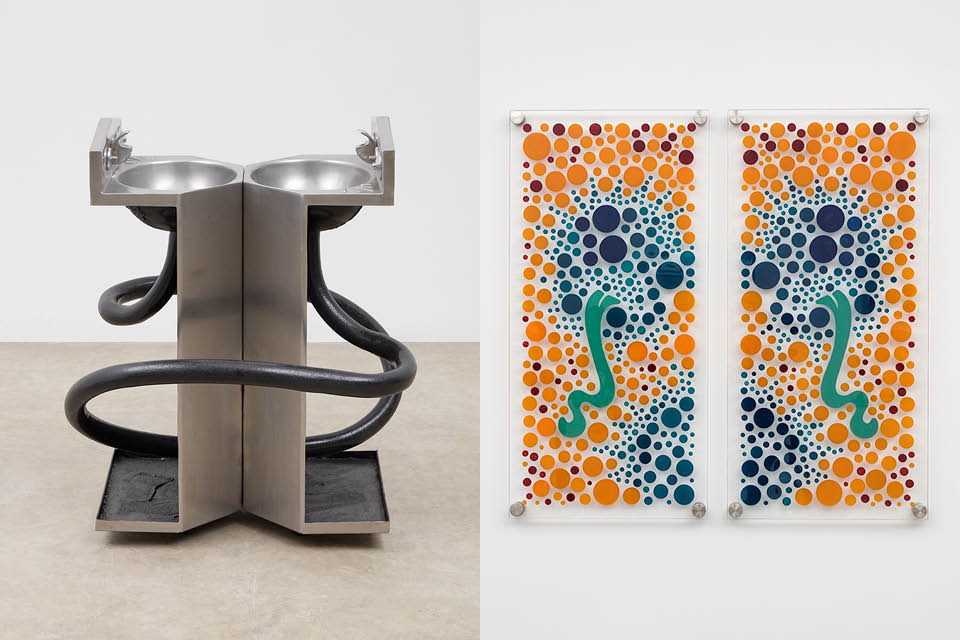
Selections from the summer 2025 exhibition “Sherrill Roland: The Turning Away From” at Tanya Bonakdar Gallery. Left image by Jason Wyche. Right image courtesy of Tanya Bonakdar Gallery.
Pier Carlo: I'd love to talk about your studio practice, your visual-art practice. I'm a puzzles guy. I saw your show at the Nasher, and I appreciated that your work has a puzzle aspect to it. Numbers and randomness and identity hidden away through a pattern of data and mazes. I'd love to talk about how you pivoted into the current work that you're doing. What were you looking to explore in this work of recent years that you had yet to explore just through “The Jumpsuit Project”?
Sherrill: What was interesting is that I wasn't really trained as a sculptor, but a lot of what I received from “The Jumpsuit Project” was everything related to my body. I had to always be conscious of my body, how more approachable I was to the public if I was seated on a stool as opposed to standing. Engagement about that. Then I also had to be aware of where I was when I was wearing this jumpsuit: if I was in a coffee shop, if I was on the side of the road. A lot of it was bodily. Then when I started to speak about these instances in public and share stories, I remembered my body in relation to the space. When I thought about working out or writing a letter, I was more aware of my body and what type of material I was sitting on that made it cold or frigid or made it feel tight or claustrophobic. So I ended up making sculpture.
The one thing I tried to be conscious of in any sculpture or object I ended up making was my body in relation to that material, so I ended up making doors with handwriting and thinking about my body and all this other stuff. When it comes down to the most recent stuff about systems, I think a lot of my practice has been very parallel with my time and experience and what happened in the past. In the beginning, everything was very close in proximity to my body. Even the sculptural work was very close to where I slept: the mattress or the door I touched or whatever.
Pier Carlo: The actual objects that you were recreating, you had once lived in close physical contact with.
Sherrill: Yeah. Even the things that look like a cinder block are about me and my body touching the wall and everything feels very much closer in proximity to the instance. So there are very direct references to my body in the happenings.
As we get to the present day, in one of the most recent shows that you spoke about, the puzzles, there are portraits of other people as well as myself, but it hasn't anything to do with my body per se. They are body-size. They represent and fill in for people, so they're at least normally around 6 feet or 5 feet in between those larger body sizes. But they are in proximity to the happening of myself, my body. They are a little bit further away.
I think my practice shows the trajectory of work that's very directly related to an orange jumpsuit and incarceration but is now more abstract and more open or just more indirect to those things and that gives more opportunities for other conversations to be in that pot with incarceration, if that makes any sense. I'm getting further and further removed from those real experiences that happened to me while I was incarcerated.
It's hard to dig deep back into those spots because where I am now is not where I was when I had the anxiety of the jumpsuit that sparked “The Jumpsuit Project” in those spaces, if this makes any sense. I think where I was at in life for the jumpsuit, that needed to happen, but I don't believe I can make something like the jumpsuit now. [He laughs.] I have other sensitivities, but not like that. Now I'm just trying to open it up, and I've inherited a lot of other people's and a larger communities’ stories about being exonerated. The show you saw at the Nasher were all portraits of other North Carolinians who've been wrongfully incarcerated and since then been exonerated.
Pier Carlo: You mentioned this network of exonerated people that you've been in contact with. I imagine there's been a lot of commonalities in the stories, but have there been stories that you've heard that really shed completely new light on what you experienced?
Sherrill: Oh yeah, absolutely. For the show at the Nasher Museum at Duke University, a lot of those gentlemen I have not met and some I have. Some of these individuals have spent most of my lifetime being wrongfully incarcerated, so I will begin to share some of the things that happened to me. I think I got a lot of experience in a short amount of time, if you think a year and some change is short.
Pier Carlo: It's a lifetime for you.
Sherrill: Yeah, it's wild to hear how some of these are similar. My happenings could just be the beginnings of somebody else's story that had gone on for so long. I'm always all ears when it comes to listening in awe because I know how much even the time that I had changed me. And to know that somebody spent my lifetime in that same space and is able to come out and use art … . Most of them have been artists; other have just been public speakers and stuff. To speak about some of these instances and things that they've experienced has just been mind-opening.
But I know that even when I was inside, most of the people that I spoke with and helped me get through the experience were not wrongfully incarcerated, but they still bestowed wisdom on me about life and how to get through the traumatic experience of being incarcerated.
Pier Carlo: Were there any other self-described artists in the prison with you?
Sherrill: Nah, I barely told people I was an artist. I mean, I rarely considered … . I drew things just as best I could. But in that space, there were a lot of folks who did innovative, creative things because we needed it. We were without a lot of things, so a lot of creativity came from people just make-shifting and doing MacGyver-esque things with food or clothing or anything, survival techniques just to make it habitable. They would've never considered themselves to be Michelin-star chefs or fine artists.
I remember getting an Artforum subscription. A friend of the family was nice enough to set me up with a subscription, and I remember getting Artforum while I was incarcerated. I remember showing Ai Weiwei's work of the sunflower seeds to people I was incarcerated with and just thinking that we could relate to this guy or this work and his practice. It's been funny what that level of engagement with art was inside that space. Context matters. I realized that and was able to ebb and flow with what was important and what was of value in that space, if that makes sense.
Pier Carlo: Has any of your visual work ever been exhibited in a prison, or are there plans to show it to some incarcerated people?
Sherrill: No, I don't think so. I've been a part of cohorts and exhibitions out here with formerly incarcerated artists that have been wonderful. When I performed in D.C., I got in contact with the Georgetown Law School, and they were able to get me access back into the jail that I was incarcerated in. But not on the side that I was on. [He laughs.] It was on a different side where folks have a little more privilege.
There was a guy that I was with on the other side that was now moved over to this side with privilege, and he was one of the folks who collaborates with Georgetown a lot. He did public speaking while he was still incarcerated, and he ended up setting up this program. I presented my “Jumpsuit Project” in there.
I couldn't wear the jumpsuit in there, but I presented the work to the men and women who were in there wearing orange, and that was really phenomenal. It was one of the shortest talks I ever had to do, as far as explaining the work, because [laughing] they knew exactly what I was talking about. It was like I didn't have to explain in so many details to a public who has never been in that space. Going back to that space and speaking, it was an easy one-to-one. They knew exactly what the jumpsuits were, because they were wearing them, and they knew exactly the D.C. space that it came from because they were in it. They felt so aligned that they believed that they could do the same thing I was doing when they got out. They felt the same conviction and purpose of, “I could totally do this also when I get out.” And I was like, “That's incredible that you feel the way I feel. That gives me affirmation that I'm saying something, speaking not only for myself but of others as well through this work.”
But I encouraged them not to. I encouraged them not to wear the orange jumpsuit, just because I believe we don't need more people wearing jumpsuits. We just need more people to be aware of what's happening.
Pier Carlo: Boy, it must have been tough for you to go back.
Sherrill: Yeah, it always is. My most recent visit to a jail was at Rikers, and I've been to juvenile centers to talk. Every time I go through these facilities, I always have to take a step back and just take a breath. Every place is different, for sure, but I'm always reminded in these particular instances that I now have the ability to leave when I want to.
Pier Carlo: You’ve proved yourself to be courageous time and time again. What’s the next project you’re courageous enough to throw yourself into?
Sherrill: I'm trying to see if some of the work currently that I've made can transition from being in art spaces, which is limited to a community of art-goers, to possibly making work that is outdoors and accessible to everybody, really seeing if the work can make that transition from being only in gallery and museum spaces to being back outside again, like that jumpsuit. Accessible to all and being for all. I'm really excited about trying to step into that and into any of those opportunities that may come.
Pier Carlo: What are those considerations? Is it just choice of material for outdoors or a choice of topic or theme?
Sherrill: Yeah, all of that. I think I can get very complicated, at least in my last outing with the puzzles. It's not all there for face value; it can get very layered sometimes, which I was excited about. In that work, I've been really conscious about trying to find something I'm obsessed about, and I wanted somebody to go to the work or find themselves in the work like, "Oh my gosh, this guy had to be obsessed to make this work." I found that with numbers, and I was like, “This is my thing: Sudoku puzzles and numbers.” And then having nightmares about numbers. I got so obsessed in that work and deep into that work. I was like, “That's good. I'm glad I've found a new way to stretch in my practice, and I can return to that and go dig back deep into that.”
Now there's another place that I want to go, and that's, how can I still find my voice or say the things the way that I can say them but also be received by just anybody? And that's hard, because sometimes somebody who comes to an art museum has different expectations, but somebody who's just riding through a neighborhood and passes by an object on their bicycle, maybe they’re not trying to do the mental gymnastics of dissecting this, whatever this is. I want it to be accessible.
I have a rule of thumb for my work: My mother has to be able to get it. [He laughs.] From the beginning, she is the first person I go to with some of my dumb ideas, dumb in the sense of, “I think I won't be able to pull it off. This is crazy of me to think.” If I can break it down, if I can make it less complicated, or if I can make it legible to my mom — who's a hard one to win over when it comes to art — then I know it's going to be pretty good.
I want it to be accessible; I don't want it to just be for the few. I want it to be in conversations with people. If it is in conversation with people, then it could be in conversation with their lives. People can live with it, people can take it, receive it, hold the responsibility of something that they've engaged with in the work, and they can take it other places.
October 22, 2025
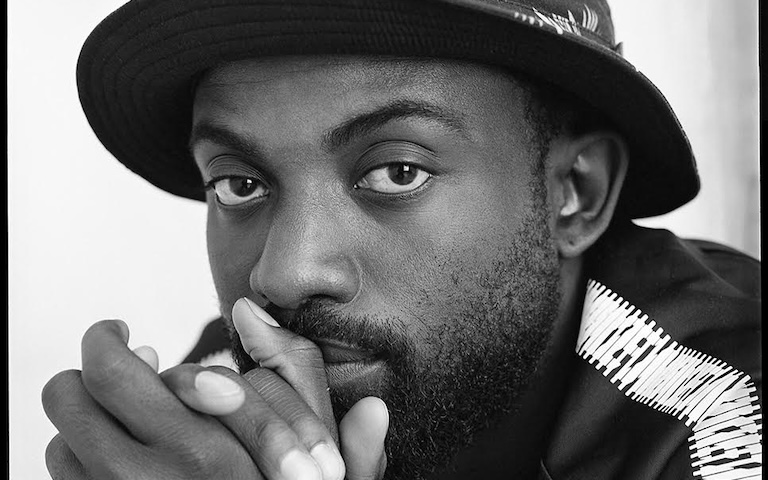
Sherrill Roland
Conceptual Artist
Sherrill Roland is a conceptual artist based in Durham, NC. An assistant professor of studio art at the University of North Carolina at Chapel Hill, much of his work challenges ideas around social and political constructs, and generates a safe space to process, question, and share. Inspired by his experience in prison for a crime he did not commit, he founded The Jumpsuit Project to raise awareness around issues related to mass incarceration. Born in 1984 in Asheville, NC, Sherrill Roland studied at Skowhegan School of Painting and Sculpture (2018) and earned his MFA and BFA from the University of North Carolina at Greensboro (2017 and 2009). He has had solo exhibitions in institutions all over the country, from the Nasher Museum of Art at Duke University, Durham, NC (2024) and Maria & Alberto de la Cruz Gallery, Georgetown University, Washington, DC (2019) to Brooklyn Public Library (Central Library), Brooklyn, NY (2017) and Los Angeles Contemporary Exhibitions, Los Angeles (2017). Roland is the recipient of the 2025 USA Fellowship; Gibbes Museum of Art’s 1858 Prize for Contemporary Southern Art (2023); Creative Capital Award (2021); South Arts Southern Grand Prize & State Fellowship (2020); and was an Art for Justice Grantee (2020) in addition to many other awards and recognitions.
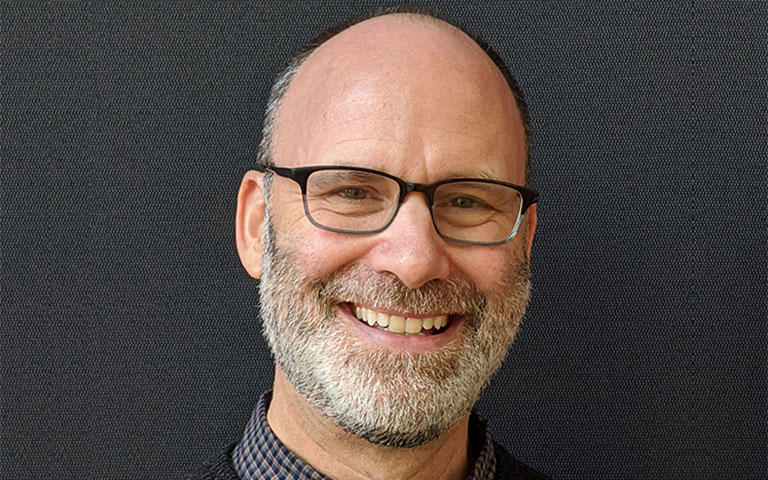
Pier Carlo Talenti
Podcast Producer & Host
Until 2016 Pier Carlo Talenti was the director of new play development at Center Theatre Group in Los Angeles where he oversaw one of the country’s most vigorous new-play commissioning programs. Over 20 years he developed scores of new works for the theater by the some of the country’s most innovative theater artists, and his combination salon/playwriting group, the Writers’ Workshop, counts among its alumni/ae extraordinary playwrights who are also currently producing and writing TV’s most exciting shows. He is currently a resident of Hillsborough, NC, where he is pursuing his own creative projects.