Indigenous Ingenuity in Architecture: Wanda Dalla Costa
Listen to the interview on Apple, Spotify, or your listening platform of choice. Captioned interviews are available on YouTube.
The views and opinions expressed by speakers and presenters in connection with Art Restart are their own, and not an endorsement by the Thomas S. Kenan Institute for the Arts and the UNC School of the Arts. This interview has been edited for length and clarity.
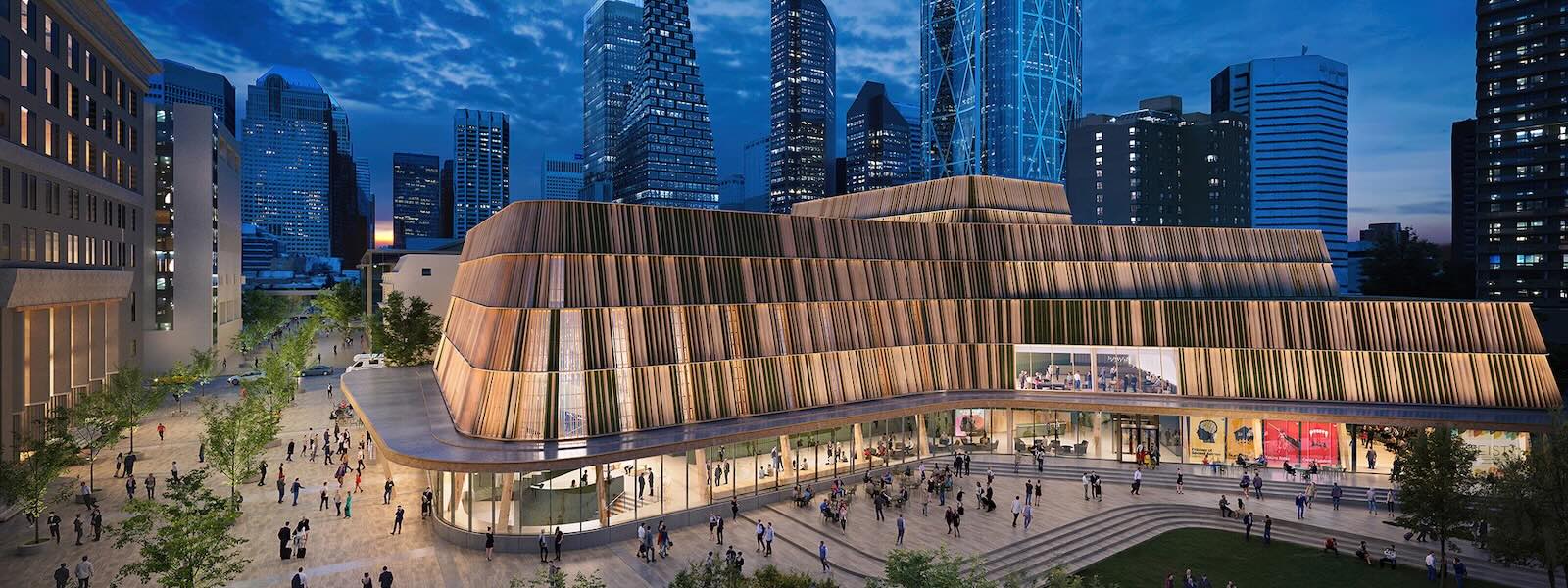
Wanda Dalla Costa, a proud member of the Saddle Lake Cree Nation, has built a groundbreaking career by weaving Indigenous knowledge systems into contemporary design. As the first First Nations woman to become a licensed architect in Canada, she is Principal and Founder of Tawaw Architecture Collective, which has offices in Calgary and Phoenix. Through her leadership, Tawaw has shaped cultural, civic and educational projects across North America, from Calgary’s Arts Commons Transformation to Toronto’s David Crombie Park Revitalization.
Her work is defined by deep engagement with communities. Over the past two decades, she and her team have conducted hundreds of sessions in dozens of communities, ensuring that every project reflects the lived experiences, cultural practices, and aspirations of the people it serves. At Arizona State University, where she is a professor and directs the Indigenous Design Collaborative, she mentors emerging Indigenous architects and demonstrates how architecture can carry forward cultural continuity while also addressing the urgent realities of climate change.
In this interview, Dalla Costa discusses how she is redefining what it means to design “in a good way,” what she has learned from decades of listening to elders, youth and knowledge-keepers and how Indigenous ingenuity offers crucial lessons for building in a rapidly changing climate. She also shares how her firm reimagines the business of architecture itself through an Indigenous ethos.
Pier Carlo Talenti: At what point in your education as an architect did you realize that incorporating your First Nations heritage was going to be crucial to your design aesthetic?
Wanda Dalla Costa: That was the entire purpose; I went into architecture school with that intention. I didn’t realize this but according to the folks in my class, I’ve always held a deeply cultural belief about architecture, not only communicating the identity of who Indigenous people are or who they aspire to be but also being able to incorporate their identity or their belief systems or their cultural practices in the spaces that we design. I think the entire push when I came back into that architecture school is that I wanted to make culture speak. I wanted to make it visible. I wanted people to know what it is.
It wasn’t the right moment for this because we were deep into modernism in the era that I was educated at university and it was all about these homogeneous designs that are imported from wherever, German architects or Brazilian architects. There was a lot of emulating very modernist designs that people thought would be a homogeneous solution for all people, and I sat, of course, on the outskirts of that philosophy. Of course, I had to abide by it if I wanted to graduate from architecture school, but I knew that there was something more that I wanted to explore.
Pier Carlo: You were not encouraged to do your own study in school? You really had to sit by and wait until you were out to start making your own experiments?
Wanda: Absolutely. But I was presenting up in Canada last week, and I ran into a girlfriend of mine. We graduated together. She said, “Wanda, you’ve been talking the same talk for 30 years, since I’ve known you. Even back then in architecture school, you were talking about the wind and the sun and connecting with four directions. You just came at architecture from a very different perspective.”
Now that I understand the last 30 or so years of work that we’ve done, it’s not so much about culture, though of course that is one of the big drivers, as much as it’s really about contextualizing architecture. It’s very place-based, not only from a climatic strategy but from a cultural strategy. It’s just, how do we make it more of the place, for the people at that place, instead of importing it from somewhere else?
Pier Carlo: Once you got your degree, how did you start creating what you’re describing, your place-centered design?
Wanda: I mean, we’re still trying. I call this a living model of architecture because through a lot of community conversations, we learned how to do this work in a good way. We have a lot of best practices within the work we do, and they’ve been taught to us by cultural advisors, knowledge-keepers, elders, administrators, even youth. Whatever building type we’re doing, they teach us, whether it be a teacher or someone who runs a cultural center. They teach us, and we just have to be good listeners and understand why they’re asking us to integrate certain things within the architecture.
For instance, I remember doing a school, and she said, “Well, we need a whole wall to hang up headdresses.” You know, in the powwow you have these big feathered headdresses, and she said, “We need a whole wall.” These sorts of modifications that we do to architecture are critically important, and it’s not something that we’re taught in architecture school. We’re not taught to customize according to a culture, but that’s exactly what we’re trying to do.
Pier Carlo: I’m hearing a different way you approach architecture is to actually listen very carefully to the culture of your clients and what their needs are. In what other way is your Indigenous-inspired approach to architecture different from what you were taught?
Wanda: One of the biggest lessons early on … . We have a method called the Indigenous Placekeeping Framework™, which is a five-part methodology. Design is in phase four of our process.
Pier Carlo: So this is a process that you developed?
Wanda: Yes, based on the teachings from our communities.
Pier Carlo: How long did it take you to develop that protocol?
Wanda: Oh, well, it’s still going. I would say we’re still learning; we continue to learn. It was really over about the first five or 10 years in the field. I knew that our approach, the methodology that we used, was slightly different, and we just happened to be able to have the time one summer about seven or eight summers ago to write it all down and document it and make a graphic that described this process.
The three major phases in the middle of this framework are place-based research. We spend three or four days just researching local culture, norms, protocols, the land acknowledgement, how many cultures live in this area, what are they trying to do, just anything we can find out about the context. We put that in our back pocket, and then we go and do engagement where we have those conversations and just validate everything that we think we have captured from our place-based research as well as new information.
Sometimes we’ll deep-dive. Things will come up in our conversations like, “Oh, we want to incorporate the 13 Moons.” “Well, what is the 13 Moons? How can we incorporate it? Is it sacred? Are there special protocols?” We do this engagement phase, and only after that do we do the co-design. That’s our phase number four. I should say co-design is really just the back and forth. It’s like the volleyball game with your client to make sure you have everything they have articulated correct in your design.
Pier Carlo: I love that you’re calling your client a co-designer.
Wanda: Absolutely. We can’t take any credit for this; we’re just the vessel through which their ideas flow, quite honestly.
The last phase is the storytelling phase. We’ve collected quotes, we have transcripts. We might even go into the archives of the museum to find precolonial patterns and beadwork and regalia that might inspire us, particularly when the architectural precedents are long gone. They disappear; there’s no trace. In that storytelling phase, we put together everything that we’ve heard and collected, and we wrap it up in a package and give it back to our clients. It’s their knowledge and their data.
Pier Carlo: Oh, that’s beautiful.
Wanda: Yeah, thank you. Our phase one is really just an extended startup phase, which normally takes a couple of weeks, but we deep-dive into the client’s aspirations to make sure that we really understand what success means to them. So that’s our Indigenous Placekeeping five-phase Framework.
Pier Carlo: Could you describe the first project you were able to create through that framework when you thought you nailed it, when you felt your vision came true?
Wanda: Yeah, absolutely. It was a couple of decades ago. We did a renovation of a school up in Calgary, AB. It was an old 1969 school. You know the old schools, how they used to have these tiny windows and they were just like a capsule? Kids couldn’t even look outside in these old schools, it was too distracting, right? In some of the classrooms, they even had no views to the outside. There were no windows. They were those inner chambers.
We had a very difficult starting place, but I sat with elders, I brought together PhDs in Indigenous education, I brought together the teachers, I brought together parents, I brought together the kids, and together we had a couple of big sessions. That’s all it took. I came with very pointed questions related to Indigenous pedagogy or how they plan to teach the little ones differently from a Western-based school. They shared with me on land-based learning and experiential sensory teachings, and all of the things that they mentioned were very, very informative towards what an Indigenous school could be.
And so this K-3 facility that we designed ended up having foot tracks on the floor for wayfinding. In that dark, dismal space in the center of this great big facility that was completely dark without windows, we popped a hole through the ceiling to let light in, and that became the ceremonial teaching space in the center of the school that was aligned with the four directions. In that room, we also put windows for the solstice-and-equinox sunrise and sunset so when they were doing a ceremony in that room, you could see the sunrise right through a window all the way to the outside.
There’s just layers and layers of elements that they said would be important for us to include in that school so that the kids would feel different, they would feel welcome, things would make sense. These kids are being taught in their home communities about culture. They go to powwows, they have traditional food, they understand the value, they’re surrounded by art and patterns and all these beautiful things, and then they come to a Western-derived school which has completely no relation to who they are. That’s what we were trying to change.
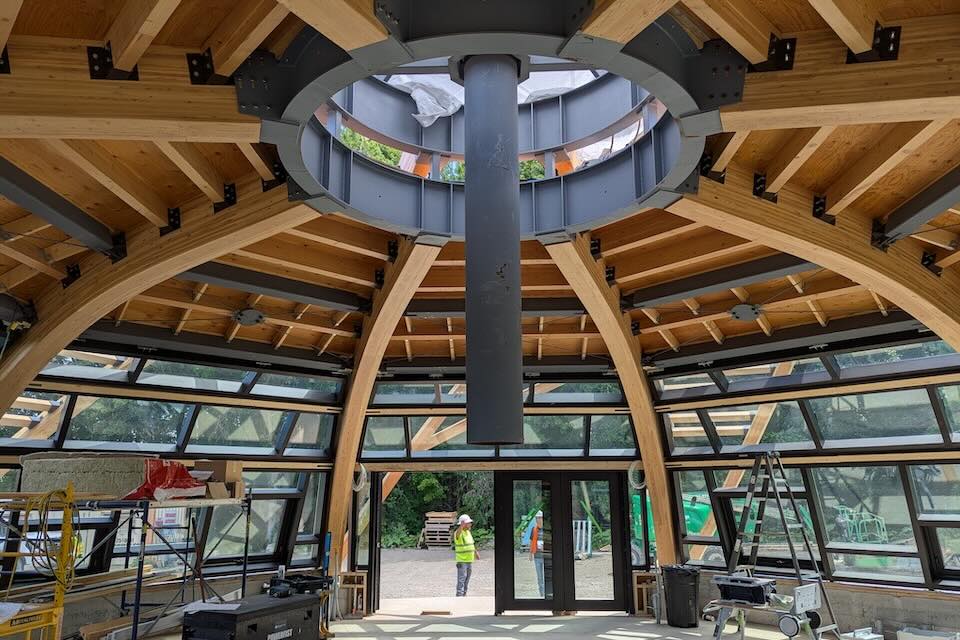
Lambton College Indigenous Outdoor Gathering Space in Sarnia, Ontario. Photo courtesy of TAWAW.
Pier Carlo: In a way, it’s also rewriting a painful history that Native people have with the Western school system.
Wanda: Absolutely, absolutely. And to that point, I had a conversation with the school psychologist after the building was built and after they had moved in for a couple of years, and she said, “You can’t believe the transformation of those kids. When they see their culture represented, their guards are down, they’re open to learning, they see the purpose of the school.”
At the same time, I also interviewed the administrators, the principal and a couple of the teachers, and they said that the parents now come into the school. They used to drop their kids off at the front door because of the colonialism and the history. They didn’t want to go in. I had said, “No, no, no. We’re going to make that entrance so welcoming that the parents want to come in and have a cup of tea. Can there be just a place for them to sit and a little cup of tea or a cup of coffee to welcome them?” Instead of the gates and the security that you find as you walk into educational facilities. It’s less about the parents and less about comforting the kids, and it’s become more about security and safety. We forget that these buildings are for people.
Pier Carlo: You are your own boss, and you have a large business with two offices. I’d love to learn about how you approach the business side of your practice and being a boss through an Indigenous perspective.
Wanda: That’s interesting, a great question, and you’re absolutely right. It’s taken us a decade to really lift this firm up, and I didn’t want it to be a regular firm. I wanted it to be different. One of the practices that guides — well, there’s many practices that are different — but one of the practices that guides our staff and how we work together is something called the four Rs: relationship, reciprocity, respect and responsibility. You’ll often hear Indigenous communities speak through the four Rs because this is the way you should align with organizations, families, colleagues.
Relationship is about celebrating people in communities, so that is a directive to all people who work here. Reciprocity is about learning, being generous with listening and learning so we can work effectively together. Respect is about leading with kindness and understanding. And then responsibility is just really following up and following through and just trying to be as helpful as we can to those home communities.
When you have the four Rs permeating through an office, you bring a certain type of people. We attract a lot of compassionate people, Indigenous and non-Indigenous, to work with us. It is a very humane approach. The business model is humane; it’s family-first. Like most architecture firms, there’s overtime and there’s constant deadlines. It can be quite stressful. We have found ways to work around that so that people are calm and they are prioritizing their family and they’re not putting work above the other very important things in life. So there is a little more flexibility in our organization as well.
Pier Carlo: Wow, I bet there’s a lot of architects out there who would love to work with you. It sounds amazing.
Wanda: [She laughs.] Yeah, Friday afternoon off as well. A lot of our staff, especially our Indigenous designers, want to drive home back up the rez for the weekend, and that’s the perfect time to.
Pier Carlo: You mentioned designing in a changing climate. I want to bring the conversation to the fact that your two offices are in two areas that are heavily impacted by climate change: Alberta, which has experienced devastating wildfires, and Tempe, part of the Phoenix metropolitan area, which is incredibly hot and water-insecure.
First, before I ask you about designing in such climates, are you sensing that your clients understand that building as usual is no longer feasible?
Wanda: And to add to that, we’ve also started rebuilding homes in California after the wildfires. I’m not sure if this is specific to any geographic location because I think there are many, many areas across North America that are undergoing change.
I think from an architect’s perspective, we sign an oath when we enter this profession to have our clients’ best interests at stake and to be up on every regulation and potential risk that could cause these very expensive assets to fail. I think nowadays this is the job of all architects, to make sure that we are doing everything we can to think into the future and to build assets that will withstand all of the environmental challenges that are coming at us.
Pier Carlo: I’ve read a lot and I hear a lot, especially after the wildfires, about Indigenous approaches to forestry, for instance, as one way to mitigate the impacts of these horrible wildfires. I hear less about Indigenous approaches to the built environment to resist climate change. Are there any Indigenous beliefs or precepts about the built environment that guide you as you build more climate-resistant or -resilient structures?
Wanda: You mentioned natural methods. My uncles used to burn our fields every summer. I think it was summer; I’m not actually sure about the season. But there was a yearly burn for regrowth of agriculture. There’s a lot of longstanding practices that I think we have either not paid attention to or they’re not used as commonly. But there are a lot of practices.
In terms of the building and preserving of these very expensive assets, namely our buildings, our philosophy — which is a direct reflection of the communities that we serve — is all about passive design, which is first and foremost using the gifts of Mother Earth. We’ve buried in very cold climates in the far north. We’ve used the earth, set the building inside the earth to keep it warm. That was a technique that many Indigenous people used in the past. Here in the region that I live in, the Akimel Oʼodham and Pee Posh people here in Arizona also used to build inside the earth because it was cooler there in hot summers. Passive-design strategies like this, I think.
They don’t just exist in North America; they exist across the world. When I was doing a housing design for this desert climate, I looked to the Middle East. I said, “These folks have been really struggling with heat for a very long time. What is it that we can learn from them?” They had phenomenal strategies that could be incorporated in architecture. I think tying the solution to Indigenous and the very deeply contextual architecture that I am so inspired by — I call it Indigenous ingenuity — that is what needs to be studied. How do people live in these climates? And can we adapt those strategies to contemporary architecture?
Let me give you one quick example. A lot of the Indigenous architecture in many places in the world has a natural exhaust effect. I think of the teepee, which has the two flaps that are on those two poles that sit outside the entry door. Those teepee flaps help to expel the hot air that comes from that warming fire inside. Depending on the direction of those teepee flaps, you can completely expel the hot air out of these structures. We used a similar technique in a building, where the air enters from the bottom of the structure but it’s pulled up because hot air rises and it’s pulled up from a chamber on the roof. That was a complete passive strategy that we learned from studying Indigenous architecture.
We can reinvent those passive strategies, and they come in all shapes and sizes. I toured a building here in the heat of Arizona. She built an extremely thick wall of adobe earth mud, which is the best material to build here in Arizona because of its thermal mass. The heat doesn’t go through, and if you build it in a certain depth, it takes eight, sometimes 12 hours for the heat to pass through that structure. On her west wall and her south wall, which are the two areas that experienced the most heating, the walls were thicker. Of course they were. The other adobe walls could be six inches, but the south and particularly the west — that’s the problematic elevation here in Arizona — that side was extra thick. They knew.
Pier Carlo: And then I’d love to know about your Indigenous approach to your creativity. Is there a way you approach your imagination or your designing, your actual practice, in a way that is beholden to your own culture?
Wanda: Absolutely. I was recently reading a book — I can’t remember the name — but it was about creativity, and he had a really beautiful description of how creativity is born. His theory was that the more you’re exposed to things out of the ordinary, the more seeds of imagination you have in your brain to pull from. He talked about anomalies and accidents and things that just come into being.
Well, that’s what we’re trying to produce here at the firm, to have as many accidents as possible so that we enlarge the amount of inspiration in the firm. When we go out and we go to a community, we’ve already done place-based research. We have all of these beautiful images and patterns and designs and motifs and traditional architecture forms that we’ve discovered. Often we show our clients. We used to hide it and just put it in our back pocket, but nowadays we use these as conversation starters, and we’ll be cautious to say, “Hey, we found a lot of this on the internet. We know a lot of it might be outdated or not authentic or dangerously a form of appropriation. But what is your reaction? Are we on the right track? Is there anything that really stands out?”
Through those conversations, the ideas come out in droves. For our communities, when they sit down and they see their culture represented in this research document — with images and quotes and references to where we got all the information, who said it, where the origin of these facts is — that is a conversation starter, and it just incites more imagination because they start to just share ideas with us. And that is where the creativity comes.
So is it a personal innate creativity? Not as much as a series of happy accidents along this journey that we take with our clients.
Pier Carlo: You are also a teacher, and I’d love to hear what you hear from your students about the kinds of built environments they are hoping to live in and raise their families. What are they imagining? What are they most eager to learn from you?
Wanda: I think just watching my mother grow up on the rez in my grandmother’s house, there’s a lot of beautiful asset-driven, positive life, the way folks organize themselves and come together and help one another and unite as a family, unite as a community. These are the things that you don’t hear in the news. You see pictures of dilapidated houses, you see pictures of packs of stray dogs running, but nobody reports the beautiful community-building that happens within our communities.
When I think of the students that I teach, for many of them, the house is their first experience with architecture, and so of course for many of them, when they graduate, what they want to design are homes. I’ve supervised six or so PhDs in Indigenous architecture who have chosen a home as the final project, and it’s extremely insightful because they all come at a very unique vantage point that I think is applicable to the way we live in a city right now.
A lot of the houses on the reserve are multi-generational. We don’t live as mom and dad and kids. There’s often a grandmother or a grandfather in the house or, if not in the house, in the yard. They will pick up and move that little house — which is what we did with my grandmother — pick up and move that house so she can be independent in her own little 600-square-foot house but she’s beside one of her children and all of the grandchildren. So she’s not isolated. It’s these modifications that I think many of our tribal and First Nations students are trying to capture, the aspects that they notice are different.
To give you an example, one of my aunts, there were eventually four houses on her property, not just one. There were four because they wanted to stay together. If you’ve studied tribal housing or First Nations housing, you’ll know your name comes up on a list and they’ll put you in whatever house is available. It could be completely across the reserve or reservation, so all of the strong extended family ties are broken, and that is not good.
These are some of the changes that I’m hearing from students that I think are incredibly important to support and listen to and really pay attention to for the future of housing, not just for Indigenous people but I think also for the broader urban context. What are we learning? What can we learn about living well together as a communities?
September 24, 2025
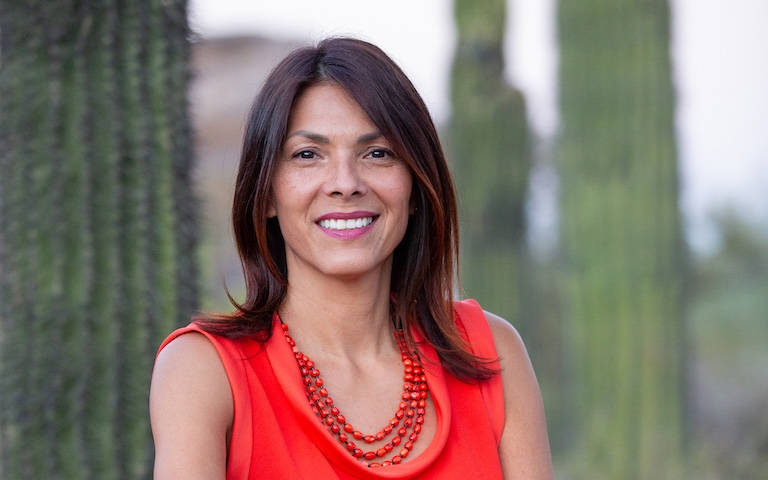
Wanda Dalla Costa
Architect
Wanda Dalla Costa is the Principal and Founder of Tawaw Architecture Collective, an Indigenous-owned and women-led design practice with offices in Calgary and Phoenix. A proud member of the Saddle Lake Cree Nation, Dalla Costa is celebrated as the first First Nations woman architect licensed in Canada. She is redefining the field by “productively disrupting” public architecture with Indigenous worldviews, shaping environments that foster connection, belonging, and cultural continuity. Through Tawaw — a Cree word meaning “there is room” — Dalla Costa leads a collective of Indigenous and allied designers creating civic, cultural, and educational spaces across North America. Her approach is rooted in the Indigenous Placekeeping Framework™, a community-grounded design model shaped by lived experience, not just theory. The firm’s portfolio spans over 425 engagement sessions in 80+ communities, creating marquee projects like the Arts Commons Transformation in Calgary and the David Crombie Park Revitalization in Toronto, both shortlisted for 2025 global design awards. In parallel, Dalla Costa is a professor at Arizona State University and director of the Indigenous Design Collaborative, where she mentors emerging Indigenous architects and leads projects that integrate ceremony, storytelling, and sustainability. Her work illustrates a deep belief: when people feel rooted in place, they protect it — even make sacrifices for it. For Dalla Costa, architecture is not just buildings — it’s a form of endurance, resurgence, and reconnection. Photo courtesy of TAWAW.
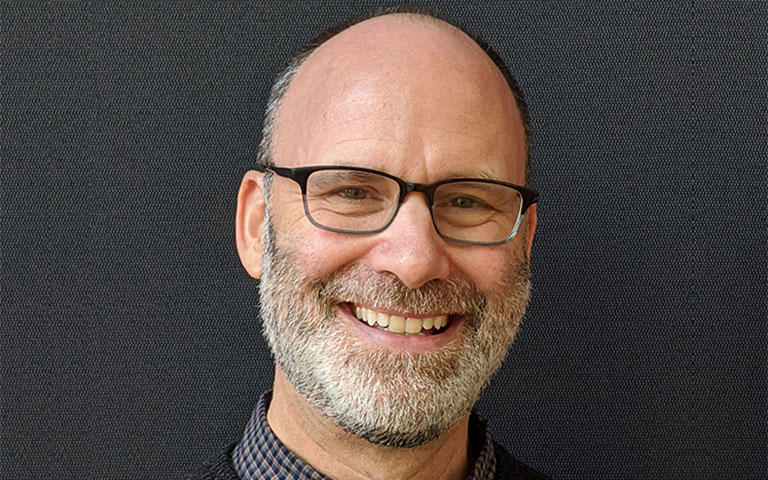
Pier Carlo Talenti
Podcast Producer & Host
Until 2016 Pier Carlo Talenti was the director of new play development at Center Theatre Group in Los Angeles where he oversaw one of the country’s most vigorous new-play commissioning programs. Over 20 years he developed scores of new works for the theater by the some of the country’s most innovative theater artists, and his combination salon/playwriting group, the Writers’ Workshop, counts among its alumni/ae extraordinary playwrights who are also currently producing and writing TV’s most exciting shows. He is currently a resident of Hillsborough, NC, where he is pursuing his own creative projects.