
Documenting Recovery: How an Endowed Professorship Turned a Hurricane into a Learning Lab
In the aftermath of Hurricane Helene, one of the most costly disasters to ever befall Western North Carolina, the familiar green slopes and meandering rivers and streams of the region were unrecognizable. Locals and first responders worked to navigate towns and countryside marked by downed trees, flooded streets, and communities suddenly redefined by loss. Into this environment stepped a group of UNCSA filmmaking students, cameras and equipment in hand, ready to listen and record.
Under the guidance of School of Filmmaking faculty member Lauren Vilchik, students traveled into the region to document the impact of this unprecedented storm. Travel had to be arranged quickly, gear secured, students organized, and alumni collaborators brought into the field. The agility of this response was made possible through Vilchik’s endowed professorship: the Dale Pollock Professorship in Filmmaking.
Together, Vilchik, her students, Film alumni, and partners in the affected communities created a project called “The Cost of Recovery: Insuring the Future in a Changing Climate.." The project examines the physical and social impact of a once-in-a-century disaster while also casting a spotlight on individual resilience and the power of cooperation. The film demanded both artistic sensitivity and logistical precision, and it placed students in the middle of unfolding events rather than on the sidelines.
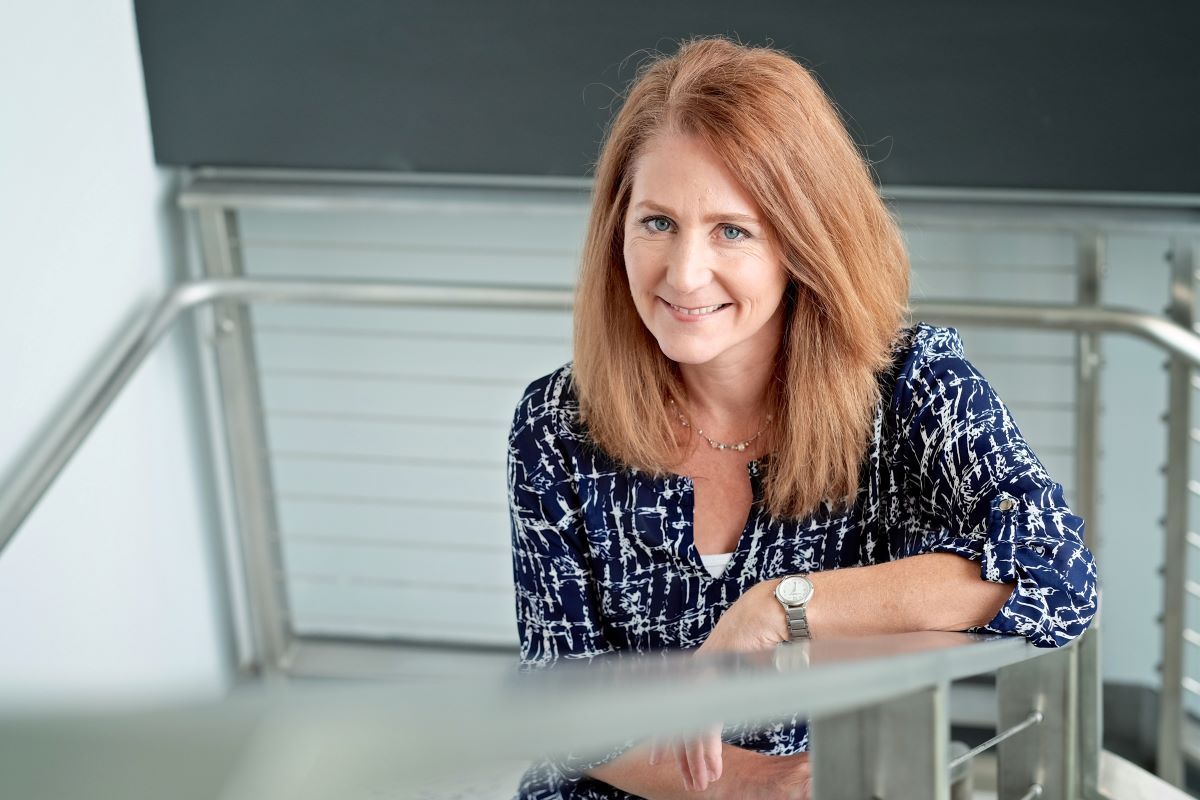
Lauren Vilchik, the Dale Pollock Professor in Filmmaking
Alejandro Lucas Fritts (B.F.A. ’24), who was a student during the project, reflected that the experience “introduced me to filmmakers who have since helped me navigate the industry and opened doors early in my career… it was one of the first times I felt the full weight and responsibility of storytelling.”
The experience was also enlightening for the alumni involved. Bernice Miller (B.F.A. ’13) remarked that “sharing the experience with the younger generation of UNCSA students was incredibly meaningful and made the project even more rewarding. I didn’t realize how life-changing it would be to meet Alejandro on the project. Seeing his journey and continued success has been one of the project’s most lasting rewards.”
For the students involved, the trip was more than a class assignment. It was a moment of becoming: a chance to understand how their work as artists might intersect with real lives and real crises.
Endowed support made this possible. The Dale Pollock Professorship in Filmmaking provided the resources and flexibility for Vilchik to seize a unique teaching moment, marshal collaborators, and take students into the field. It turned a natural disaster into a living classroom, where the lessons were about ethics, empathy, and the power of narrative.
Experiences like this underscored a larger truth: when faculty are supported through endowed professorships, they can respond to the world in real time and invite students to do the same.
July 8, 2026