


Acting tips for drama school auditions
Auditioning for a drama school is one of the most important — and potentially the most nerveracking — steps of getting into your dream program. But what should you choose to perform? How do you showcase your full range? And what should you be paying attention to during the process?
In his years as the UNCSA School of Drama director of recruitment, Quinn Gordon has seen hundreds of auditions. "It's a long-held core value in the School of Drama that every candidate that wishes to apply receives a live audition slot, regardless of their competitiveness for the program," he says. This means Gordon has a good idea of what works, and what doesn't.
Here are a few of his audition tips that can help optimize the experience for actors and auditors alike.
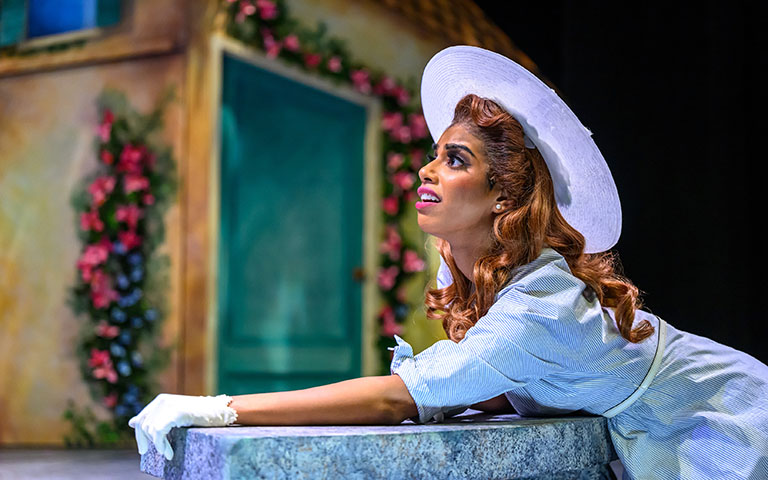
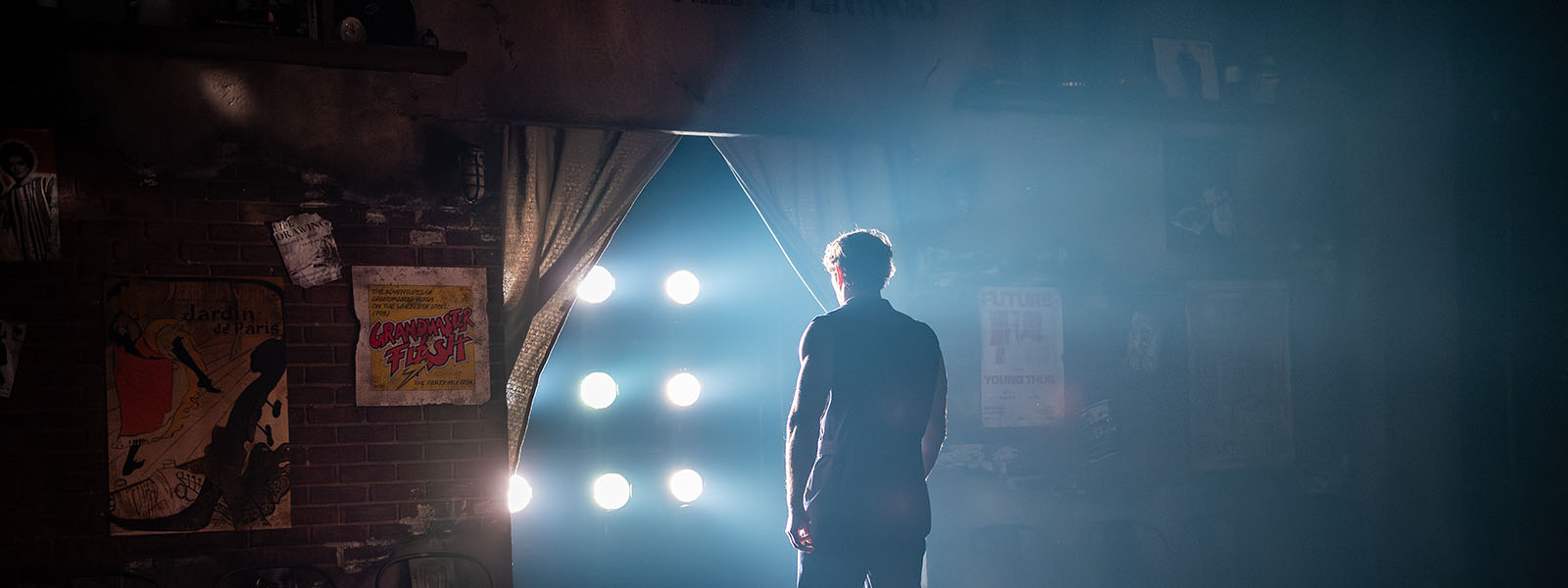
A student in the UNCSA production of "Twelfth Night or What You Will" / Photo: Luke Jamroz
1. Choose the right material.
You should aways choose material that you love. If for no other reason, you'll be doing your pieces a lot over the audition cycle, so you better darn well love your material. You should be excited about sharing your pieces and it shouldn't feel like a chore. Only you can decide what monologues and songs resonate with you — not a teach, coach or loved one.
The material should also contrast from piece to piece. This is an opportunity to allow the auditors to see several distinct sides of you as an artist. A "kiss of death" for Gordon is when an applicant gets to the end of their audition and the pieces have all blended together. "I like actors that have multiple gears and can play different characters," he says. "You should look at your audition as your personal playlist with each piece providing its own unique energy."
2. Make the most of the pieces you choose.
Be very clear on the first moment and final moment. The first moment is where you grab the adjudicator's attention. The last moment is the final impression and a chance to allow the piece to reverberate. Gordon advises not to just drop out at the end, but to give yourself a beat or a breath.
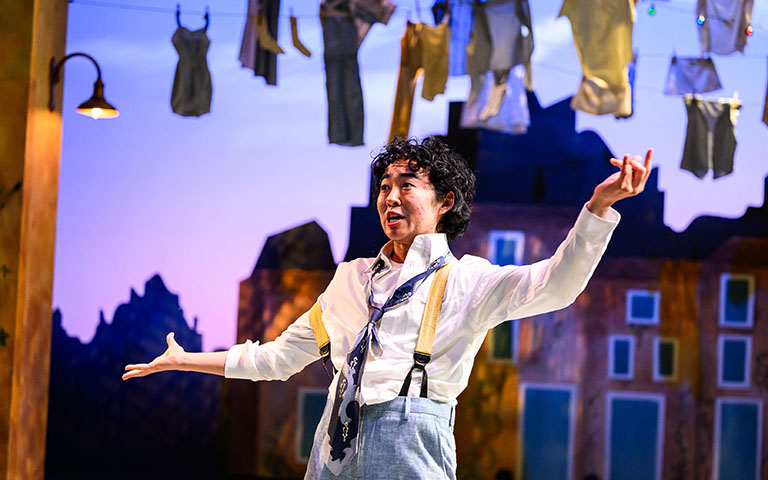
A student in the UNCSA production of "Twelfth Night or What You Will" / Photo: Luke Jamroz
It's also crucial to know the journey or arc of the piece, however slight. "The person that begins the piece should be changed by the end," Gordon explains. "Just the sheer act of saying the words or singing the lyrics should shift the character."
And make sure you don't get stuck in one physical spot in the audition space! The auditors want to see the physical impulse of the scene. The words are only half the story of the monologue or song — the physical life is equally important to the storytelling. Whether in person or on video, make the most of the space you have.
3. Stay true to yourself.
Wear clothing to your audition that feels like you — the neat and well-groomed part of you, but still you. Don't wear clothing that makes you feel like a different person.
Also try to avoid pieces wherein the character's stage in life is vastly different from your own. "No one wants to see you play your 90-year-old dying grandpa," Gordon says. "We want to meet you, not an external version of you!"
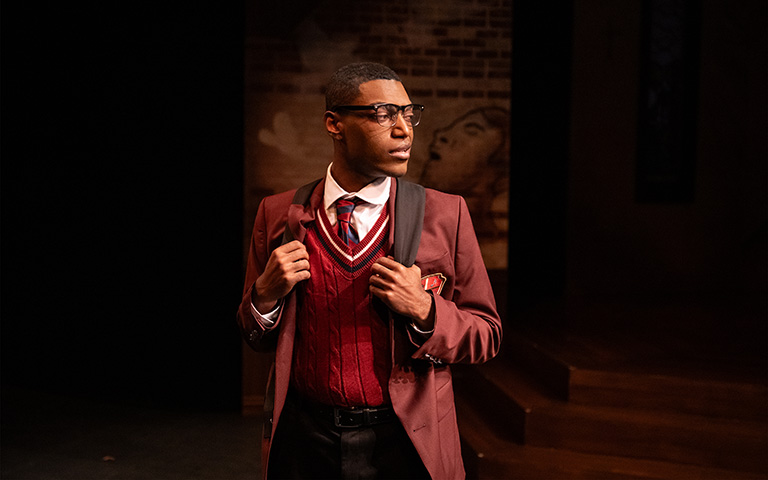
A student in the UNCSA production of "Choir Boy" / Photo: Luke Jamroz
4. Remember that adjudicating goes both ways.
As you're being adjudicated, there should be a little piece of you that is also adjudicating the audition experience. "I have friends at peer institutions all over the country and most rooms you’ll enter will be absolutely lovely," Gordon says. "But occasionally, I’ll hear of a room where the applicant does not feel respected or valued as a human being."
The people in the audition room are ambassadors for their programs and the experience you receive through the audition process is representative of what you’d be in for at that program over four years.
That said, remember that the people in the audition room are not in any adversarial position. They're looking for talented artists to fill their next class and want you to help solve that problem!
5. Be grateful for your support system.
Probably someone along the way — a parent, guardian, teacher, loved one — supported you in the audition process. "As a parent, I know that we all want what’s best for our student," says Gordon. "As hard as the audition cycle is on the applicant, it’s probably harder on the people invested in your success."
Get the best news, performance and alumni stories from UNCSA.
SUBSCRIBE TO OUR NEWSLETTERS
Aug. 8, 2026