UNCSA alumna named first Kenan Arts Research Fellow
Emily Simoness, an innovative arts entrepreneur who graduated from the University of North Carolina School of the Arts in 2007 with a BFA in acting, is the Thomas S. Kenan Institute for the Arts’ first Kenan Arts Research Fellow.
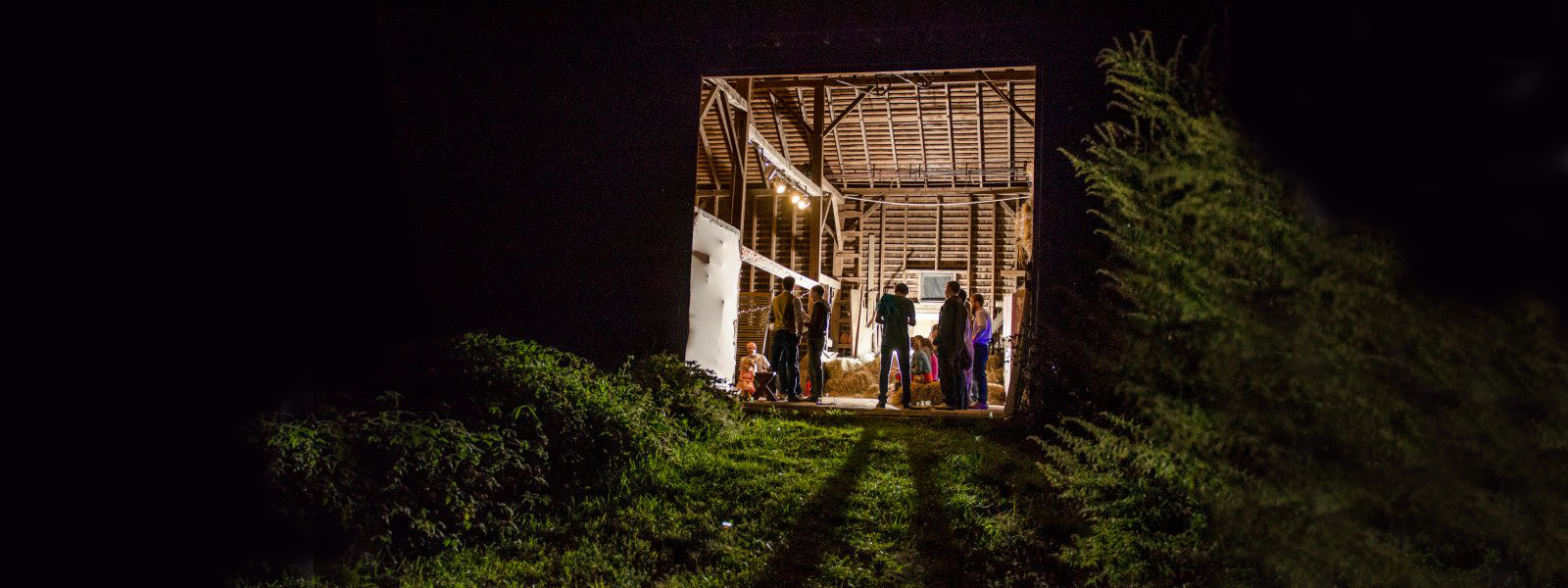
Simoness is founder and Executive Director of SPACE on Ryder Farm, a nonprofit artist residency program on the grounds of Ryder Farm, an hour north of New York City. Every June through October, SPACE hosts residencies, retreats and workshops designed to reinvigorate artists and creative innovators while contributing to the ongoing viability of one of the oldest organic family farms on the East Coast.
Through its new Kenan Arts Research Fellowship, the Institute supports residencies for select senior faculty and guest artists at its new Creative Community Lab in Winston-Salem. Fellows receive time, space and funding to pursue their creative research, and in return curate and facilitate events in which they share their knowledge and skill with campus and community members.
“With her fresh ideas and generous approach to leadership, we thought Emily was the ideal person to help us to cultivate new relationships and programs at the Creative Community Lab,” says Corey Madden, Executive Director of the Kenan Institute.
In addition to developing programs for faculty, students and community artists, the fellowship will give Simoness time to explore next steps for SPACE, while writing a case study on its founding.
Simoness, 32, spent her childhood in Minneapolis singing, dancing and acting. When it came time for college, she says, “UNCSA was at the top of the list of places I wanted to be.”
After graduating, she moved from “this safe place” in Winston-Salem to Brooklyn, where she launched a career working off-Broadway and in regional theatre. “Those were not easy years,” Simoness says. “I talk to aspiring actors now about getting into the business. There is no way to really and truly prepare anyone for it. You more or less just have to go through it.”
In 2009, Simoness made a phone call that would drastically change the course of her career.
“Ever since I was a kid, I had heard tell of this farm located in Brewster, New York, that had been in my mother’s extended family since 1775. My nuclear family had never visited, but my mom got a yearly letter from the farm to all the family shareholders. The place was lodged somewhere in my brain,” she recalls.
“I was living in Brooklyn and pounding the pavement daily. On a whim, I called Betsey Ryder, my fourth-cousin-once-removed, whom I had never met. Betsey lived on the farm. I asked if I could come up for a visit.”
Three things happened during her subsequent visit. Simoness realized how close the farm was to her creative community in New York City, many of them playwrights without adequate time and space to work on their art. She discovered the scope of the farm operation — “a 130-acre expanse, not an 8-acre vegetable plot.” And she saw houses dating back to the late 1700s that sorely needed renovation.
Long story, short: “I thought I would just pop up to visit and then go back to my life — I had no expectation of it being anything but that. But I got back to the city and couldn’t stop thinking about the farm.”
So Simoness pitched an idea to her distant cousin and other family members she had met: “Why don’t I bring my artist friends up to Ryder Farm and we work on our art, and then, in exchange, we could help breathe life into the farm’s historic structures?”
The answer? A resounding yes.
By 2011, Simoness’ friends had completed the work needed to obtain Certificates of Occupancy for several of the old buildings, she had secured nonprofit status for SPACE on Ryder Farm, and the nonprofit was ready to host its first season of artists, many of them UNCSA graduates.
During the 2015 season, about 200 artists visited the one-of-a-kind retreat and workshop space for one to five weeks, including playwrights, actors, visual artists and filmmakers. Each day, they gathered for three meals together. Otherwise their time was their own. Not surprisingly, many chose to help with work on the farm — from harvesting herbs and tomatoes to making flower bouquets for a farmers market nearby.
Each season SPACE also hosts several interns from UNCSA’s School of Drama, a connection Simoness feels is important to nurture with her alma mater.
“It facilitates an opportunity for students to meet and work with professionals in the field they are training to work in. And it gives them a ‘boots on the ground’ account of what it takes to run an arts organization,” she says. “In a culture where self-producing is more and more the norm, the experience at SPACE gives students the tools to be advocates for future pursuits.”
As Simoness sees it, SPACE has created a “mutually beneficial” relationship. Her family’s old homestead is reinvigorated; her artist community has a serene and inspiring space in which to work and create.
“So much of what we do is think about how we can create a sustainable model where artists are literally and figuratively giving back to the land that feeds them,” she says.
“Back then, I really saw an opportunity to help out a family farm and help out my artist friends. But I had a background in being an actor, not running a nonprofit or getting buildings up to code,” she says. “At the beginning, I was just following an impulse. It was just putting one foot in front of the other and really believing that this could be something.”
Simoness is grateful to her alma mater for supporting her work so many years after she graduated from UNCSA and moved on.
“This is a special time in my life. I’m very flattered by the opportunity and excited to come down and talk with community members and faculty and students about what I’ve done at SPACE,” she says. “What I have done hopefully, in some way, can translate and be helpful to them as they build their creative community.”
March 9, 2016