

Partnership helps UNCSA grad create a story of his own
At his core, Wiley Basho Gorn is a storyteller. Growing up in the woods of Hudson Valley, New York, he took to memorizing scenes from his favorite movies and performing them for his family at the dinner table.
“That was my go-to at age 7 — usually Monty Python — a sort of one-man show at the table for my parents or friends,” he recalls with a chuckle.
“I guess that is where it started, this interest in storytelling and being involved in performance. Now I am interested in the more invisible side of it — as the director who sits in the back and helps craft this world that the actors get to live and breathe in.”
Recently Gorn enjoyed a rare opportunity to hone his craft among fellow artists in Seattle as the inaugural recipient of the Kenan Fellowship at ACT — A Contemporary Theatre. The Kenan Institute for the Arts created the fellowship to provide practical knowledge and experience to recent graduates of the School of Drama at the UNC School of the Arts who are embarking on a career in regional theatre. Gorn earned a BFA in Directing from UNCSA in 2013.
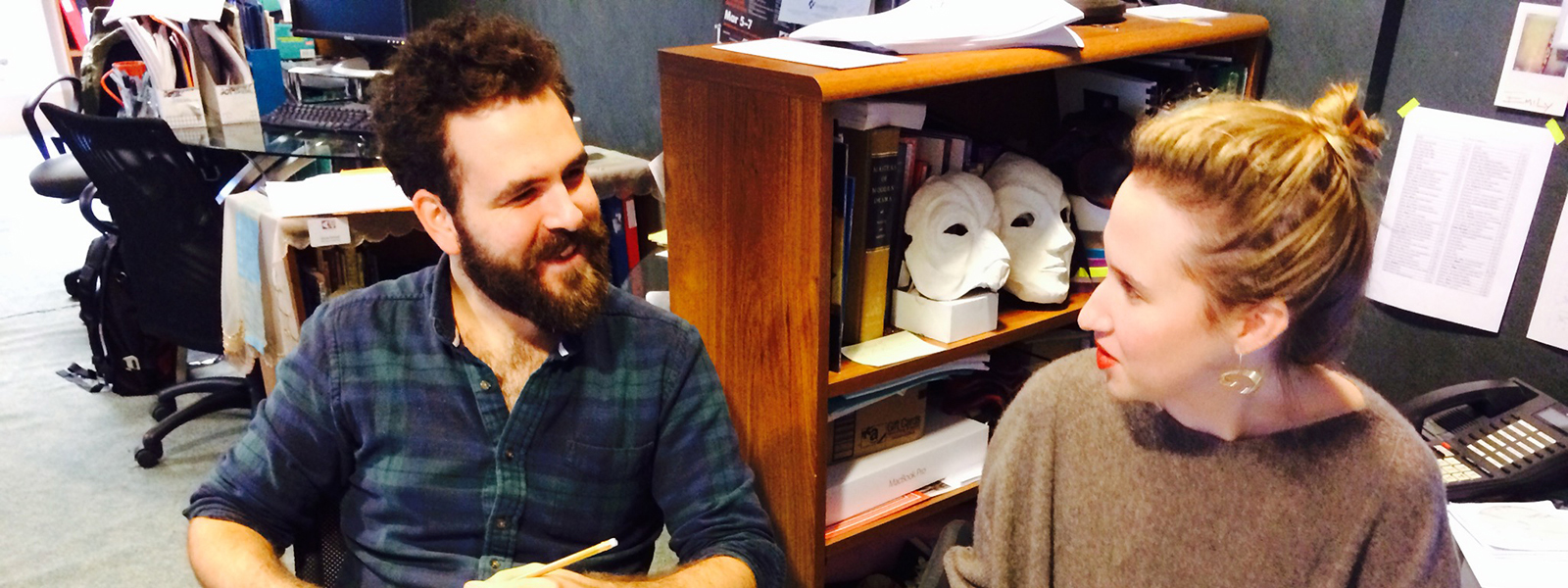
But he was hardly “invisible” during his six-month fellowship at ACT, where he was mentored by Artistic Director John Langs (also a graduate of UNCSA) and Emily Penick, ACT’s Literary and Artistic Manager and Kenan Fellowship Director.
“It’s been a grand success of a pilot year,” Penick says. “Wiley has really just woven himself into the fabric of ACT. In addition to his directing work, he’s also learned the lay of the land when it comes to how we market, how we budget, and how we seek out artistic partners. It’s a directing fellowship, but he is primed to work in any regional theatre in a leadership position.
“What makes Wiley such an excellent first fellow is he’s hungry to learn anything and everything.”
The fellowship culminated with a performance of “As You Like It” directed by Gorn. His strength as a storyteller came shining through in his imaginative interpretation of the Shakespearean classic.
“He tasked only five actors to play close to 20 roles. He had men playing female parts and women playing male roles,” Penick explains. “And his ability to tell the story made the Shakespeare we already knew feel fresh and modern and relevant.
“A lot of fellowships don’t have a directing component,” she adds. “It was a huge success. Wiley has made a name for himself in our community.”
Gorn’s hunger for learning was well-fed during his years at UNCSA, where he found both the structure and rigor he needed as a young artist. By his sophomore year he discovered that directing was his real passion
“UNCSA was that artistic incubator that helped foster that dream from childhood, that starting place that allowed me to grow,” he says. “I needed people to really hold me to my word in the creation of this art. I think I still need that. The learning never really stops.”
Gorn learned about the Kenan Fellowship at ACT from UNCSA Dean of Drama Carl Forsman and was immediately interested.
“John Langs had come back every year or so and directed plays when I was a student, and his plays were always incredible,” Gorn recalls. “He called you out on your laziness and inspired you to rise above what you thought you were capable of.”
A visit to Seattle to see for himself the kind of work taking shape at ACT sealed the deal for Gorn.
“I saw ‘Three Sisters’ that John directed — that show was so gripping, so incredible. I had never seen Chekhov done in that way,” he says. “I had been looking for a city where I could put roots down and really grow and develop. That experience gave me the feeling that maybe Seattle was the one.”
Opportunities like the Kenan Fellowship at ACT are not only critical to the success of emerging theatre artists like Gorn, Penick believes, but also essential to the health of American theatre as well.
“Excellent art only happens with trust and time,” she says. “And so often, young artists are either lacking a mentor who trusts them or an extended mentorship period in which to learn. And this fellowship offers both.”
Gorn agrees. The fellowship at ACT created a supportive space for him to challenge himself, take risks and grow.
“Fellowships like this give you an opportunity to identify who those artists are that you look up to and admire, and to be around them and learn from them,” he says. “I think that element of apprenticeship needs to be a part of every artist’s life.”
March 29, 2016