Student Spotlight: Marina Zurita
It’s not easy for Marina Zurita (B.F.A. Drama ’22) to pinpoint the moment she fell in love with theater and directing. All she knows is that she’s always loved creating, especially with other people.
“As a kid, I enjoyed making things — my own clothes, stuffed animals, gifts for people, cooking,” Zurita said. “That’s what drew me to directing. Even if you’re directing something that already exists, you’re still making. You’re creating that new performance.”
In her four years as a directing student at UNCSA, she was able to channel that creative energy into her work, finding herself especially attracted to the collaborative nature of devised theater, which the School of Drama has made an area of focus under Dean Scott Zigler. In her third year, she co-directed the devised piece “Love and Depositions” with fellow directing student Acadia Barrengos and faculty member Mollye Maxner.
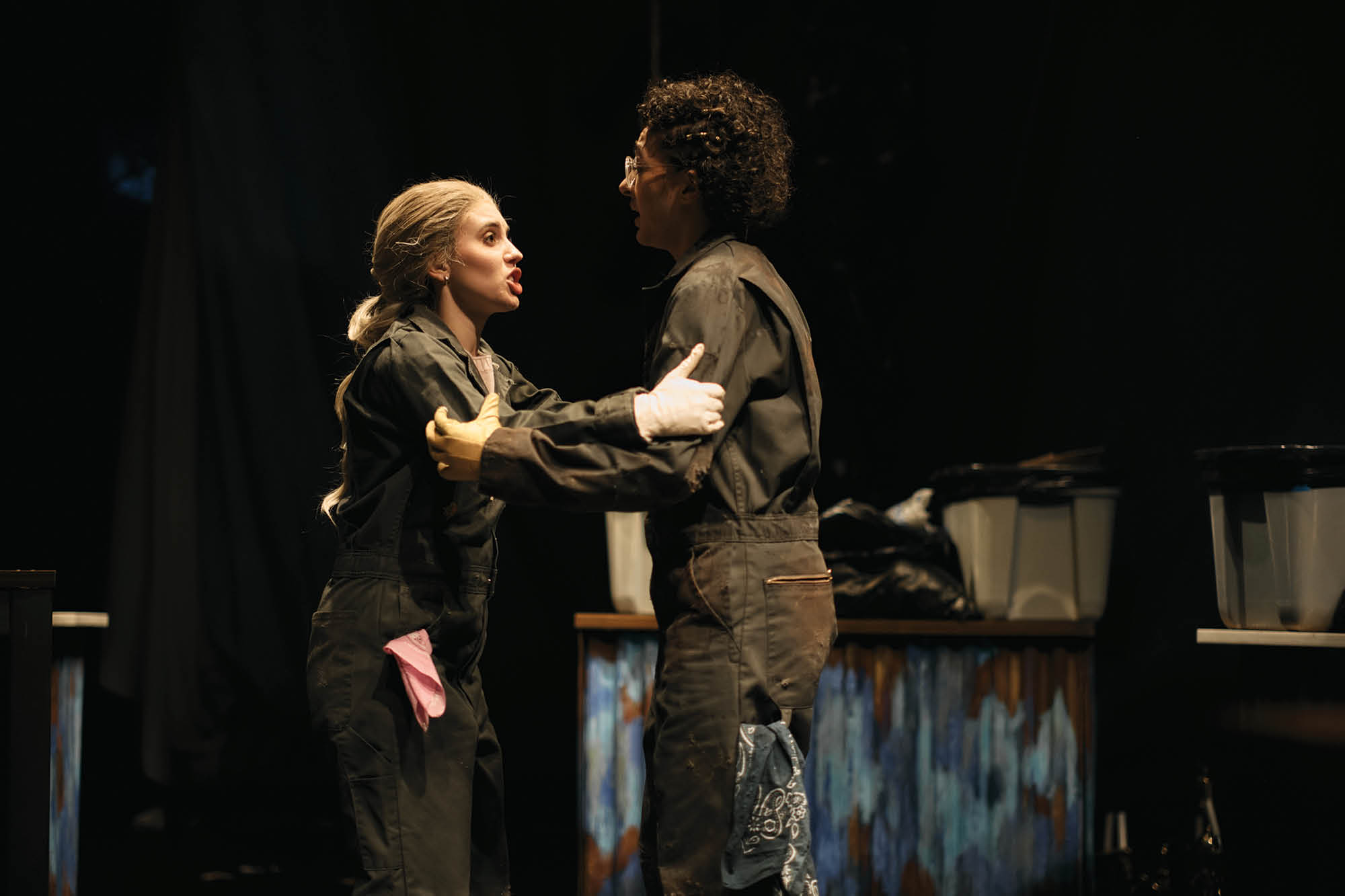
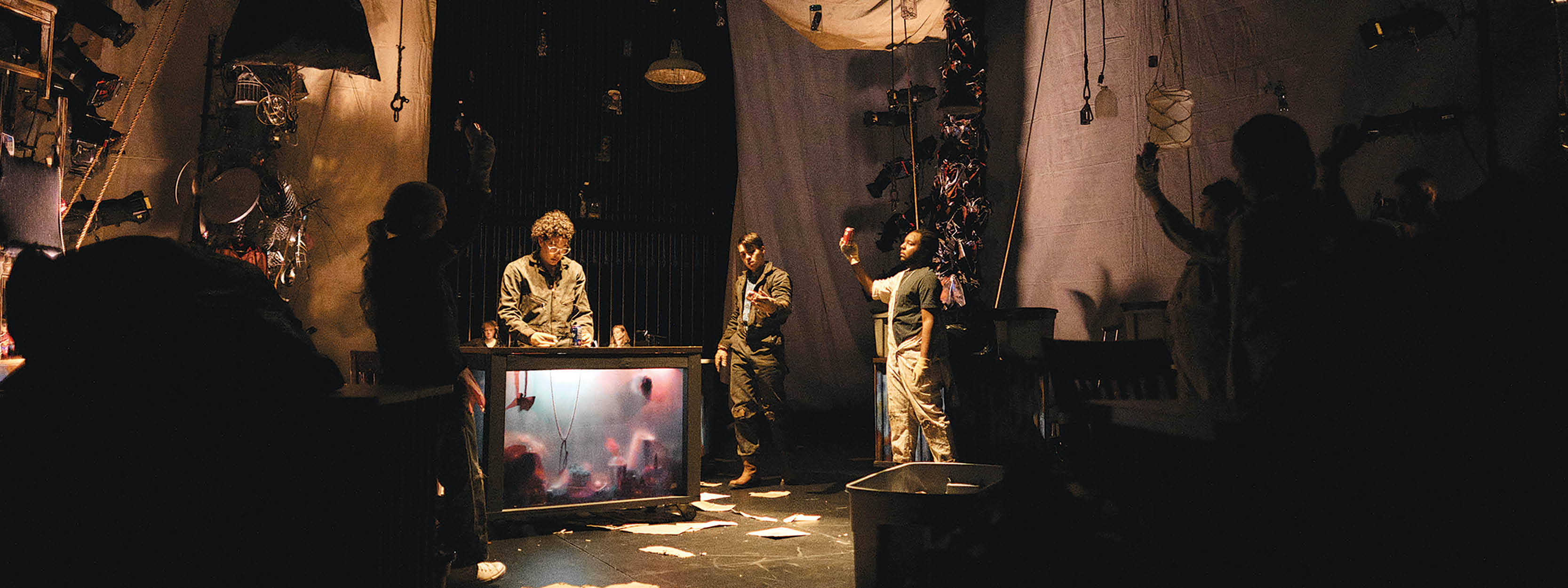
Marina Zurita directed a sold-out run of “Mother Tongue” in the spring. Audiences were invited to experience the devised theater production from a unique vantage point: seated close to the actors on the Freedman Theatre stage. / Photo: Wayne Reich
This spring, she directed her senior thesis project, “Mother Tongue” — marking the first devised theater production conceived and directed by a student at the school. “Mother Tongue” tells the story of waste pickers in Zurita’s home country of Brazil, who salvage materials thrown away by others to sell or use, and explores themes like overconsumption, waste and the treatment of these essential and often overlooked workers. It was inspired by Bertolt Brecht’s “Mother Courage and Her Children” and the diary of Carolina Maria de Jesus, a waste picker living in São Paulo, Brazil, in the mid-1900s.
Zurita created the script with cast members, musicians, and text from interviews with Brazilian waste pickers. “I was more like an editor than a playwright,” she said. To research the piece, Zurita traveled to her home country to conduct interviews of modern-day waste pickers, with funding provided in part by a Semans Art Fund grant. She returned from Brazil just as the COVID-19 pandemic began to shut down borders. The pandemic, she says, served as a poignant backdrop for the stories she had read and recorded.
As she closed out the first iteration of “Mother Tongue” and her undergraduate studies at UNCSA, Zurita reflected on the process and what it means to “end” something, particularly when devised theater is, by definition, constantly evolving.
I loved my time at the school. I’m beyond grateful for it, and I wouldn’t have been able to have this experience anywhere else.
Marina Zurita
“I thought a lot about how you finalize the creative process in a particular moment with a particular group of people,” she said. “I want to practice being careful with that, which means being able to say, ‘This is where we got — and this is ok.’”
A recipient of a 2022 UNCSA Artpreneur Grant for graduating college students, Zurita will soon use her grant funding to bring “Mother Tongue” to the Brazilian community in New York City and use their feedback to further develop the piece.
With the support of faculty members Andy Paris and Carl Forsman, along with her participation in the Studio for Creative Practice, a laboratory for the making of original, transdisciplinary work, Zurita said her time at UNCSA was both intense and gratifying.
“I loved my time at the school,” she said. “I’m beyond grateful for it, and I wouldn’t have been able to have this experience anywhere else.”
This article appeared in the 2022 issue of Scene.
READ THE COMPLETE ISSUE
July 19, 2022