How UNCSA alumni are leading the future of immersive theater in 'Masquerade'
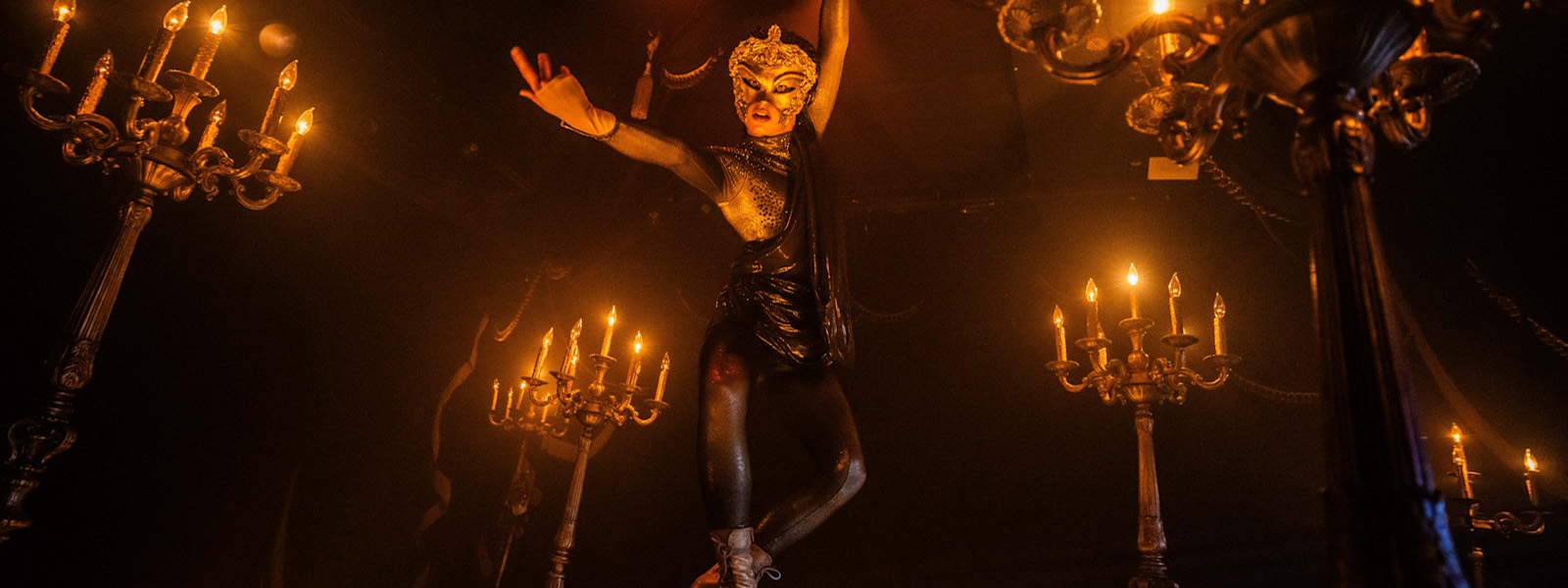
When audiences step inside “Masquerade” — a new immersive reimagining of Andrew Lloyd Webber’s “The Phantom of the Opera” from Tony Award-winning director Diane Paulus — they enter a world unlike anything New York theater has seen before.
“Masquerade” opened in September 2025 at 218 W. 57th Street in the former Lee’s Art Shop building. It transforms a familiar story into a fully immersive environment, blending sound design, lighting, show control, electronics, props and stage management into a seamless, living system.
What many audience members may not realize is that much of the technology, artistry and infrastructure powering the experience each night was built by UNCSA alumni.
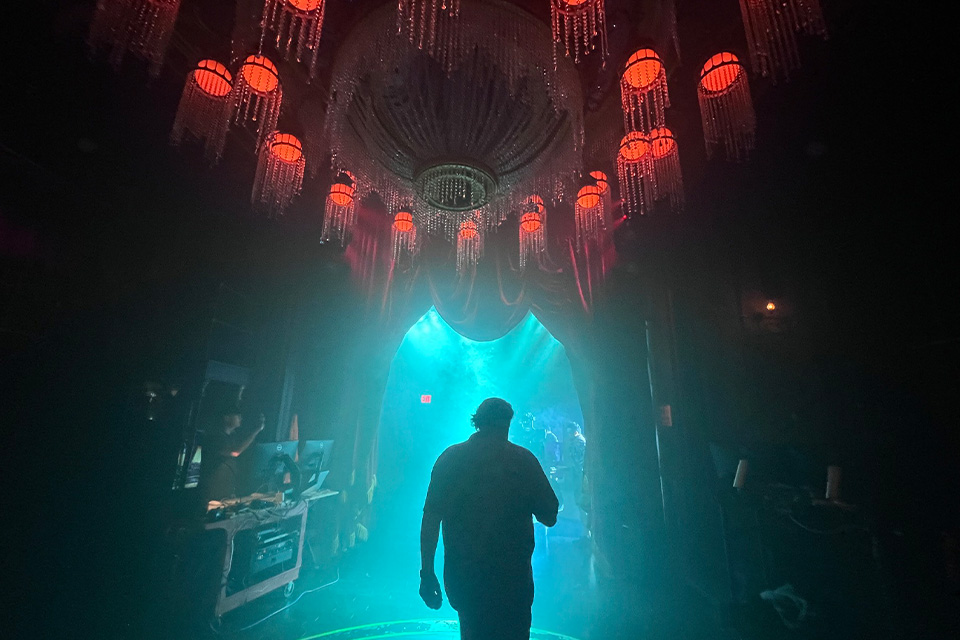
Sound Designer Brett Jarvis behind the scenes of "Masquerade" / Photo by James Fluhr
The UNCSA alumni behind "Masquerade"
School of Design & Production alumni are playing especially pivotal roles:
The software platform that makes the production’s complexity possible — ShowPulse — was created by Brett Jarvis (B.F.A. Sound Design ’97), Sean Beach (B.F.A. Lighting ’09), alongside Lee McCutcheon. “ShowPulse isn’t just an app,” Jarvis explained. “It’s a way of working.” For "Masquerade," Jarvis serves as Sound Designer and Head of Show Control, and Beach serves as Show Control Programmer and ShowPulse Software Developer.
Shaping the visual identity of the characters is Christina Grant (M.F.A. Wig & Makeup Design ’04) as a Wig & Makeup lead and her crew, including Amy Porter (M.F.A. Wig & Makeup Design ’03) and Taylor Winer (B.F.A. Wig & Makeup Design ’18). Then there's Melissa Thurn (M.F.A. Costume Design '21), serving as an assistant costume designer.
Brianna Messina (B.F.A. Lighting ‘06) is Head Electrician, overseeing the electrical systems that bring the immersive environment to life, and Darian Horvath (B.F.A. Lighting ‘22) contributes as Assistant Electrician. Fellow Lighting alum Alex Fogel (B.F.A. Lighting ’09) adds their talents to the team as Lighting Programmer.
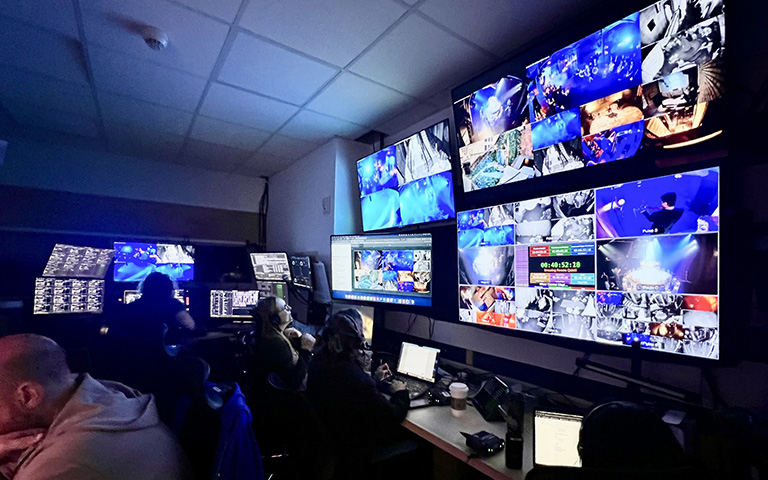
Members of the crew behind the scenes of "Masquerade" / Photo by Brett Jarvis
Meanwhile, Diana Rebholz (B.F.A. Stage Properties ’00) is Head of Props, ensuring every physical detail supports the world-building. Kelbi Hevia Carrig (B.F.A. Stage Management ’16) served on the stage management team during production and previews, and Kate Foster (B.F.A. Scenic Arts & Crafts '95) is a behind-the-scenes crew member.
UNCSA’s presence even extends beyond the technical backbone: School of Drama alum Charles Osborne (B.F.A. Acting ‘12) is an actor in the production.
Leading the way in entertainment innovation
Together, these artists and technicians represent the breadth of UNCSA’s training. In a production defined by its technical ambition and immersive scope, UNCSA alumni didn’t just contribute; they helped build the engine that powers it.
Immersive, technology-driven storytelling continues to transform the global entertainment landscape. Productions like “Masquerade” demand fluency in automation, integrated show control systems, dynamic lighting environments and collaborative cross-disciplinary execution — the very skills embedded in UNCSA’s conservatory model.
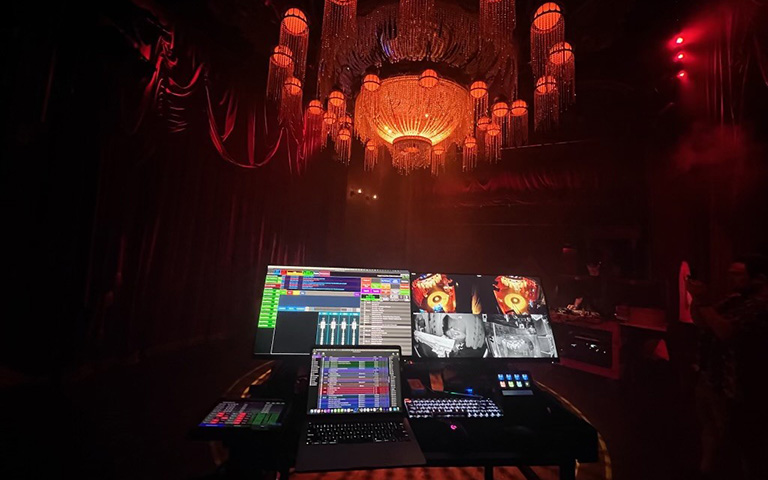
Software programming behind the scenes of "Masquerade" / Photo by Brett Jarvis
But this is not the beginning of UNCSA’s connection to “The Phantom of the Opera.” For more than three decades, UNCSA alumni have been part of the Broadway phenomenon, contributing to one of the longest-running productions in theater history. As the industry expands from traditional stages to immersive, experience-driven performance, UNCSA alumni are once again at the forefront, helping carry the production into its next evolution.
For current and prospective artists, this moment signals something larger: The future of theatre is immersive. It is technologically sophisticated. It is collaborative across disciplines. And it requires artists who are ready to rise to the challenge.
At UNCSA, students don’t just train for today’s productions; they prepare to build what comes next.