UNCSA alumni bring feature film “Lone Rider” home
As School of Filmmaking alumni Adam Jumba (B.F.A. '19) and Christian Flowers (B.F.A. '19) prepared for the RiverRun International Film Festival screening of their first feature film, “Lone Rider,” they found themselves on familiar ground.
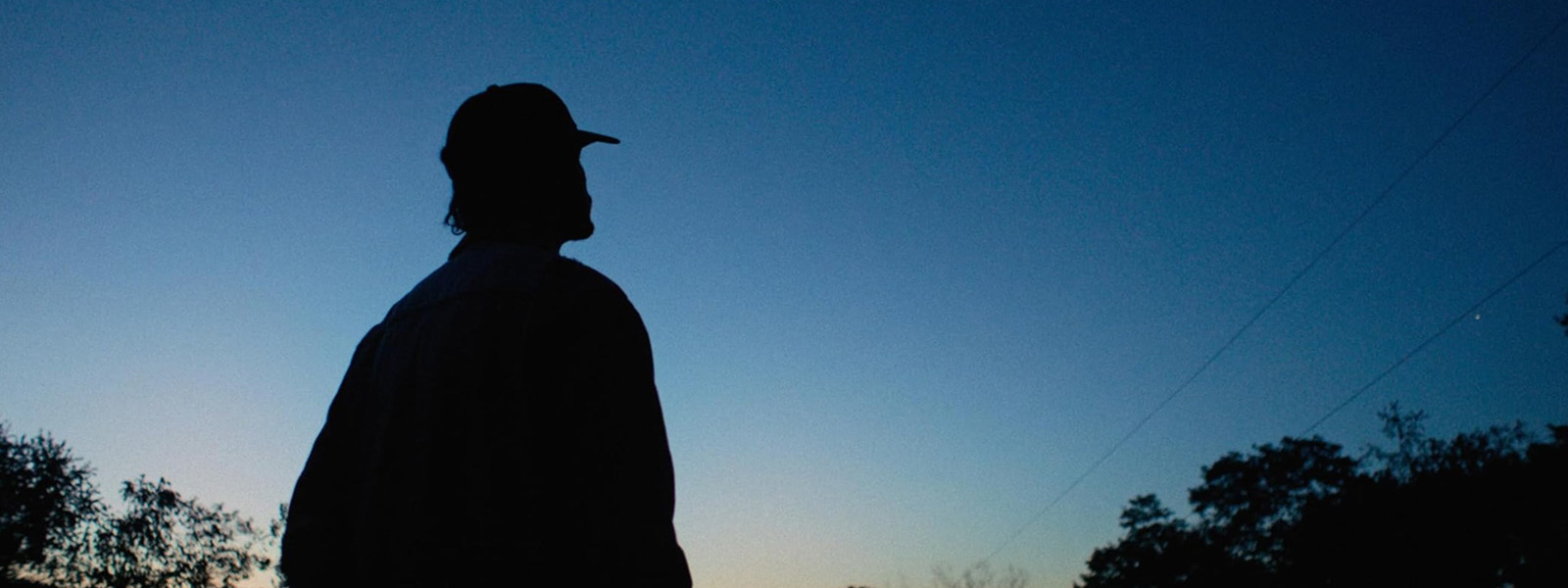
The film follows Tyler Lovett, played by School of Drama alumnus Jack Alcott (B.F.A. '19), a lonely 25-year-old who steals his father’s old 1989 Mustang and slips into a long, restless summer of midnight drives, fleeting reunions, fractured friendships and old regrets. He is moving constantly but not exactly getting anywhere, pulled down roads that keep leading him back to the life he is trying to outrun.
In a way, the film’s own journey followed a similar loop.
“Lone Rider” had begun at UNCSA as an idea Jumba could not shake, a screenplay Flowers could not stop giving notes on and a project shared among friends still shaping themselves as artists. More than a decade later, Jumba, Flowers and Alcott were back on campus premiering their film at UNCSA’s ACE Theatre as part of RiverRun, steps away from the studios where they learned their crafts and built the relationships that made it all possible.
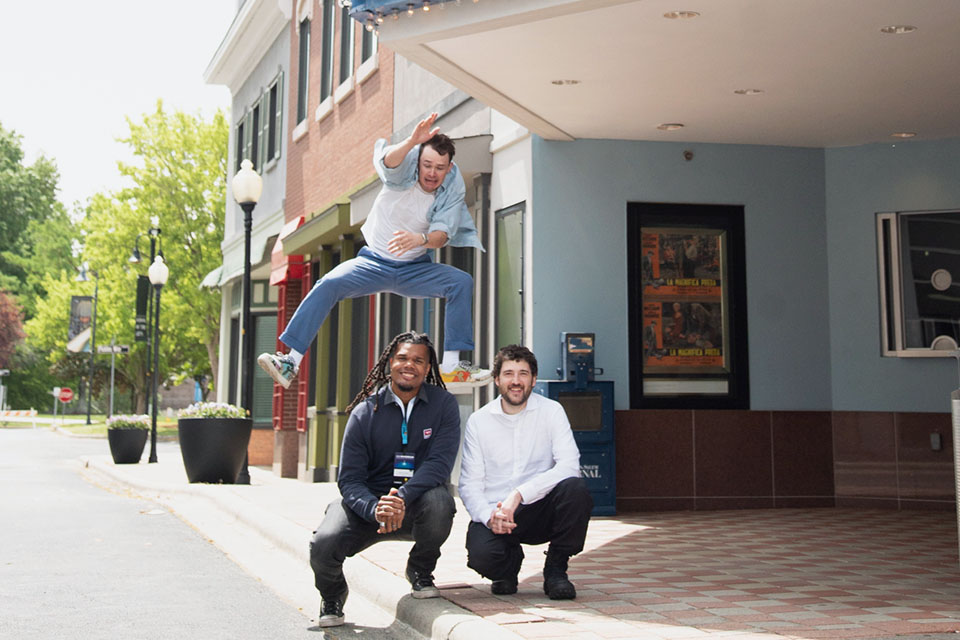
Jack Alcott, Christian Flowers and Adam Jumba outside of the ACE Exhibition Complex at UNCSA / Photo: Sasha Hartzell
How "Lone Rider" began at UNCSA
The seed of “Lone Rider” was planted the year before Jumba started at UNCSA, when he attended a campus screening of “Raising Arizona,” the Coen brothers' film edited by UNCSA Filmmaking faculty member Michael Miller. Watching it, Jumba found himself turning over a question: What would a road trip movie look like if there were only one traveler?
The question stayed with him, and as a directing student at UNCSA, he began turning it into a screenplay. “I’d just kind of work on it and take a few months off, work on it and take a few months off,” Jumba recalls. “It was always there.” Every new draft of the story made its way to Flowers, who was then Jumba’s dorm-mate and a screenwriting student. At first, Flowers was a trusted reader. Then he became more of a creative sparring partner.
“Every time I had a new version of the script, I would ask him for notes,” Jumba says. “Eventually, he just kept giving so many notes, I was like, ‘Do you want to just write it with me?’”
By their senior year, the script had become something that felt achievable as a first feature: character-driven, intimate and grounded enough to be made without a Hollywood budget. Still students, Jumba and Flowers decided to test the material first by making a short-film version over winter break.
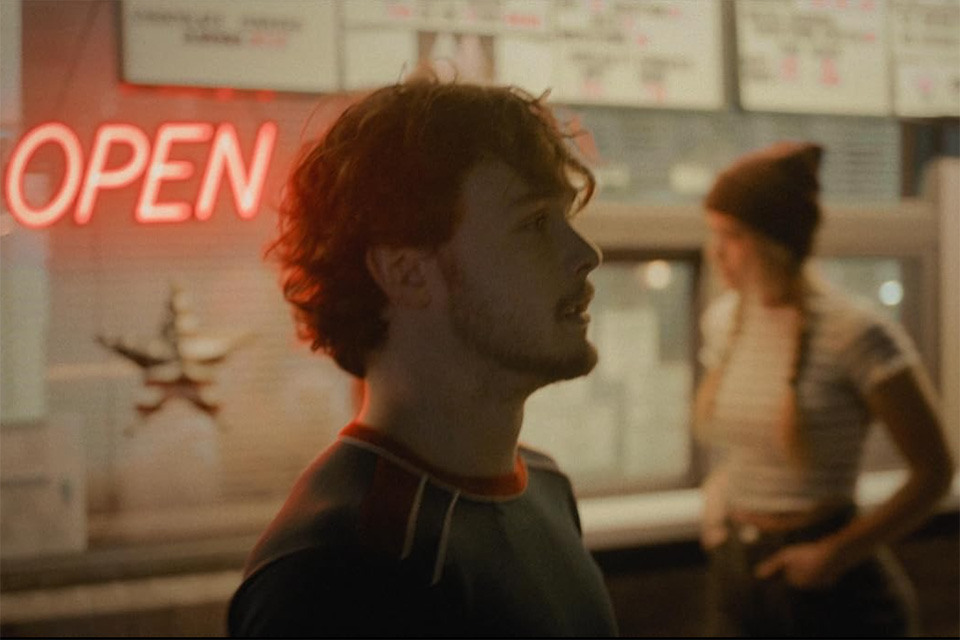
Jack Alcott as Tyler Lovett in "Lone Rider" / Photo: IMDB
They did not have to look far for someone to play Tyler. Over the years, they had frequently collaborated with Drama students, and Alcott had become both a friend and a natural fit for the character. He understood Tyler’s humor, loneliness and self-protective restlessness — even if he did not yet know the short was part of something larger.
“At this point, I didn’t know it was a short-film version,” Alcott says, laughing. “Adam just said, ‘Here’s the short,’ and I was like, ‘Awesome. Yeah, let’s make it.’” Years later, Jumba called again. “Remember Tyler?” he asked. This time, they were ready to make the full feature.
Making a low-budget film possible
Over the years, “Lone Rider” changed dramatically. Early drafts had a bigger canvas: more locations, more detours, more genre flourishes and a journey that once stretched from Pennsylvania to Florida. But the deeper Jumba and Flowers got into the story, the more they found themselves stripping things away.
The road movie became less about distance traveled and more about the emotional loop Tyler was caught in. What emerged was not a traditional road-trip movie, but something more fragmented and interior: part memory, part dream, part restless summer drive. “It was condensed and condensed and condensed,” Flowers says, “until we were left with what feels like a really potent kind of tone poem.”
That same process of distillation carried into production. After graduation, the friends spread out across Los Angeles, New York and Nashville. They were trying to build careers, take the work that came and keep the film alive without waiting for ideal circumstances. So they built “Lone Rider” around what they had.
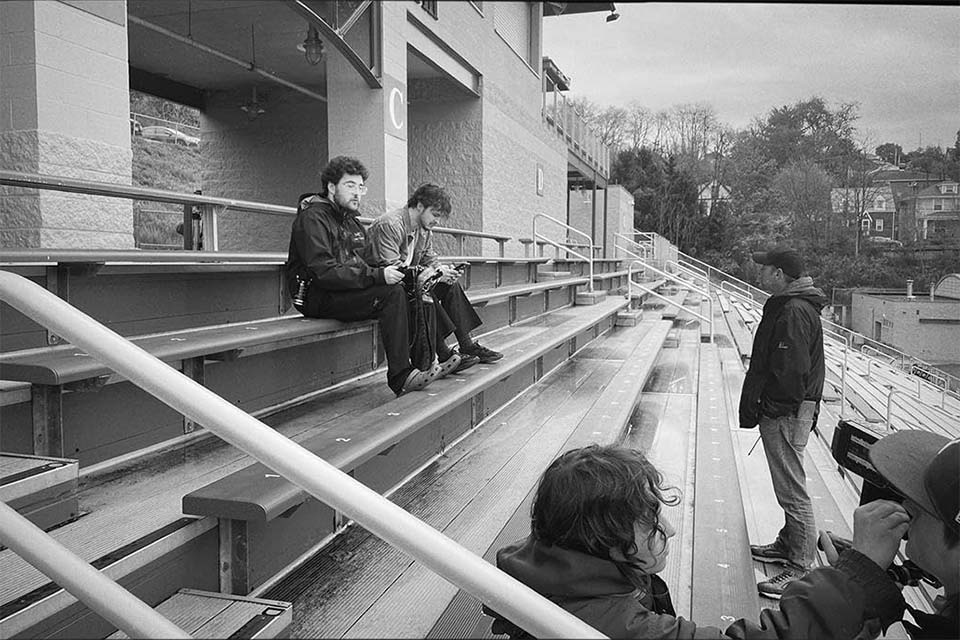
Adam Jumba and Jack Alcott on set for "Lone Rider" at Jumba's high school / Photo: IMDB
A casino scene disappeared when it became clear they could never afford the location. Pittsburgh, Jumba’s hometown, became the film’s primary backdrop. A marina where he had once worked became one of the film’s central settings. His former high school became a filming location, filled with childhood friends, family members and extras.
For Flowers, those choices brought the film closer to Tyler’s reality. “What would Tyler’s life actually look like?” Flowers would ask. “How do we take that component of him feeling like he’s in control here, but loses control there, and kind of take the shine off of it?”
In this way, the film’s independent constraints became part of its language. “Lone Rider” is not a movie about escape in the glamorous sense — it is about the kind of escape that happens in familiar places: on old roads, in old cars, among people who know versions of you that you are trying to leave behind.
The UNCSA alumni network
For all the creative problem-solving involved, the film would not exist without the relationships behind it. “Early on we established that we were not just talkers when it came to projects,” Alcott says. “We were all, in our own right, doers.”
As students, they spent years helping with one another’s projects, attending performances and screenings and lending whatever skills they could. That network extended beyond the three central collaborators: “Lone Rider” brought together additional UNCSA alumni across the cast and crew, including Drama alumna Nadezhda Ame (B.F.A. '19) and Filmmaking alumni in key creative and production roles, including first assistant director, title design and color.
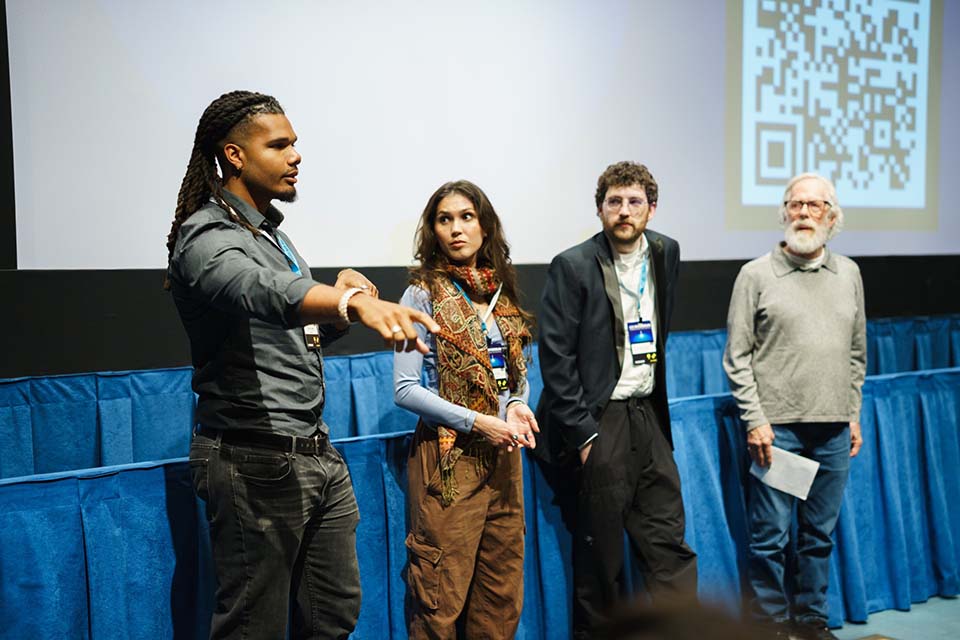
Christian Flowers, Nadezhda Ame, Adam Jumba and Filmmaking emeritus faculty member Dale Pollock at a Q&A following the ACE Theatre screening of "Lone Rider" / Photo: Brigith Dávila
For Alcott, who has spent much of his professional career working in television, the “Lone Rider” set felt markedly different from a larger production. It was smaller, scrappier and more intimate. “Everybody did a little bit of everything,” he remembers. “People are doing each other’s jobs in a good way, everybody’s picking up everybody else’s slack.”
It was the embodiment of advice Alcott had once received from one of his professional icons: "Make shit with your friends." And that's exactly what Jumba, Flowers and Alcott set out to do.
Bringing "Lone Rider" back to campus
Returning to UNCSA brought the journey into sharp focus.
“I remember talking to Christian when we were in college,” Jumba says. “We’d say, ‘You know, someday, it would be great to come back and show a movie that we made.’ And I didn’t think it would happen this quickly.”
For Flowers, coming back carried its own sense of responsibility. His younger brother, a UNCSA animation student, was graduating, and Flowers had set a quiet goal for himself: he wanted to bring a film back before his brother left campus. “I told myself I wasn’t going to come back to UNCSA until I had a film to present,” Flowers remembers.
For Alcott, the return felt almost dreamlike. He had flown in between shooting days for “Dexter: Resurrection,” stepping briefly out of one professional world and back into the place where he first trained. “It’s like a pleasant fever dream,” he says.
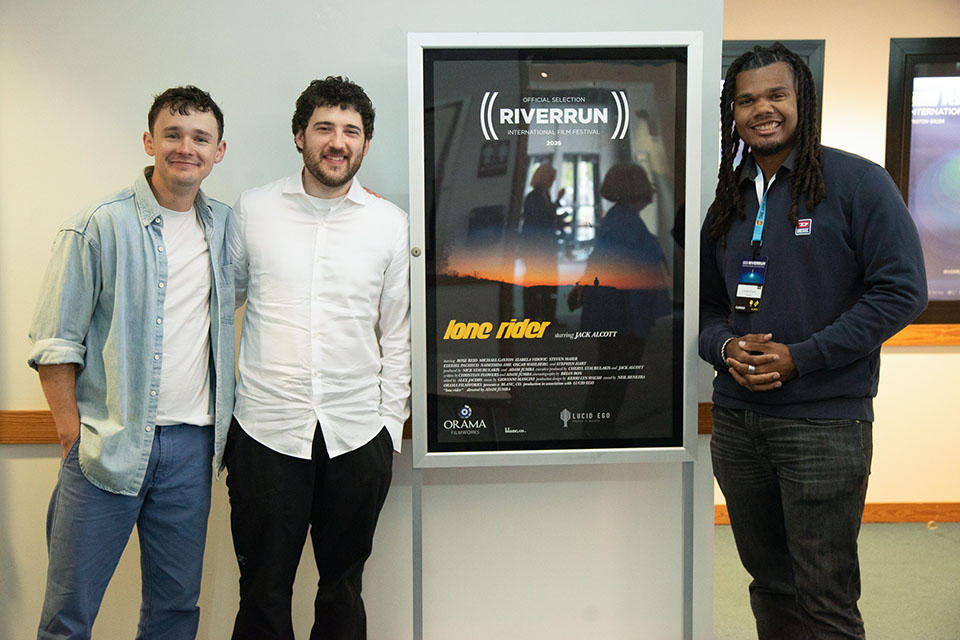
Jack Alcott, Adam Jumba and Christian Flowers with a "Lone Rider" poster / Photo: Sasha Hartzell
Keeping the film festival momentum
Since its RiverRun premiere, “Lone Rider” has continued on the festival circuit, including screenings at the Lighthouse International Film Festival and Dances With Films in Los Angeles, as well as announced screenings at the Wyoming International Film Festival and Festival of Cinema NYC.
But its return to UNCSA remains central to the story. “Lone Rider” is a film about a young man trying to understand why every road seems to lead him back to himself. For the alumni who made it, bringing the film home offered a different answer to a similar question: Sometimes the place you begin is not something to outrun. Sometimes it is the place that gives you the people, the tools and the nerve to keep going.
Get the best news, performance and alumni stories from UNCSA.
SUBSCRIBE TO OUR NEWSLETTERS(OPENS IN NEW TAB)(opens in new tab)
June 29, 2026