Victoria King finds inspiration in Alaska’s wilderness
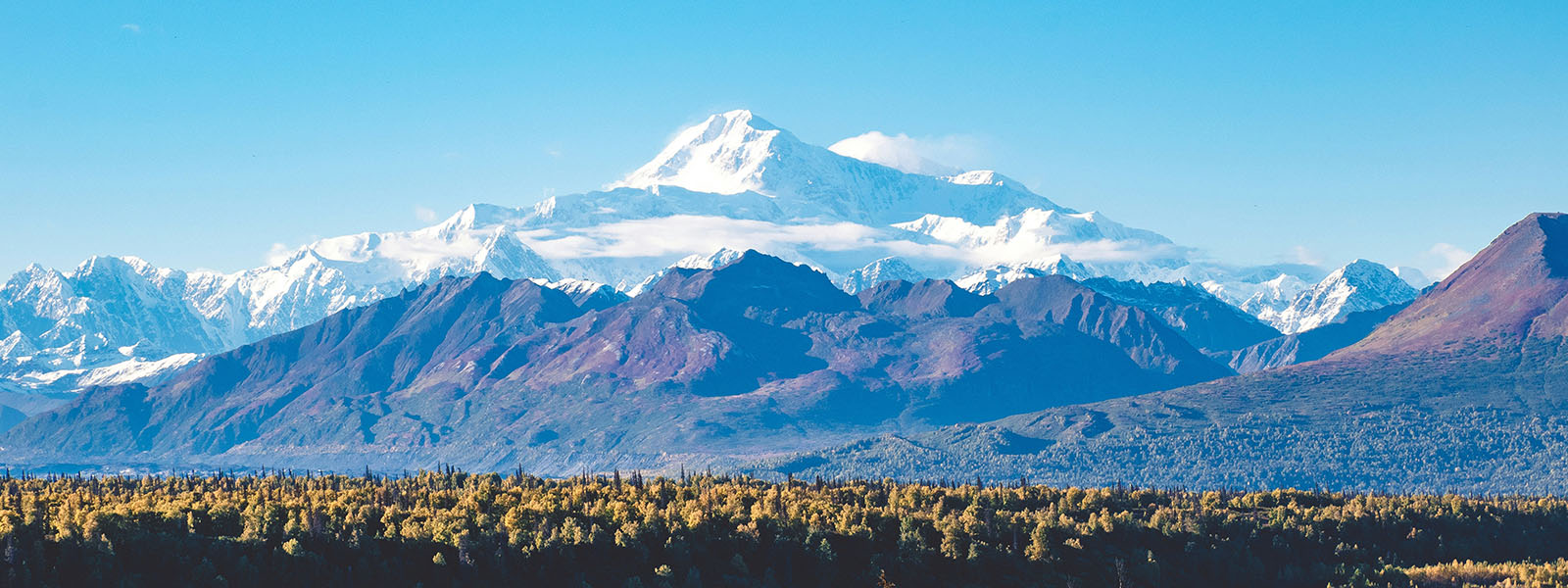
School of Music undergraduate Victoria King spent part of her summer trading the classroom for the wilds of Alaska. Selected for the Fairbanks Summer Arts Festival’s prestigious Composing in the Wilderness program, King joined seven other composers for an unforgettable blend of outdoor adventure and creative challenge in Denali National Park.
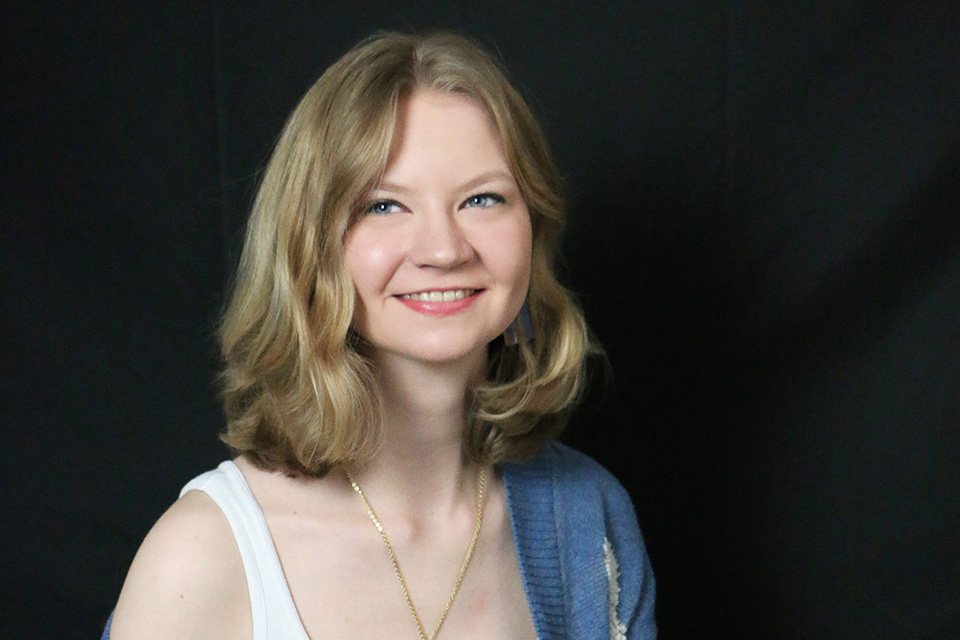
UNCSA School of Music student Victoria King
Below, learn more about this one in a lifetime experience from King:
Tell us about what you did this summer!
This summer, I participated in Fairbanks Summer Arts Festival’s Composing in the Wilderness program. Eight composers were selected to go hiking in the wilderness of Denali National Park for four days, then we each wrote a piece based on our experience and had it performed by the Corvus ensemble.
Stephen Lias led our eight composers in Denali National Park on various hikes for four days. The first day, we all met up, saw the sled dogs, took a short hike, then met our Alaska Geographic Guide Cassidy (who was amazing!) and set up at the Teklanika river camp. It was a short walk away from the Teklanika braided river, which many of us visited often. That night, all the composers found out what instruments we would eventually be writing a piece for by drawing our instrumentation out of a hat. The next day, we hiked along Tatler Creek with the National Park Service sound specialist and ecologist Davyd Betchkal. He brought us freshly caught salmon for dinner, which we smoked over a spruce wood fire!
The day after, we hiked on the third drainage of Cathedral Mountain, which was a much more difficult hike, but led to the most gorgeous views I’ve ever seen. National Park Service Director for Education and Interpretation Paul Ollig joined us that day. On our last day in Denali National Park, we hiked Primrose Ridge on Mount Margaret where we saw a caribou! Our group gelled together very well—we looked after each other and had lots of fun together. Each guest hiking with us was also knowledgeable and incredibly kind.
We spent the next three days staying at the Denali Education Center where we had to write a musical composition inspired by our experience in the national park. I wrote “After the Birds Stop Singing” for alto flute, violin, cello and vibraphone. I was nervous because I’ve never written a piece this quickly before, but I had a rough sketch of the whole thing done by the first day, a better draft by the second day and a fully completed piece early on the last day. One of those evenings, I attended a talk on the resources, economics and Indigenous thought of Alaska, which was very enlightening. Everyone turned in their scores to the Corvus ensemble on the last night in the Denali Education Center. The next morning, we drove to the University of Fairbanks where we would be staying for the rest of the program.
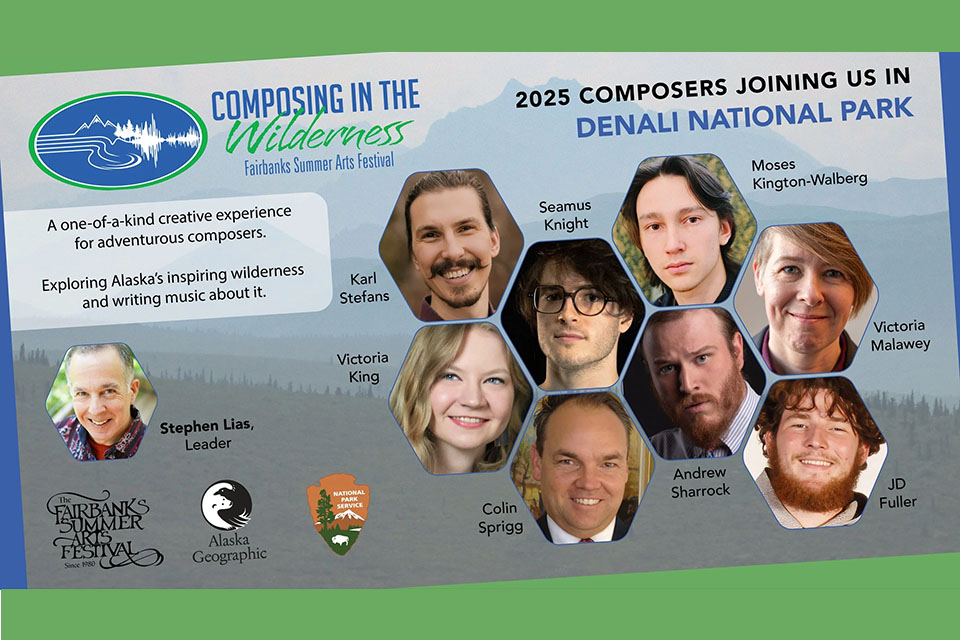
The 2025 Composing in the Wilderness cohort.
Having only received the scores the day before, Corvus rehearsed four of the eight pieces the very next day. They rehearsed the other four the day after that. On July 30, our group went to the Museum of the North and got to see John Luther Adams’ “The Place Where You Go to Listen.” After that, we all went on KUAC live radio. Lori Neufeld interviewed all of the composers and Corvus played three of the pieces on live radio—including mine! The next day, July 31, we had our Composing in the Wilderness concert. Corvus played eight pieces, one by each of the eight composers, beautifully. Each piece was unique and inspiring. On August 1, we all went to the Denali National Park visitor’s center for the second Composing in the Wilderness concert. That night, everyone said their goodbyes.
What was the best part or biggest lesson learned?
One of the best parts about my time with Composing in the Wilderness was the view at the top of Cathedral Mountain. It took my breath away. However, I think my biggest take away from the experience is just how much hope it filled me with. I know my experience was somewhat curated, with our group of composers being carefully chosen, and each guest a friend of Stephen Lias’, but every single person I met was absolutely lovely. From the composer I shared a cabin with to the staff member at the Denali Education Center who made coffee for us, every single person was generous, caring and open minded. If random people from all over the country (and the world, even!) were so wonderful, then maybe the future isn’t so scary. There are beautiful humans everywhere. Artistically, I realized that I should be more confident in my music. Simplicity is good, and often much more moving than when I get in my own head about what I’m writing. It just needs to come from the heart.
How did you get this opportunity and make it happen?
Paul Sharpe, double bass professor at UNCSA, told me about this program. I looked it up, applied and made it in! I am so thankful to him for telling me about his opportunity and helping me get to Alaska. I stayed with his parents for a day before Composing in the Wilderness and several days afterwards—he even gave me hiking boots! I’m very grateful to him and his parents.
Who were the people that were instrumental in making this possible?
There’s a long list of people who helped me make this experience possible. Paul Sharpe, John and Joy Sharpe, and Jake and Kate Taylor all gave me places to stay in Alaska. Jake and Kate are Intervarsity staff members at UAF—they were so kind to pick me up from the airport (at 1 a.m.!) and host me for a night in Fairbanks, having never even met me before. My parents and several members at my church at home provided me with the necessary hiking gear. The Career Development grant and Semans Art Fund Grant help me pay for tuition and plane tickets. Stephen Lias and the Fairbanks Summer Arts Festival organized the program. Cassidy, our Alaska Geographic guide, kept us safe and shared her wealth of knowledge and enthusiasm, along with the national park staff members Davyd and Paul that joined us on our hikes. The Denali Education Center provided the perfect, peaceful place to compose our piece, the members of Corvus gave several wonderful performances of my piece “After the Birds Stop Singing.” Lori Neufeld hosted us on the radio, Kris Capps interviewed all of us and put the story on the front page of the Fairbanks News-Miner, and several Fairbanks Summer Arts Festival volunteers provided delicious meals for our group while we were in Fairbanks.
Was the experience what you expected or something more? How did it shape your artistry?
I tried not to have any expectations when going into this trip, so everything was new and exciting for me. I certainly didn’t expect the writing process to go as smoothly as it did, and I didn’t expect all the composers to bond so well. I realized that I am capable of writing music quickly and well as long as I devote my focus to it and commit to an idea. There wasn’t time to flounder around wondering if my melody was good enough, I just had to do it—and it worked out! Composing in the Wilderness has certainly helped me out of my summer slump and inspired me for this coming semester.
What’s next? What are you looking forward to most this year?
Next, I get ready for school! I have an orchestration gig I’m working on outside of school, but the biggest thing is my orchestra piece. As a third year undergrad, I’m super fortunate to have the opportunity to write for orchestra. I’m nervous, but mostly super excited! I’ll spend fall semester writing and have it performed by the UNCSA Symphony Orchestra at the end of spring semester.
Get the best news, performance and alumni stories from UNCSA.
SUBSCRIBE TO OUR NEWSLETTERS(OPENS IN NEW TAB)(OPENS IN NEW TAB)(OPENS IN NEW TAB)(OPENS IN NEW TAB)(OPENS IN NEW TAB)(opens in new tab)
August 15, 2025