Kenan Arts helps bring community arts stories to life nationwide
The impact of the arts in America, told through the lens of filmmakers in five communities across the country. It’s a simple description for a deeply impactful initiative led by the Arts Impact Collaborative (AIC), with support from the Thomas S. Kenan Institute for the Arts (Kenan Arts).
The documentary anthology “I Feel Myself to be Part of Something” — with films releasing throughout 2025 and 2026 — explores how the arts affect economies, identities and belonging while highlighting a multitude of art forms and programs.
The Arts Impact Collaborative champions artists by lifting up stories rooted in the lived experiences of their communities.
Kevin Bitterman, Executive Director, Kenan Arts
“The Arts Impact Collaborative champions artists by lifting up stories rooted in the lived experiences of their communities,” says Kevin Bitterman, executive director of the Kenan Institute for the Arts. “Their work reminds us that we are all capable of creative expression grounded in the stories we carry — and that artmaking can foster connection, understanding and healing. At Kenan Arts, we are committed to building pathways to creativity for all, and we are proud to support the work of Arts Impact Collaborative here in North Carolina and across the country.”
Community-centered storytelling
The idea for “I Feel Myself to be Part of Something” was sparked during the COVID-19 pandemic, explains AIC co-founder and producer Mara Isaacs. “I saw so many industries affected by closures and lots of discourse about essential workers and their industries… but very little discourse about the arts.” Though mounting data exists that speaks to the value of the arts, both socially and economically, it’s an industry that isn’t widely embraced by the community at large. “I wondered how we could do this differently,” Isaacs explains. “People respond to narrative and to personal stories… that’s what the Arts Impact Collaborative is and how the anthology came to be.”
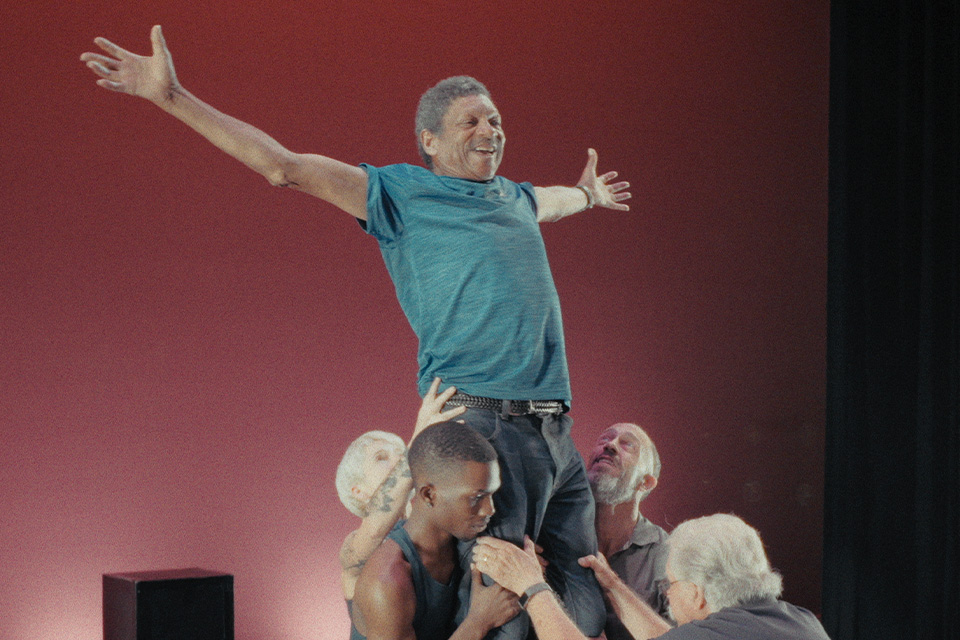
Dancers support one another in a moment of trust, connection and joy. / Contributed photo
As each documentary in the anthology premieres, AIC follows a community first distribution model to prioritize screenings in the very communities where the stories were filmed. “So often in the filmmaking world there’s an elitism that guides how films are presented and rolled out… you need to be in this festival or get picked up by that distributor,” says Isaacs. Often, success in these areas dictates the overall success of a film. “But our goals are different,” she explains. “We want to be a catalyst for conversations in a community, and we want to decentralize the control of the films to allow communities and arts organizations to host their own screenings while building their own dialogue.”
The anthology’s five films explore a range of topics:
- “The Feeling of Home” highlights the RedAnts Pants Music Festival in White Sulphur Springs, Montana, which
has transformed the small community over the last decade. The film premiered in July
2025.
- “We Lift Each Other” explores the dancers of Raleigh-based Black Box Dance Theatre as they travel across
North Carolina to build community primarily with active-duty military and their families,
veterans and people coping with PTSD. The film premieres on November 10, 2025, at
the Wortham Center for the Performing Arts in Asheville, N.C.
- “A Vision of the Future” visits Oakland, California-based muralist Rachel Wolfe-Goldsmith as she works through
the design and execution of a community-based mural that illustrates community members’
hopes for the future. This film will premiere in 2026.
- “Growing Leaders” follows the work of Moving Arts Española in Española, New Mexico, and will premiere
in 2026. The organization provides performing arts education for children and youth—a
safe haven from the dangers of their town, which sees one of the highest rates of
drug overdose deaths in the country.
- “The Wisdom of Community” profiles the In[HEIR]itance Theater Project in Chicago, Illinois, which co-creates plays with South Side Chicago residents to address neighborhood issues and foster civic dialogue. This film is slated to premiere in 2026/27.
“At the Montana premiere, I saw proof that Arts Impact Collaborative has struck a chord with audiences about the value of the arts — illuminating the ways in which creativity connects and contributes to a thriving community,” says Bitterman.
We want to be a catalyst for conversations in a community, and we want to decentralize the control of the films to allow communities and arts organizations to host their own screenings while building their own dialogue.
Mara Isaacs, Co-founder and Producer, Arts Impact Collaborative
It was shortly after production wrapped for “We Lift Each Other,” the North Carolina-based film, that Kenan Arts began to develop a partnership with AIC to support the post-production and premiere of the film. The partnership is critical to AIC’s philanthropic model, which seeks to be mission-driven, rather than market-driven. “We raised money to support the making of the films, but also to sustain the roll out of community screenings,” says Isaacs.
Following each premiere, collaborative partners will work with additional local and regional outposts — such as libraries, universities, community centers and arts organizations — to screen the film for wider audiences free of charge. Kenan Arts is also supporting the development of a toolkit for each of the five films which will provide organizers with a screening guide and handbook to drive local engagement, dialogue and additional and future support.
A North Carolina story to tell
“We Lift Each Other” and the work of Black Box Dance Theatre was initially pursued by AIC producer and director Lou Pepe for practical reasons that appealed to him as a creative. “Moving bodies is cinematic. It’s visual, and it plays into filmmaking in a fun way.” Inspired by the street dancing scene in Colorado, he began searching for a story to tell around the intersection of post-traumatic stress disorder (PTSD) and dance. Black Box and the company’s work with veterans drew his attention, and he immediately forged a close connection with founding artistic director Michelle Pearson. “It was a big mission of AIC to find stories that were nonpartisan; stories that affected more than just believers in a cause,” recalls Pepe. “I thought, ‘ok, this catches my curiosity.’ And as a documentary filmmaker, I pay attention to what makes me curious.”
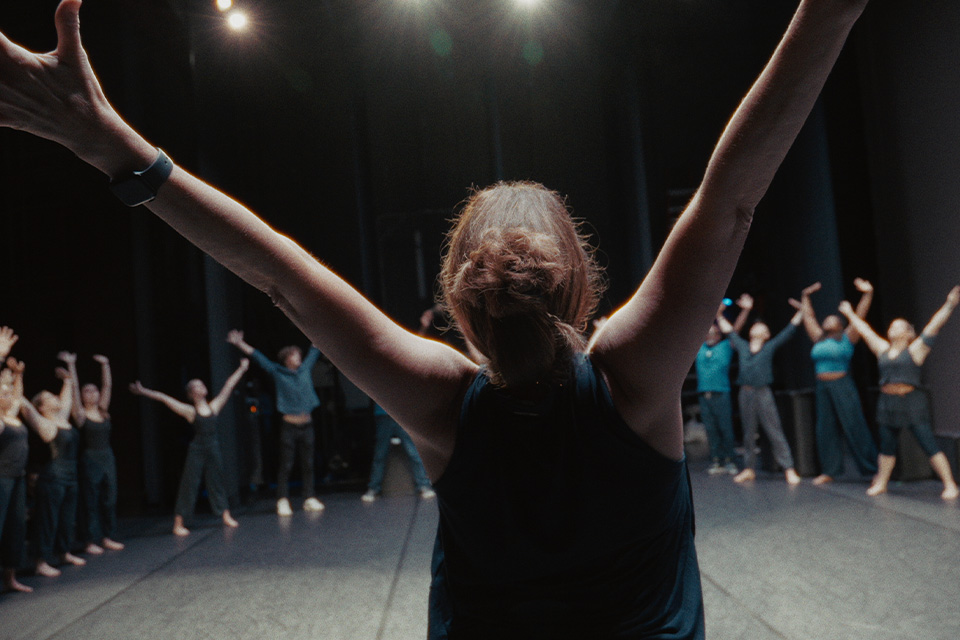
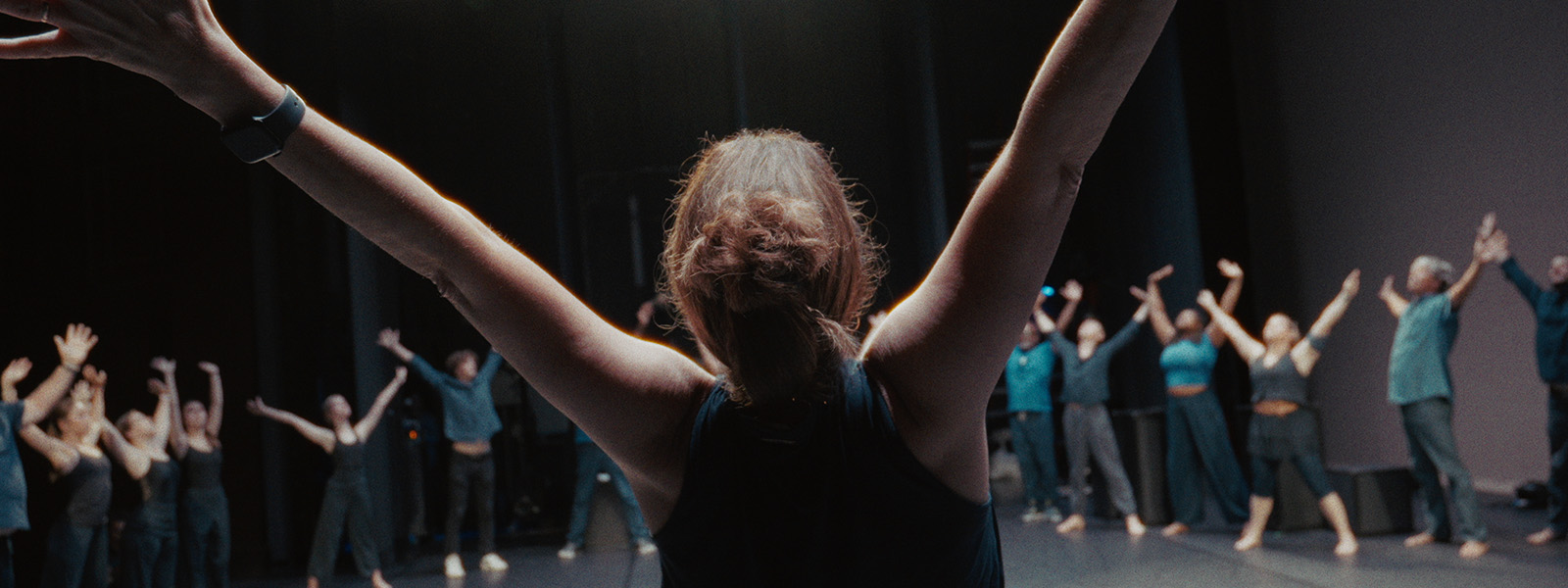
A dancer leads the ensemble in an expression of unity and release. / Contributed photo
Pearson and her company had recently completed a six-part dance program with both veterans and active-duty military in communities across North Carolina. The initiative was rooted in Pearson’s early experience as a dancer with Liz Lerman where company members asked themselves four questions: Who gets to dance? Where do you dance? What are you dancing about? Does dance matter? She focuses on the fourth question. “Often people will ask if I’m a dance therapist or if I work in healing arts,” she says. “And I think to myself, ‘no, I’m just a dancer.’ Dance allows us to understand each other and our own selves differently. It matters.”
Military stories came into the company’s work quickly, inspired in part by founding company member, Army veteran and Purple Heart recipient Alfredo Hurtado and influenced by the high number of military families in North Carolina. After observing workshops with active-duty military and their spouses at Fort Bragg, Pepe and AIC were officially on board and Pearson connected with a group of veterans in Asheville to engage in the weeklong program. Though the documentary was filmed in 2023, the real work began after the cameras shuttered. “Many of the Asheville participants continue to meet once a week to dance,” says Pearson. When Hurricane Helene hit the region in September 2024, only one weekly meetup was canceled. “So much changed at that point,” recalls Pearson. “The stories changed. They became about taking their war experience and being able to talk about what happened in Asheville through that lens.”
The film premieres on Nov. 10, 2025 — a date carefully selected to celebrate Veterans Day and to honor the active-duty military and veterans who engaged in the making of the film. The community first screening will be followed by a discussion with the filmmakers along with veterans and dancers featured in the film.
Additional screenings are planned for “We Lift Each Other” — including a second showing in Asheville and a Winston-Salem screening in partnership with RiverRun International Film Festival. These free events invite the same opportunities for engagement that are present in the community first film premieres. “We hope the film will be a catalyst for us to take our work to new communities,” says Pearson. The model is easily scalable to align with community demand, offering opportunities for the work of the Arts Impact Collaborative and Black Box Dance Theatre to continue to be elevated around the state and across the country.
November 5, 2025