Embracing the artistic process: Kenan Arts sponsors faculty to attend Penland creative workshops
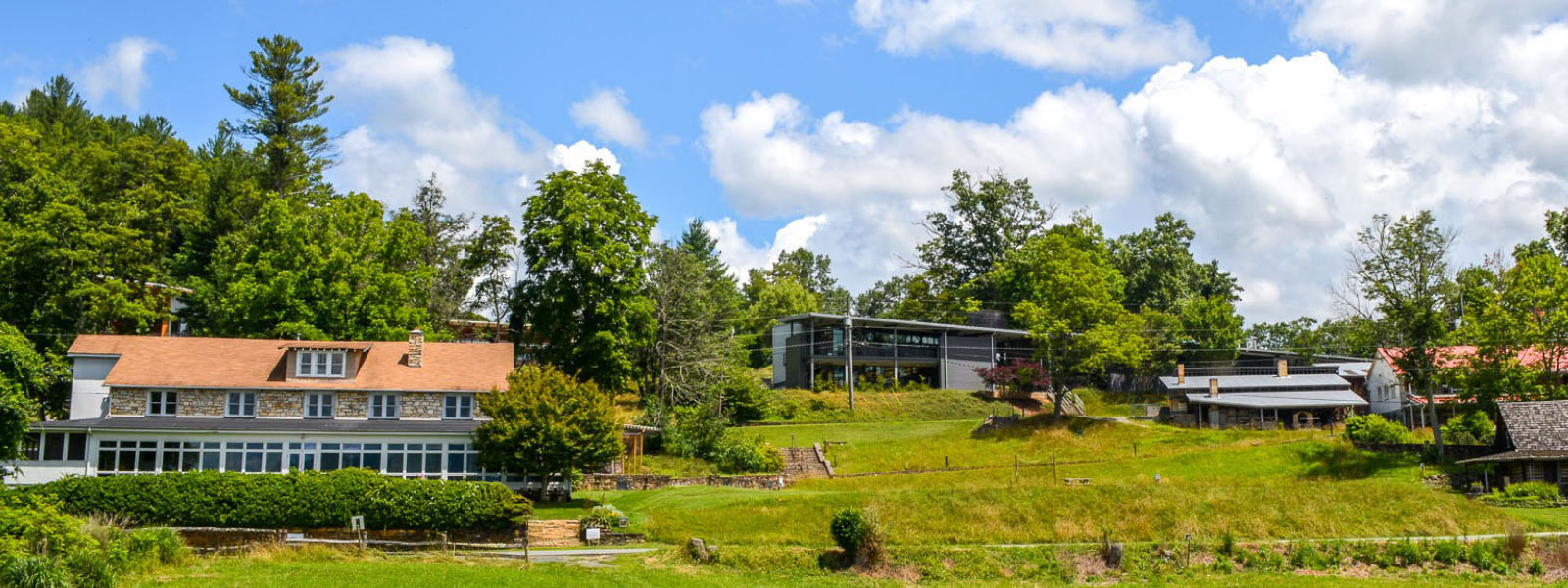
Penland School of Craft and Thomas S. Kenan Institute for the Arts (Kenan Arts) share a long, deeply connected history rooted in a mutual commitment to the arts, learning and community. Following a successful program in which Kenan Arts sponsored UNCSA faculty members to attend Penland summer workshops in summer 2024, five more were selected to attend in 2025. Over two weeks, they immersed themselves in cohort-style learning under the guidance of renowned artists. The dedicated time on Penland’s campus offered space to step away from routine and broaden their creative expression.
“Kenan Arts is committed to supporting the whole artist,” says Executive Director Kevin Bitterman," and Penland has proven to be an ideal space to nurture their creativity and passion. These workshops provide the time, space and encouragement artists need to explore deeply and freely. UNCSA faculty returned energized by their experience, bringing renewed creative momentum into their classrooms and their own artistic practices.”
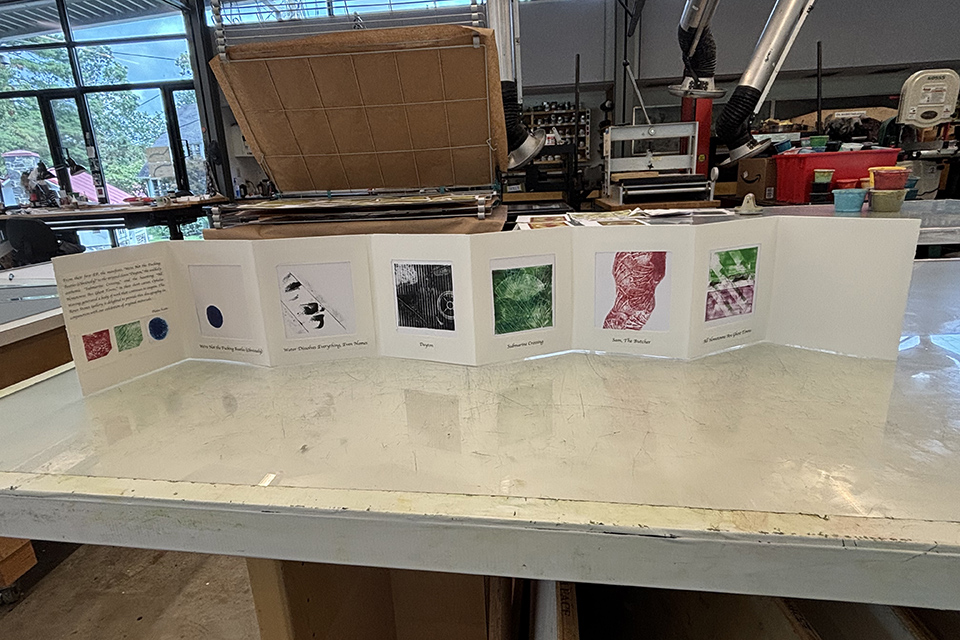
Joe Mills' work from a printmaking workshop with Susan Webster and Stuart Kestenbaum.
Division of Liberal Arts humanities and writing professor Joe Mills studied printmaking with Susan Webster and Stuart Kestenbaum. Fellow DLA writing professor Elizabeth Klaimon enrolled in “Material Exploration: Memory and the Senses” with Masako Onodera. Collaborative Piano Department Chair Allison Gagnon and Visual Arts professor Teresa Cervantes both attended clay workshops — Gagnon with professor Chris Staley and Cervantes with professor Tammie Rubin. Director of Scene Design John Coyne participated in the drawing studio workshop “Diving Into Authenticity” with Christina Shmigel.
An opportunity to stretch and grow
“It was intense and really beautiful,” says Klaimon of her time at Penland. “I learned a completely new skillset… I didn’t know I was signing up for metal work!” Mills shares a similar sentiment, not having been sure what to expect at the start of his workshop. “After several years of teaching during the summer, I wanted to spend some time being a student again, being a novice, learning something completely new, being somewhat scared and feeling out of place. That fuels me,” he says. “I brought up some work to do and just left it in the car. Everything had to be new, and I was fully committed to being there. I wasn’t going to be shy.”
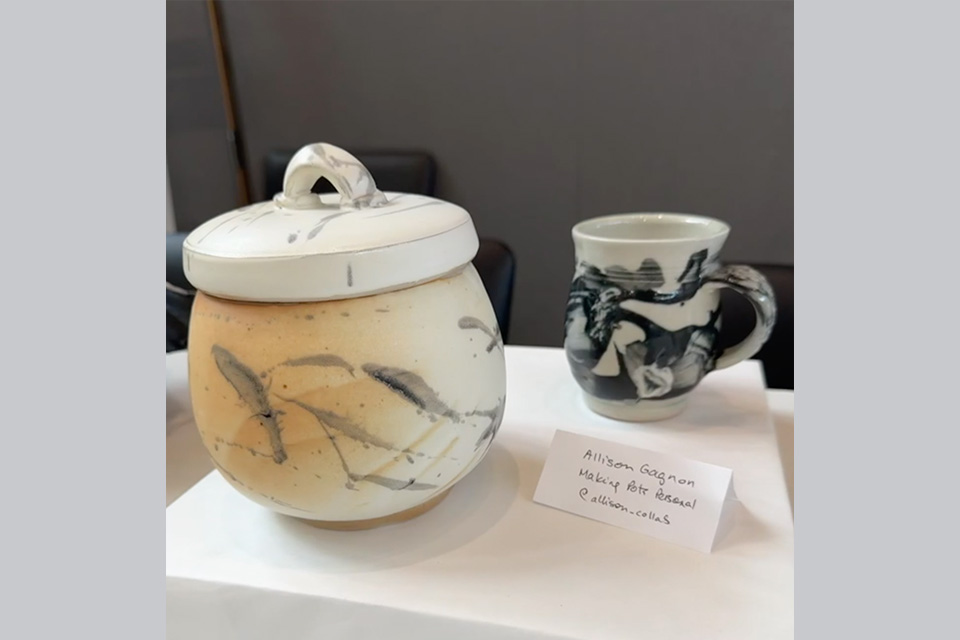
Collaborative piano faculty Allison Gagnon's work from a clay workshop with professor Chris Staley.
Coyne selected his workshop out of a desire to uncover what drives his personal creative practice. Alongside performance artists, textile artists, weavers, painters and sculptors he searched for “ways into his work” as a scene designer and plein air painter. “A lot of our time was spent reflecting on the work of other cohort members,” he explains. “We brought in work but weren’t allowed to talk about it. We could only receive what others shared about our work. It was interesting to let the work simply speak for itself.” This method opened students up to opportunities to discover new perspectives and points of view they hadn’t initially considered when creating the work.
Gagnon selected a workshop with a familiar subject matter, offering the opportunity to dig deep into technique while broadening her skill. “Penland was the first time I spent all day, every day for many days focusing on clay,” she says, adding that she had new opportunities to learn how to load and fire the kiln during the workshop. Cervantes, too, had worked with ceramics before Penland, but learned a new method: “I had wanted to learn how to slip cast for quite some time,” she says, “but I had never seen a program offered outside of courses for a degree program. I was beyond excited to make this long time goal a reality.”
Space for flexibility
Flexibility was a thread woven throughout the Penland workshops, regardless of subject matter. Gagnon describes her instructor’s simple guidance to eliminate the rigid standards artists sometimes impose on themselves: if not this way, go that way.
“My instructor was big on memory and on pieces that evoke memory,” shares Klaimon of her workshop that primarily focused on jewelry making. “We were told to start with small objects and I began to go out on a limb… I was shaping torsos for dolls. When my instructor saw me going off the deep end, she encouraged it.”
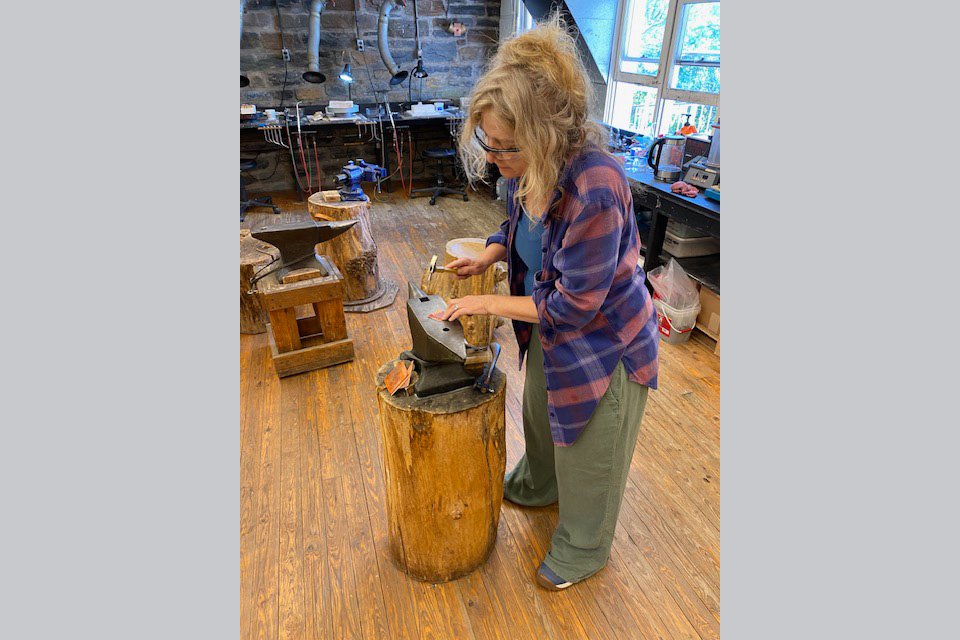
Elizabeth Klaimon working in the studio at Penland School of Craft.
“It was an intensively productive period for me,” says Mills, both in terms of printmaking but also writing. “I was thinking about music and I wrote a one page story on the studio’s manual typewriter,” he explains. Inspired by a kayaking trip where his son was momentarily pulled under water, Mills generated an idea for a punk band: Ophelia Waving. “I began making album covers and EP covers… imagining that the band broke up and wanted to do a retro exhibit 20 years later.” Ophelia Waving fit the bill for his final project, a collection of six related images.
Coyne arrived at Penland with a narrow vision of what he wanted to accomplish. “I had to trust the process and let that vision go a little bit,” he shares. “My work tends to be external to me. I draw the world around me and I interpret it, but it’s very observational,” he explains. “The process I learned [at Penland] showed me that I can begin working internally. It was new, terrifying and rewarding. And it yielded work unlike what I’ve created before.”
A spirit of collaboration
Penland workshops are designed for a cohort of students. While each attendee developed solo work, the spirit of collaboration was high across the bucolic creative campus in the Blue Ridge Mountains. “The students in my group were open and generous,” recalls Mills. “One of them brought in a vintage cartography book of river maps. I was excited to work with maps, and she gave me a few to use in my work.” Gagnon’s instructor was intentional about creating opportunities for collaboration within her studio. “We had 17 in our class,” she says, “and we really got to know each other because of the way the instructor was leading us. We were often sharing feedback in pairs or in small groups.”
Klaimon was energized to be in the classroom as a student, with peers of all ages, rather than as a teacher. “My cohort took me far outside of my comfort zone,” she says, “and there was a beautiful group engaged in cross generational sharing and partnering. I was learning side by side with people who are my students’ age. There was a great energy that came from that.”
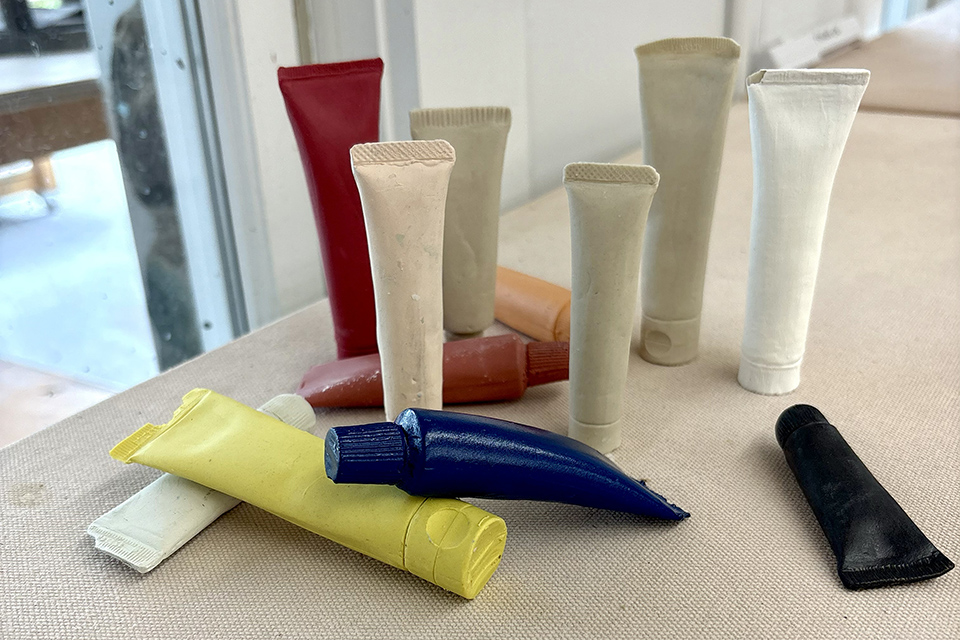
Teresa Cervantes' work from a clay workshop with professor Tammie Rubin.
Cervantes found uniqueness in the collaboration across Penland’s campus, and how many studios took a similar approach to their work. “I really bonded with the instructor who was doing tintypes, and I enjoyed walking through many of the studios,” she shares. “Everyone was so focused on their craft, and it was magical to see how we can make and be creative without using expensive things that require computer programs.” Klaimon agrees. “We had discussions around generational approaches to artmaking,” she says, “but so many students were very hands-on and valued that type of process and artmaking. It renewed my faith a little bit in where our world is going.”
Lessons to share
The two weeks at Penland filled faculty with inspiration to bring back to their classrooms at UNCSA and to their personal practice. “I was given a reminder to be aware of where inspiration comes from,” reflects Coyne. “And how to trust the process. When you’re creating something, you have to be vulnerable and put it out there — not knowing how it will be interpreted or seen. You have to trust yourself.” He’s planning to use an exercise from Penland with students next semester. “We brought in three simple objects that represented us,” he explains. “We laid them out and people around the table shared what they saw and what it made them think of. It’s a good reminder for students that people will always assign meaning. Our work is always seen and understood, even in ways we may not intend.”
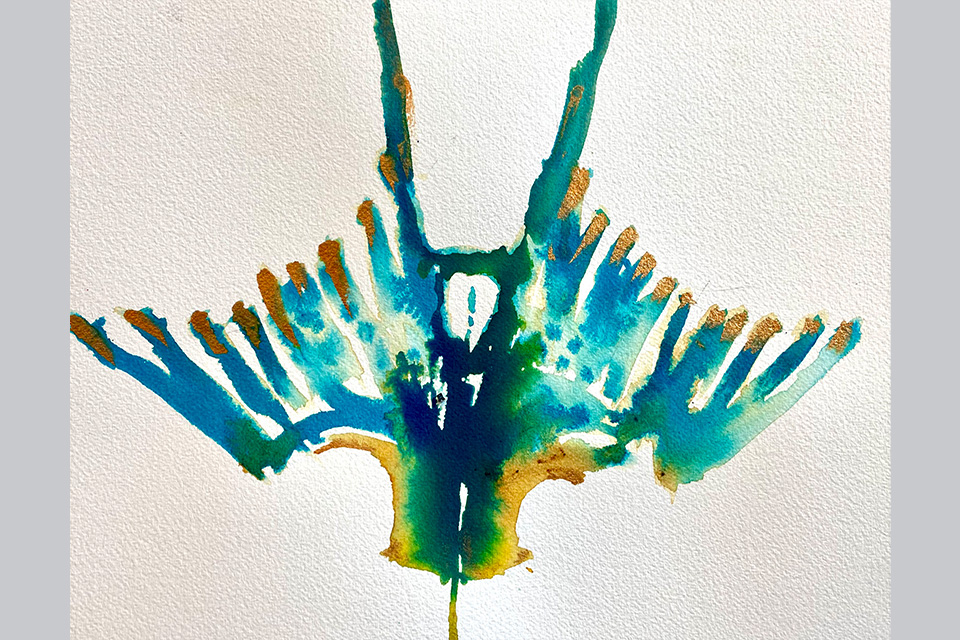
John Coyne's work from the drawing studio workshop “Diving Into Authenticity” with Christina Shmigel.
Klaimon’s course was focused on process over product, which aligned with her teaching philosophy. “We were all together, 2 a.m., music cranked and working super hard,” she remembers. “It was a good reminder of the mindset my students go through. I realized I wasn’t thinking about anything else other than this work. It gave me a lot to reflect on.”
“It’s important to realize we can move outside our comfort zone,” she continues. “Penland forced us to step outside that box in a positive way; to be in a space where everyone is immersed in craft. It was an important experience and a beautiful way to spend time being a student again.”