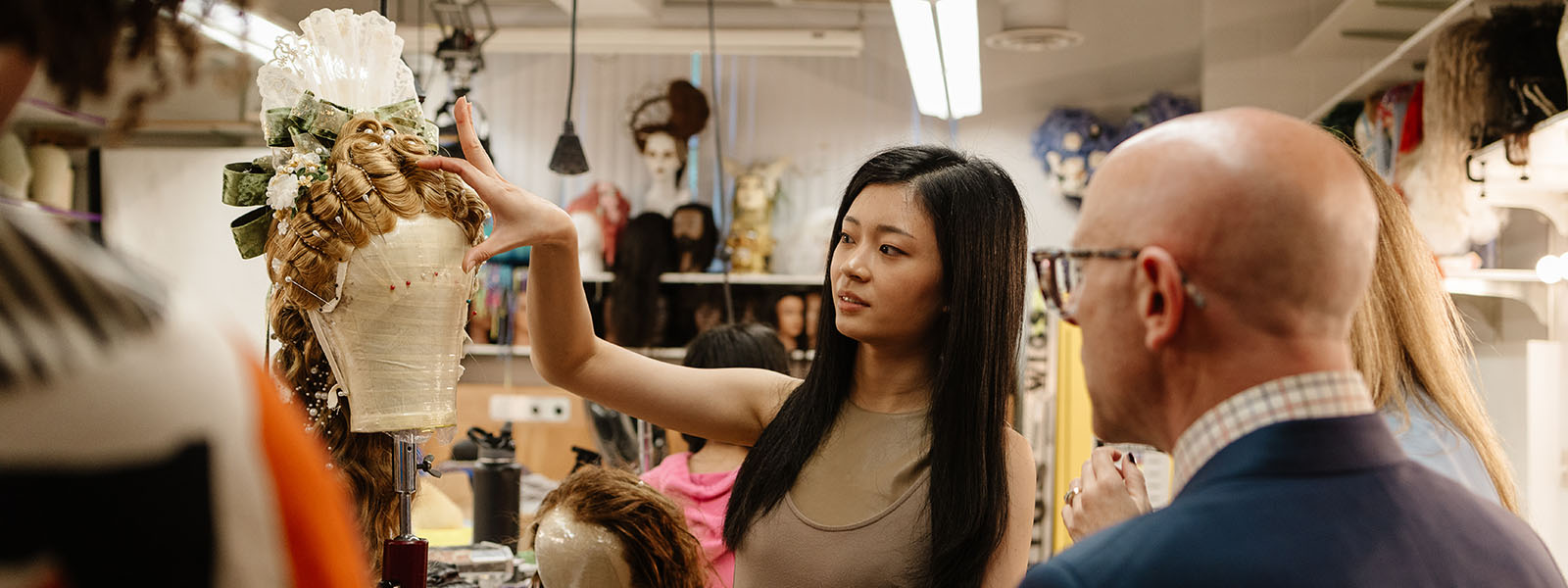
Wig and Makeup Design graduate Celine Lin blends fashion inspiration with theatrical storytelling
For graduating Wig and Makeup Design M.F.A. student Celine Lin, artistry has always started with her hands. Long before she began crafting intricate wigs, experimenting with prosthetic makeup or designing theatrical looks, she was sewing as a middle school student in Taiwan.
Her grandfather worked as a tailor, making suits professionally, and creativity became woven into her family history and ultimately, her own future. “I’ve always liked making things with my hands,” Lin shares. “I started sewing bags and little things, and then eventually I wanted to make clothes.”
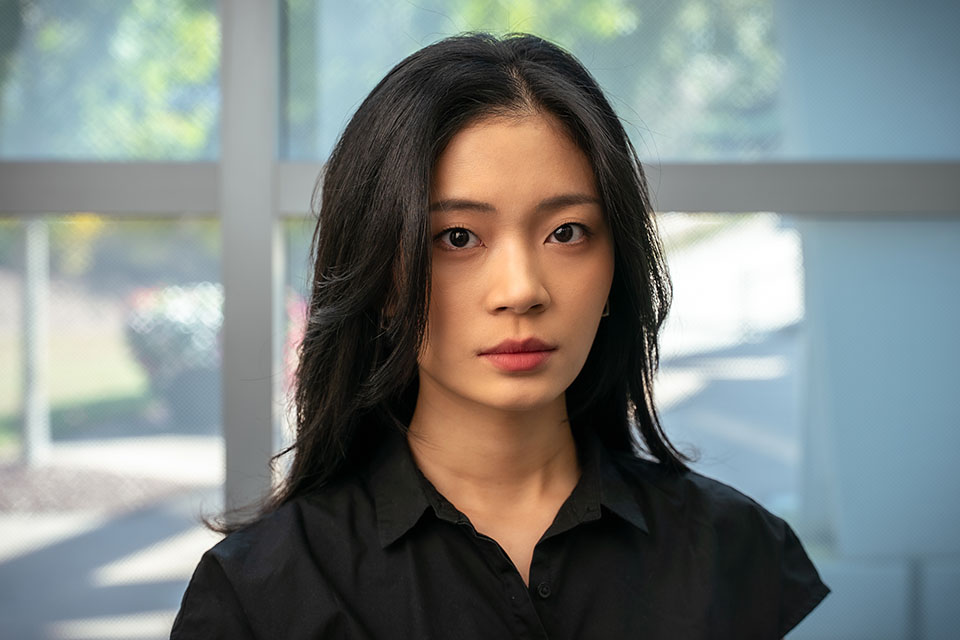
Wig and Makeup Design M.F.A. graduate Celine Lin. / Photo: Evan Daniel
Originally, Lin considered pursuing fashion design, inspired by the avant-garde runway work she admired growing up. But while she loved fashion creatively, she struggled to see herself in the competitive environment of the industry. Instead, she found herself drawn toward storytelling.
“I felt like costume design made more sense to me because it’s not just for beauty standards,” she explains. “It’s for everyone.”
From Taiwan to UNCSA
Lin earned her undergraduate degree in theatrical costume design in Taiwan, where her program combined multiple disciplines into one training ground. Because there was no separate wig and makeup concentration, costume designers were also responsible for hair and makeup design for productions.
That overlap became the unexpected starting point for her future career.
“At first it was just part of the work I had to do,” Lin says. “But then I realized I really loved that part of creating the actor.”
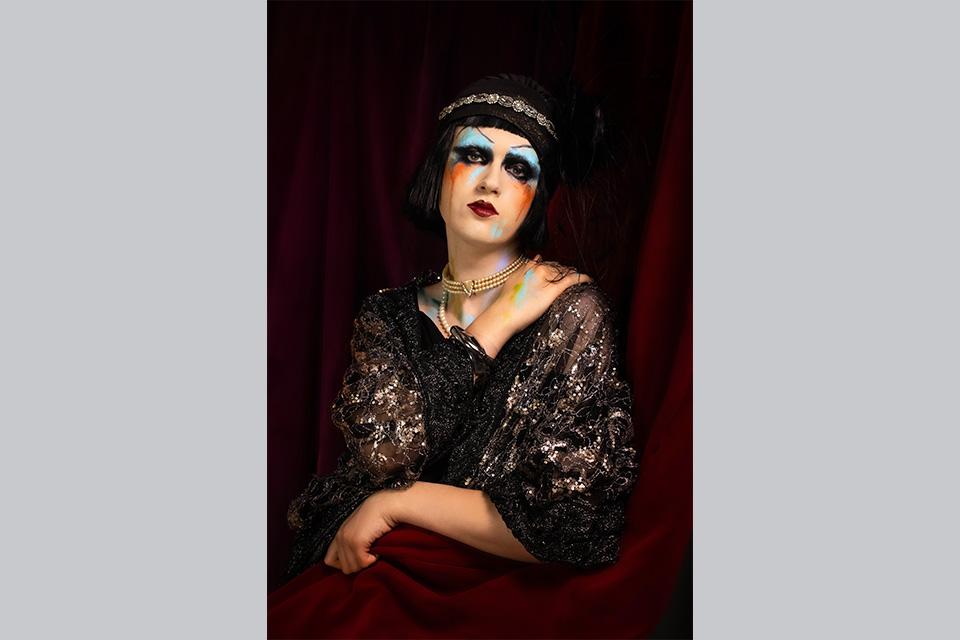
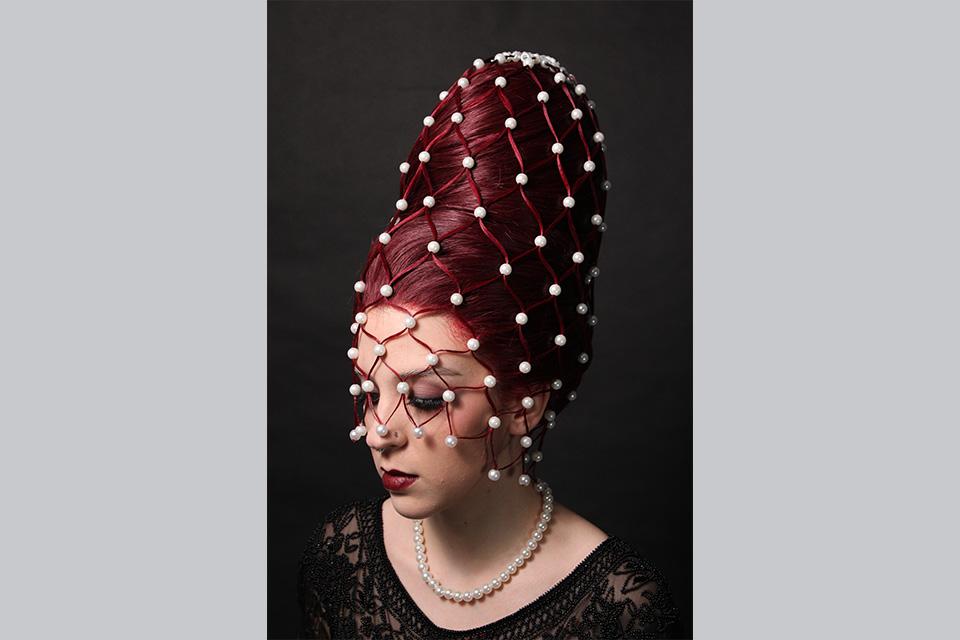

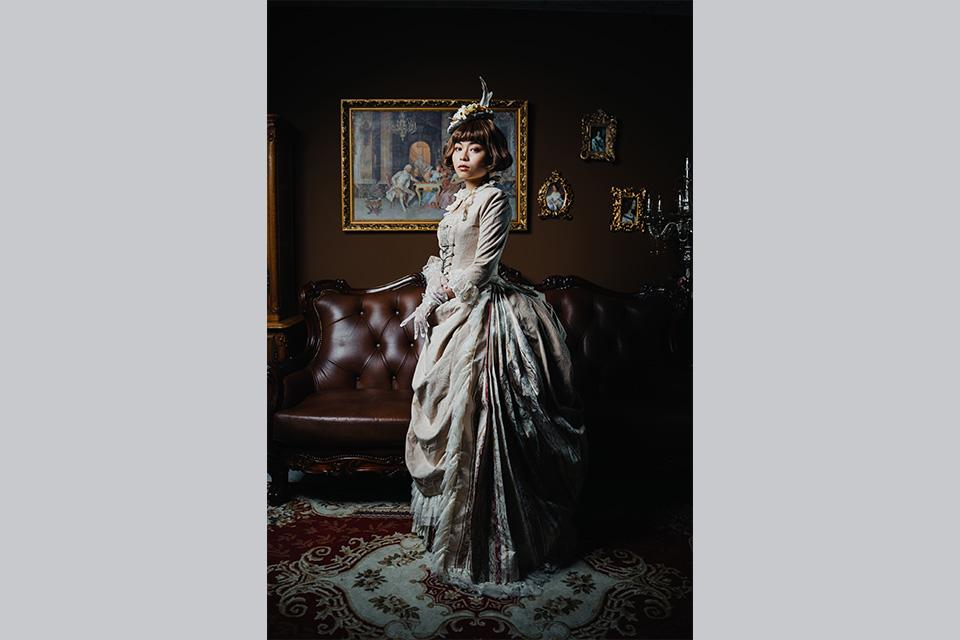
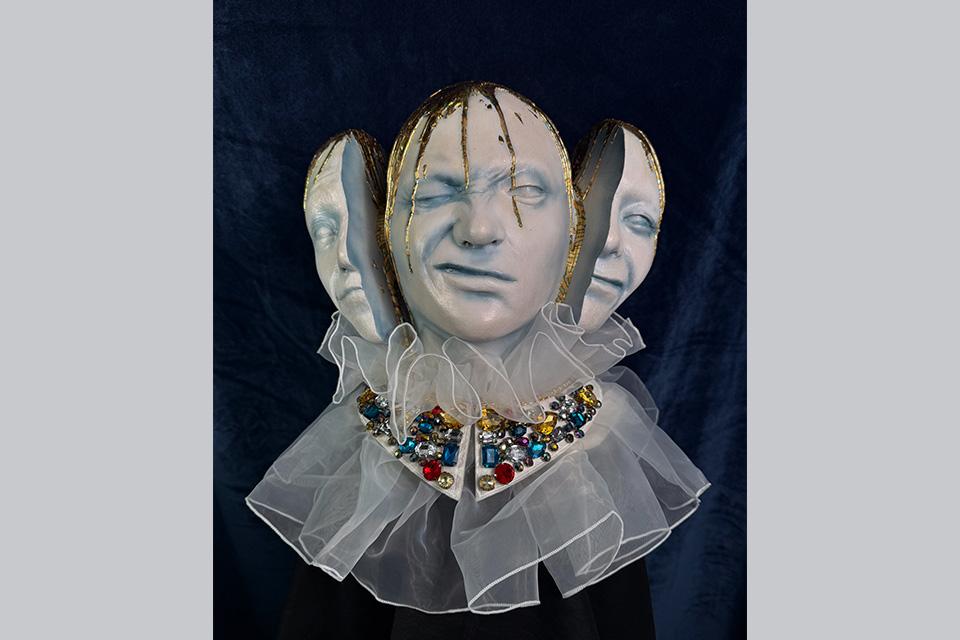
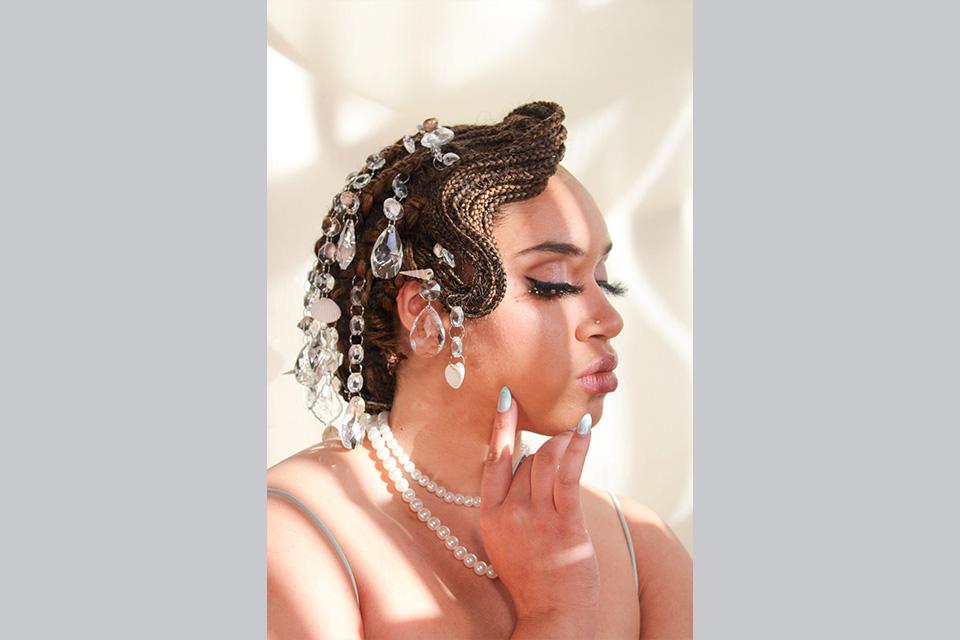
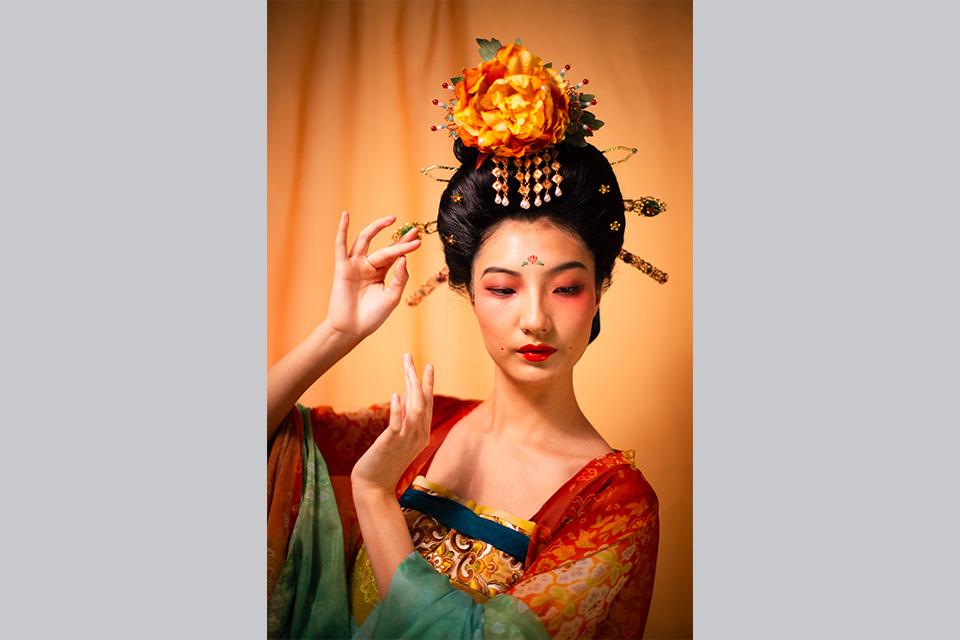
After graduation, she worked in costume shops, served as a wardrobe head and costume design assistant, and gained experience doing special effects makeup on film sets. But eventually, she realized she wanted deeper technical training in wigs, prosthetics and makeup artistry.
A former professor connected her with a fellow Taiwanese alumna of her undergraduate program Ming-yen Ho who had studied in the School of Design & Production years earlier and now serves on the adjunct faculty.
“That was when I learned about this school, the program and curriculum,” Lin says. “And I thought, ‘This is exactly what I want to learn.’”
Building artistry from the foundation up
When Lin arrived at UNCSA, she brought strong costume design experience but limited formal wig and makeup training. She credits the Wig and Makeup Design concentration with giving her both the technical foundation and creative freedom to grow into a more complete artist.
“The program assumes you know nothing, which I actually really appreciated,” she says. “They teach you everything from the beginning and build the foundation step by step.” That structure proved transformative.
Lin says production work became one of the most important parts of her education, allowing her to apply classroom lessons in real-world settings across theater, opera and film productions. But what stood out most to her was the openness of the faculty.
“They teach you the skills, but they don’t force you to do things only their way,” says Lin. “They let you combine what you already know with what you’re learning here.”
That flexibility helped Lin merge her background with her growing expertise and over time, she began thinking less about individual disciplines and more about the totality of character design.
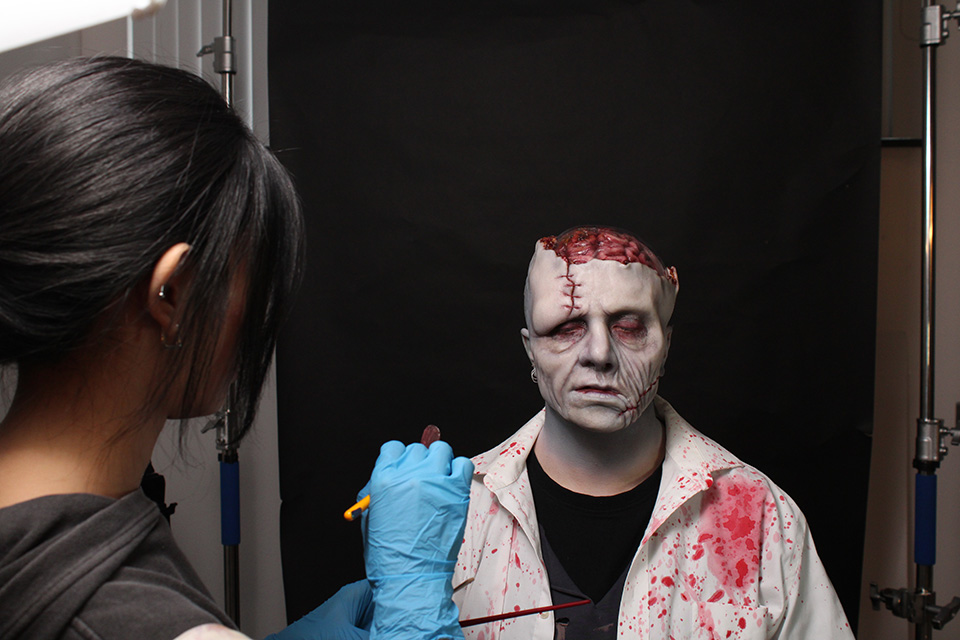
Lin working on a prosthetic project. / Photo courtesy of Lin
“I realized I don’t only want to do makeup or only do hair,” she says. “I see hair, makeup and costume as elements of a total look.” That philosophy now defines the way she approaches her work.
For stage productions and opera, Lin focuses heavily on silhouette and visual distinction between characters — lessons rooted in her undergraduate costume training. Even from a distance, she believes audiences should immediately understand who a character is through their appearance alone.
Film work requires a different approach. “With film, the camera is so close that the details become more subtle,” she explains. “Even if characters have similar hairstyles, you can still tell them apart because the camera captures so much detail.”
No matter the medium, Lin begins every design process by searching for the emotional core of a character. “If I had to describe a character in one word or one adjective, I try to reflect that in the look,” she says.
Experimentation, culture and creative freedom
As Lin’s technical confidence grew, so did her willingness to experiment. That spirit became central to her M.F.A. thesis work, where she pushed beyond traditional program expectations to explore techniques and cultural influences that personally inspired her.
One project featured a highly stylized craft wig inspired by a Japanese hair and makeup artist whose techniques Lin had long admired. Another explored traditional ancient Chinese hairstyling, allowing her to incorporate elements of her own cultural background into her graduate work after years of focusing primarily on Western styles.
“I thought, ‘I’ve done so many Western hairstyles. I should create something from another cultural background too,’” she says. Neither project fit neatly into standard thesis requirements, but Lin says faculty encouraged her to pursue the ideas anyway.
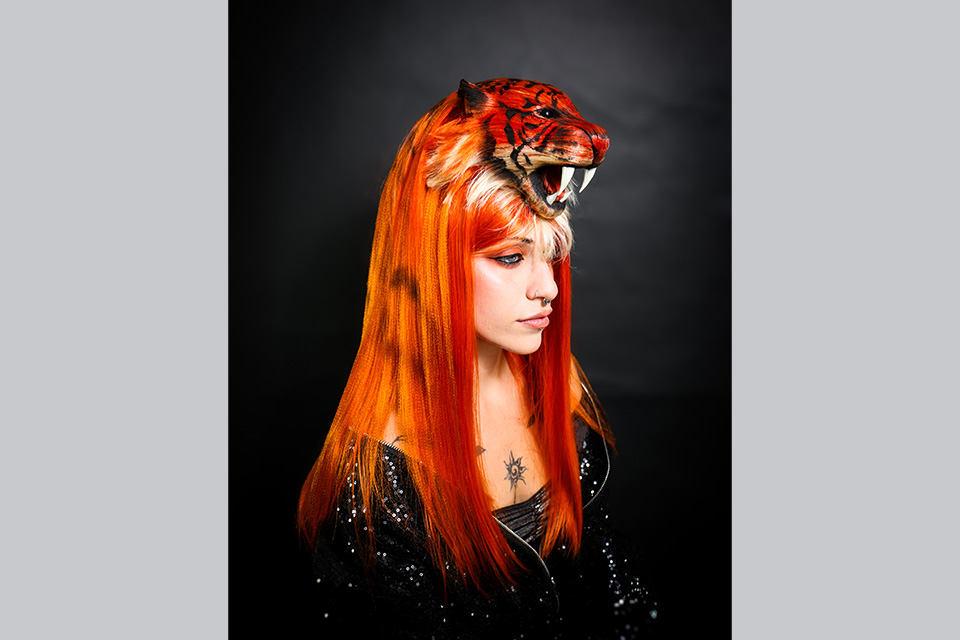
A wig created by Celine Lin for her thesis project. / Photo courtesy of Lin
“That’s something really special about an educational environment,” she says. “No one says, ‘This won’t make money, so don’t do it.’ They let you try things you’re passionate about.”
She also collaborated with the Animatronics concentration on a project involving 3D printing technology for prosthetic makeup molds. Instead of relying solely on traditional mold-making methods, Lin explored how emerging technologies could reshape the process. The project reflected another defining characteristic of her artistry: curiosity.
Even when recreating looks inspired by major fashion runway shows or editorial makeup artistry, Lin enjoys discovering how her own interpretation changes the outcome. “Sometimes I try to replicate something I saw, but because I don’t know exactly how they created it, it turns into something completely different,” she says. “And I’m okay with that. I think that’s the interesting part.”
Mentorship, recognition and looking ahead
Throughout her three years at UNCSA, Lin found especially meaningful mentorship in faculty members Holland Berson and Johan Teng.
“Holland is such a role model,” Lin says. “Being a nice human being is honestly even more important than being talented in this field because we work so closely with people.” She admired Berson’s calmness, empathy and professionalism, qualities Lin hopes to carry into her own career.
Lin also credits Teng, who is also originally from Taiwan, with profoundly shaping her technical growth, especially in prosthetic makeup. “Sometimes when learning really technical things, it helps being able to explain something in your own language,” she explains.
Beyond technical training, Teng encouraged Lin to apply for the makeup design award through the Young Designers, Managers and Technicians program at the annual conference of United States Institute for Theatre Technology (USITT).
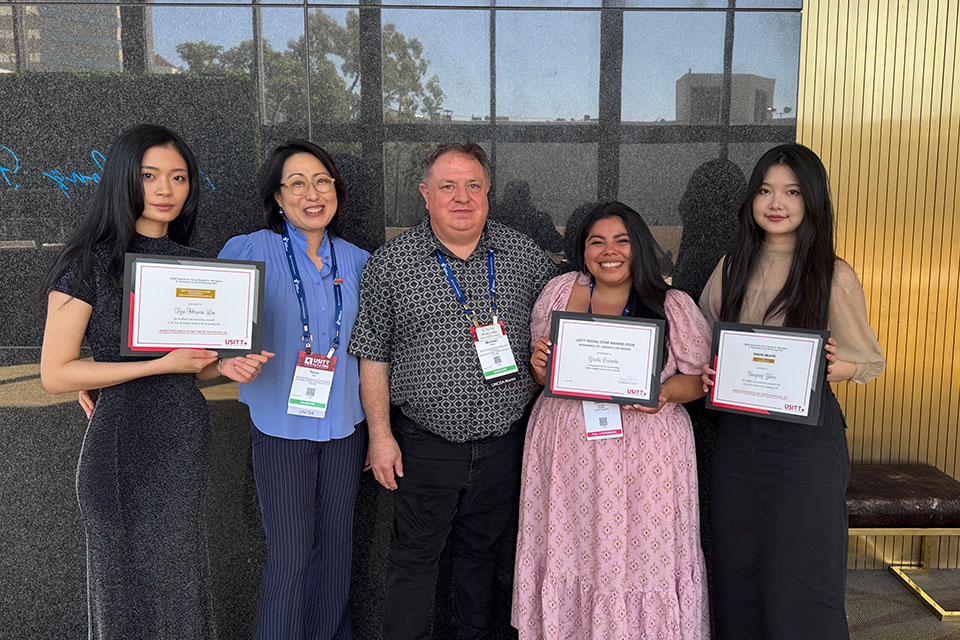
Lin (far left) at USITT with her fellow School of Design and Production award winners, faculty member Yoon Bae and Dean Michael Kelley. / Photo courtesy of Lin
This year, Lin received the award, continuing what she jokingly described as a “Taiwanese tradition” among UNCSA alumni and faculty connected to the program. “It’s my first award ever,” she says. “I’m very honored.”
The recognition carried additional significance as an international student entering a competitive professional industry. “It’s just one line on a resume,” Lin says, “but it helps people trust you a little more when you’re starting out.”
As graduation approaches, Lin plans to move to New York City and explore opportunities across theater, film and live entertainment while continuing to discover which creative environment fits her best.
Her long-term dream, however, extends far beyond any single production.
Inspired by elaborate concert tours and immersive live performance experiences, Lin hopes one day to design complete visual worlds for performers — integrating costumes, hair, makeup and large-scale theatrical elements into a unified artistic vision.
One recent inspiration came from Taiwanese pop star Jolin Tsai and her visually ambitious world tour performances featuring massive moving puppetry and theatrical staging.
“It wasn’t just about looking good on stage,” Lin says. “The entire arena became part of the performance.” That kind of transformative storytelling is exactly what Lin hopes to create herself someday: complete worlds built by hand, imagination and artistry from head to toe.
Get the best news, performance and alumni stories from UNCSA.
SUBSCRIBE TO OUR NEWSLETTERS(opens in new tab)(opens in new tab)
May 12, 2026