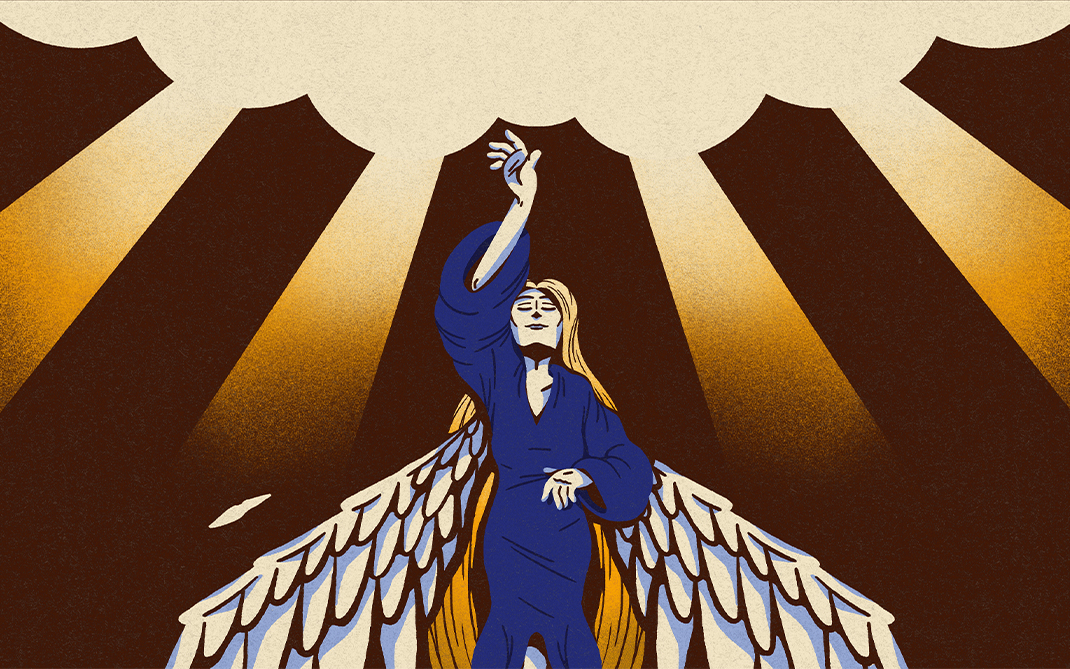

UNCSA presents Haydn’s opera “Orlando Paladino,” Feb. 3-7
The A.J. Fletcher Opera Institute at UNCSA presents Joseph Haydn’s “Orlando Paladino,” set in outer space and featuring a visit to the Gates of Hell and help from a powerful sorceress, as the annual winter opera this February. James Allbritten, Fletcher music director, conducts musicians from the School of Music.
A heroic comedy in three acts, “Orlando Paladino” will be presented three times: 7:30 p.m. Feb. 3 and 7, and 2 p.m. Feb. 5 at the Stevens Center, 405 W. Fourth St. Tickets are $20 regular and $15 for students with valid IDs at uncsa.edu/performances and by calling 336-721-1945.
Based on Ludovico Ariosto’s epic poem, “Orlando Furioso,” “Orlando Paladino” was Haydn’s most successful opera. It features Angelica, queen of Cathay, and her lover, Medoro, who must flee to a remote castle to get away from Orlando, a knight of France, who is madly in love with Angelica. Angelica recruits a mighty sorceress, Alcina, for help.
Steven LaCosse, the stage director for “Orlando Paladino” and the artistic director of the Fletcher Institute, worked with the School of Design and Production to come up with the innovative universe in which the opera is set. The opera will no doubt look very different from when it was first performed in 1782.
“I first met with the designers on Zoom and asked them to imagine ‘Orlando Paladino’ in the world of ‘Thor: Ragnorak,’” LaCosse said, referring to the 2017 Marvel movie starring Chris Hemsworth. “I like the Marvel movie, and there’s nothing in the libretto of ‘Orlando Paladino’ that ties it to any historical period.
“So our production set is in outer space in a distant galaxy in the future.”
The sets, costumes and lighting all work with the music and the acting to support the story, LaCosse said. The production will use animatronics for the first time in a Fletcher Opera production, created by the School of Design and Production’s animatronics graduate program.

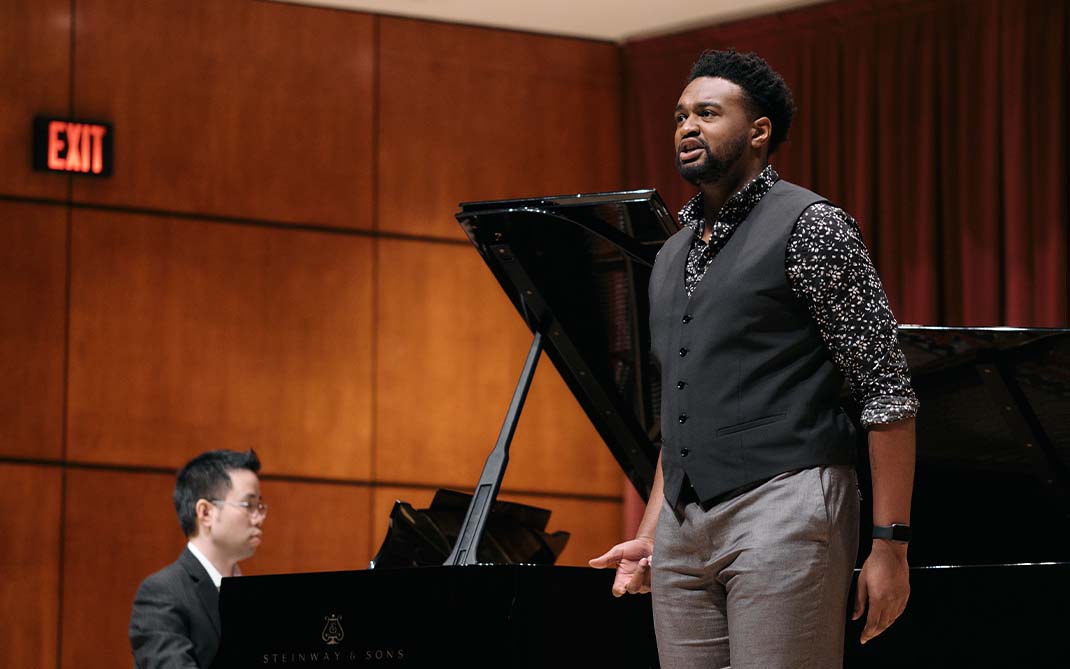
Kameron Alston (Orlando), tenor
“There’s a big entrance for the sorceress Alcina. She has a crown/headpiece that has remotely controlled moving parts, and a couple of other costumes will move,” LaCosse said. “And we have a transformer or time tunnel that allows people to appear and disappear.”
The opera will take place on three different sets depicting two different parts of the island where the young lovers have taken refuge and the Gates of Hell where Orlando drinks the waters of the Lethe as an antidote to a potion that has enchanted him.
“The design looks really great,” LaCosse said. “The whole production looks like we’re in one universe, and everything supports the story.
“Whatever we do, we have to tell the story. If an idea doesn’t work for the story, you have to let it go, or tuck it away. Maybe you’ll use it later in another production.”
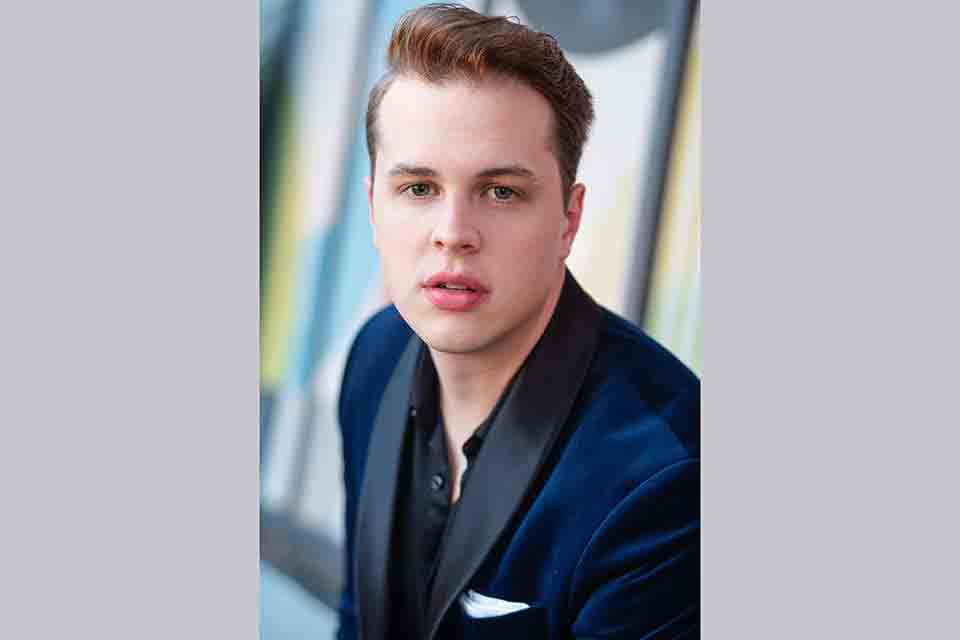
Toby Bradford (Pasquale), tenor
For much of his career, Haydn was a court musician for the wealthy Esterházy family at their Eszterháza Castle in Hungary, called by some the Hungarian Versailles. There he composed music and conducted works by other artists of the day, such as Mozart and Salieri. Haydn said that this relative isolation forced him to “become original” as a composer. His work falls in the classical period with Mozart, his friend and protégé.
There were lots of tenors on the musical staff at Eszterháza, so “Orlando Paladino” contains roles for three tenors: heroic, comic and romantic. “Orlando Paladino” is a good choice for the current fellows, which include three tenors: Kameron Alston (Orlando), Toby Bradford (Pasquale), and David Maize (Medoro).
“At Fletcher, we are always anxious to give our students the skill set they need to succeed,” conductor Allbritten said. “‘Orlando Paladino’ gives the students all the skills required to sing any opera in the classical era – recitative styles, vocal requirements, characters, and aria forms.
“We are preparing these students for a professional career in opera, and we try to give them the vocabulary they need to succeed in all these areas.”
Haydn wrote more than 100 symphonies and more than 15 operas during his lifetime. “These operas are pretty amazing,” Allbritten said. “And there are parts of ‘Orlando Paladino’ that correspond to the great parts of other operas that (students) will sing during their careers, especially those by Mozart.
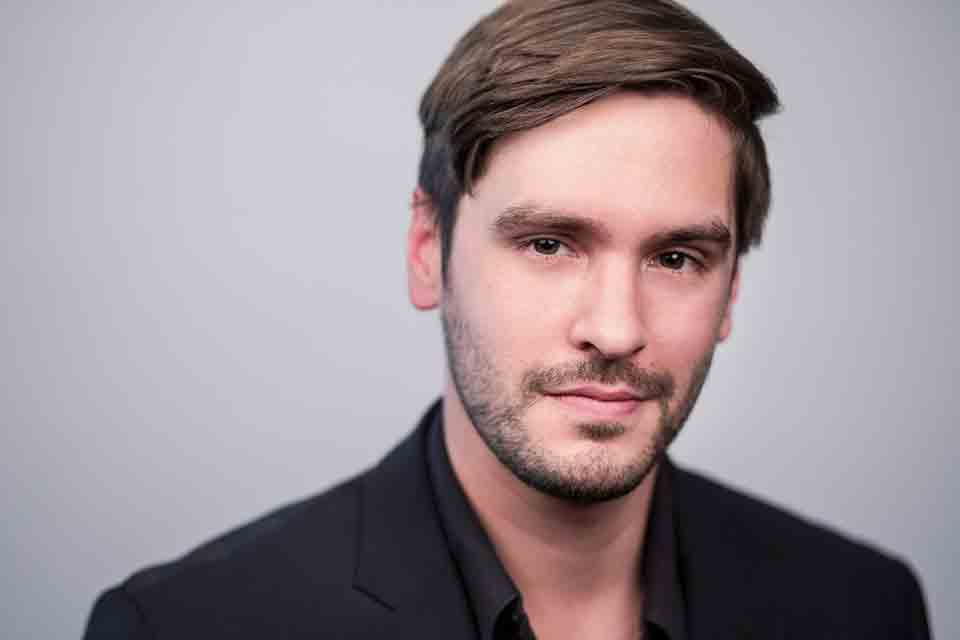
David Maize (Medoro), tenor
“The first time that I conducted ‘Orlando Paladino,’ I said, ‘We are on the road to ‘Marriage of Figaro,”’ Allbritten explained. “The operas of Handel and the later baroques (the period before the classical) had choral parts, but the choruses in ‘Orlando Paladino’ are bigger and advance the plot. They are well on the way to Mozart.
“These composers and these operas were not as siloed as we might imagine,” Allbritten added. “They were all swimming in a big minestrone soup of creativity. It’s fascinating to be in a situation where we’re actually performing this music. We are making the notes happen that were written down nearly 250 years ago.”
Additional cast members are: Jillian Hope Griffey and Gabi Meinke (Eurilla); Jackson Ray (Licone); Robbie Raso and Kevin Spooner (Rodomonte); Carly Orr (Angelica); Danielle Romano (Alcina); Ethan Wood (Caronte); Bentley Dorics, Olivia Grocott and Karen Mason (workers, attendants, dead souls of Hades); Caleb Horner and Wyatt Johnston (knights, savages, dead souls of Hades).
From the School of Design and Production, Evan Hausthor is production stage manager, Chloe Lupini is stage manager, Gisela Estrada is scene designer, Logan Benson is costume designer, Petko Novosad is lighting designer, Alex Farlow is sound engineer, Madi Pattillo is wig and makeup designer, John F. O’Neil is production manager, Ryan Lasich is technical director, Clara S. Rimes is charge scenic artist, Natalie Carney is properties director, Van Wei is automation engineer, Olivia Keserich is lead animatronics, and Jessica Holcombe is director of production.
Get the best news, performance and alumni stories from UNCSA.
SUBSCRIBE TO OUR NEWSLETTERS(OPENS IN NEW TAB)(OPENS IN NEW TAB)(OPENS IN NEW TAB)(OPENS IN NEW TAB)
January 10, 2023