

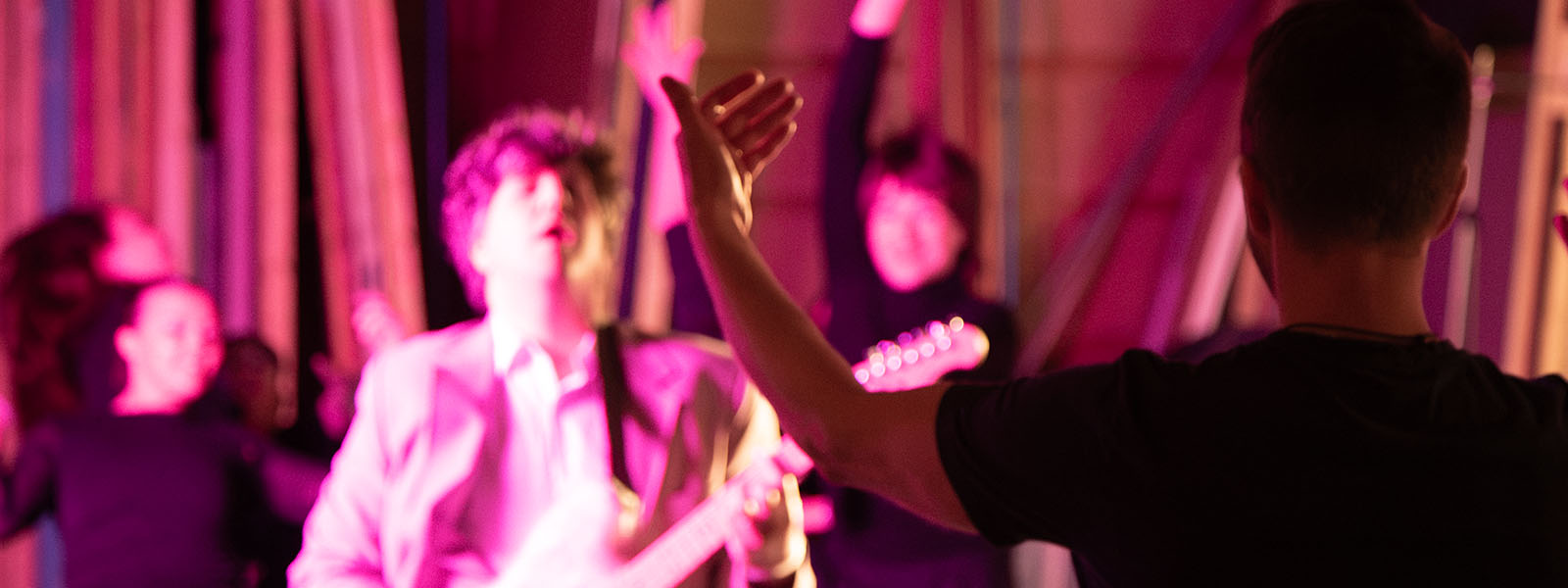
Learning to “shoot an emotion”: UNCSA students make a music video for Eric Slick
The UNCSA School of Filmmaking soundstage was in full production mode. On a hot-pink, repurposed set in the middle of the studio, film students hung tassels and positioned lights. They carefully mounted cameras on dollies, testing and retesting monitors. A fuzzy guitar was positioned; a mannequin was dressed in sequins. In an adjoining studio, contemporary dance students from the School of Dance warmed up, practicing choreography they’d developed remotely. They were almost ready.
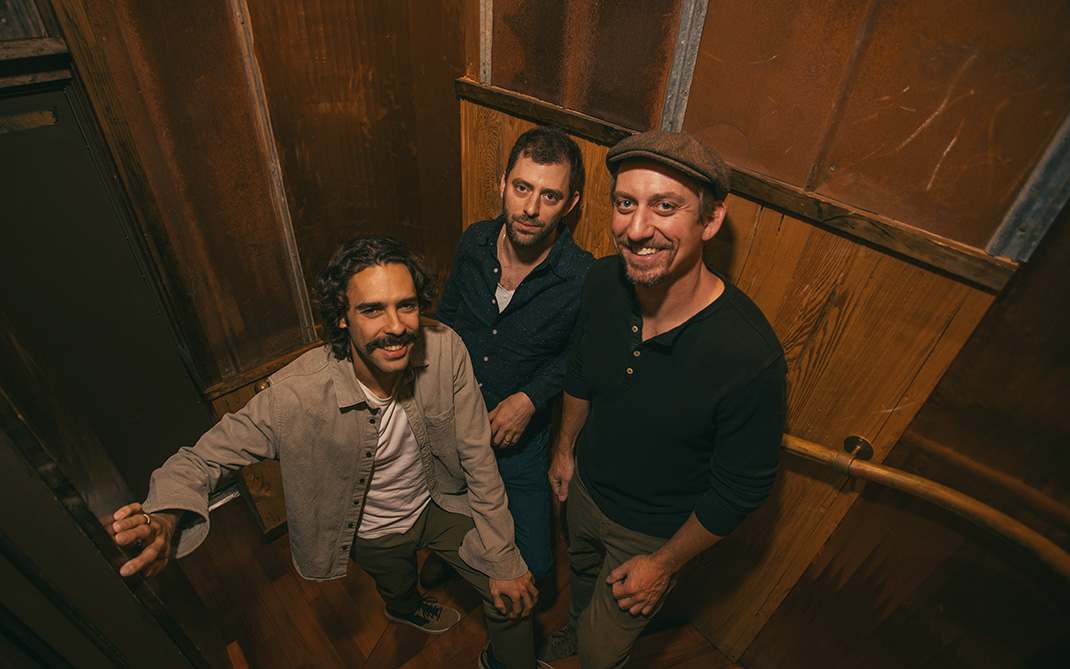
It was April 2026, and students were about to film a music video for Eric Slick, a solo artist and longtime drummer for the indie-rock band Dr. Dog. The song, “Mannequin,” is the lead single from his forthcoming album, “Bounce House.” Slick had flown into North Carolina the night before, and after weeks of planning and remote meetings, they had one day to shoot.
It was a fitting wrap to faculty member Jethro Waters’ brand-new Music Video Workshop course.
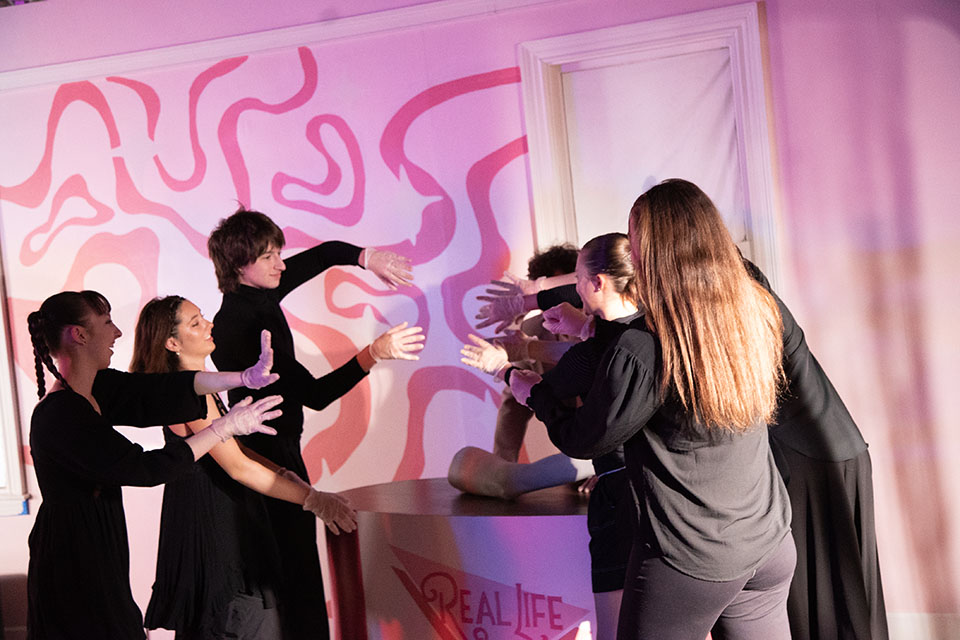
School of Dance students rehearse for Eric Slick's "Mannequin" music video / Photo: Sasha Hartzell
From music videos to the classroom
For Waters, music videos had once offered a way to bring his own ambitions into focus. “I wanted to be a director and a writer from the time that I was six years old,” he says. Getting there involved photography, years traveling in a band and diving into filmmaking. Music videos gave him a way to bring those skills together without needing a large crew or an extensive budget.
His collaborations with musician Angel Olsen became a turning point. Waters worked on music videos for several songs from her 2016 album, “My Woman,” including “Shut Up Kiss Me” and “Sister.” He recalls those videos bringing his work attention in Rolling Stone, Spin and Billboard, his first experience with that kind of press and an important step in launching his career.
He later brought that approach into the classroom at Brooklyn College, using music-video assignments to teach cinematography. Students learned about lighting, cameras and lens selection while developing videos of their own.
Then, in only his second semester teaching in the School of Filmmaking at UNCSA, Waters created the Music Video Workshop. The course quickly filled to capacity, with 25 first-to-fourth-year students enrolling. Many arrived with their own experience in music videos, and the class spent their first session and a half just watching the work students had brought with them.
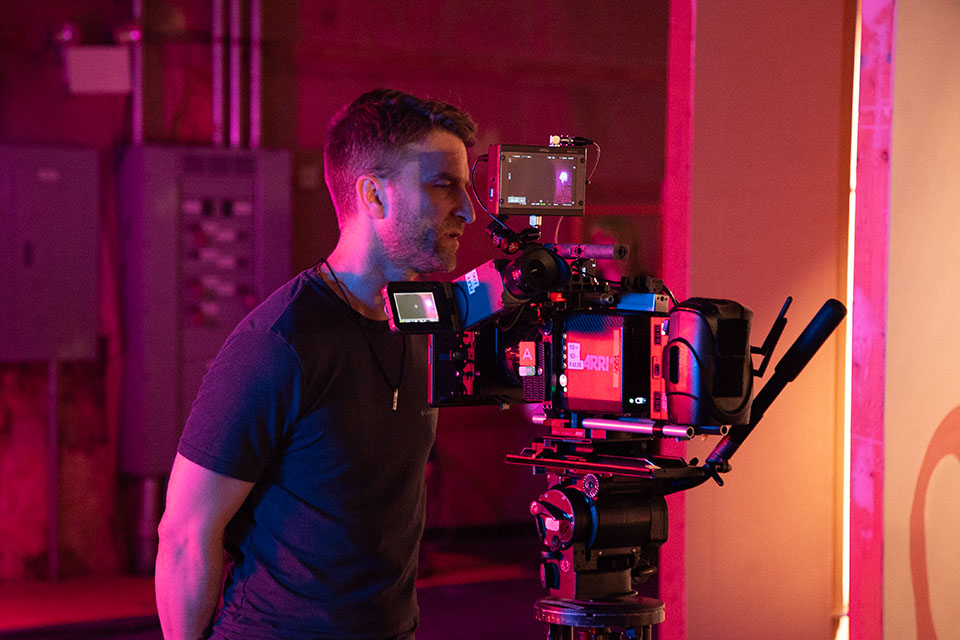
Filmmaking faculty member Jethro Waters on set for Eric Slick's "Mannequin" music video / Photo: Sasha Hartzell
Waters wanted to build on those instincts, helping students expand their visual references and think more deliberately about the choices behind their work. Music videos were the perfect platform to practice and hone the skills they’d carry into their filmmaking careers.
And the students were not the only ones learning — School of Music faculty member Ksenija Komljenović also sat in on the course, exploring music video production while contributing a professional musician’s perspective. She connected Filmmaking students with Music students for video projects of their own, creating opportunities for the two groups to learn from one another.
The course also addressed the business behind the work. Hanna Le, now a fourth-year Filmmaking student who took the class in the spring and participated in the Slick shoot, says students learned how to recognize problematic contracts and understand agreements with musicians and record labels, including questions of fair compensation.
For classmates hoping to build careers primarily shooting, directing or editing music videos, Le says, those discussions were especially useful.
Learning to turn music into images
The process for making any music video begins with listening. Students played songs on repeat, considering the emotions they evoked and shared the images that came to mind. A verse might suggest one feeling; a chorus, another. Putting those ideas into words allowed classmates to respond, make connections and build on one another’s interpretations.
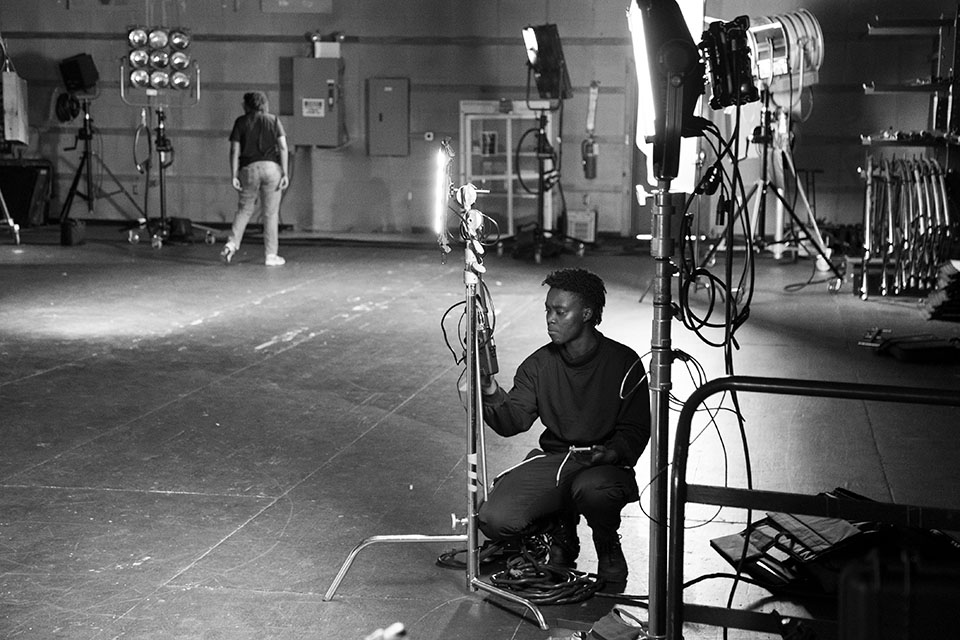
A School of Filmmaking student adjusting lights on set for Eric Slick's "Mannequin" music video / Photo: Sasha Hartzell
The class also watched music videos and music-centered feature films, discussing how sound and images worked together. Why did a particular piece of music accompany a particular moment? What did it make the viewer feel?
For Waters, those questions are central to the course. “They’re learning how to shoot an emotion. They’re learning how to edit those emotions together. They’re learning how to direct.”
There is no single formula for doing that. A music video can tell a straightforward story, move through abstract imagery or combine the two. Its direction depends on the song and the collaboration with the musician whose work the filmmaker is interpreting.
For “Mannequin,” that collaboration grew out of an existing friendship. Waters and Slick had made music videos together, and Slick had scored Waters’ first feature documentary. When they began talking about Slick’s upcoming album, Waters suggested bringing him to campus to work with the class.
Slick sent the song, and the students spent two class sessions listening and brainstorming. They proposed elaborate ideas, considered whether to take the lyrics literally and discussed how much narrative the video needed. They also had a practical constraint: Whatever they imagined had to be achievable within the available class shooting time.
One reference Waters shared with Slick was Genesis’ “Invisible Touch” video. Waters loved its willingness to reveal the production itself — the cameras, tracks, dollies and crew — and the sense that the musicians were simply enjoying themselves.
The concept for “Mannequin” would have a little more narrative, but a similarly playful spirit. At its center would be Slick, a mannequin and dancers from the School of Dance.
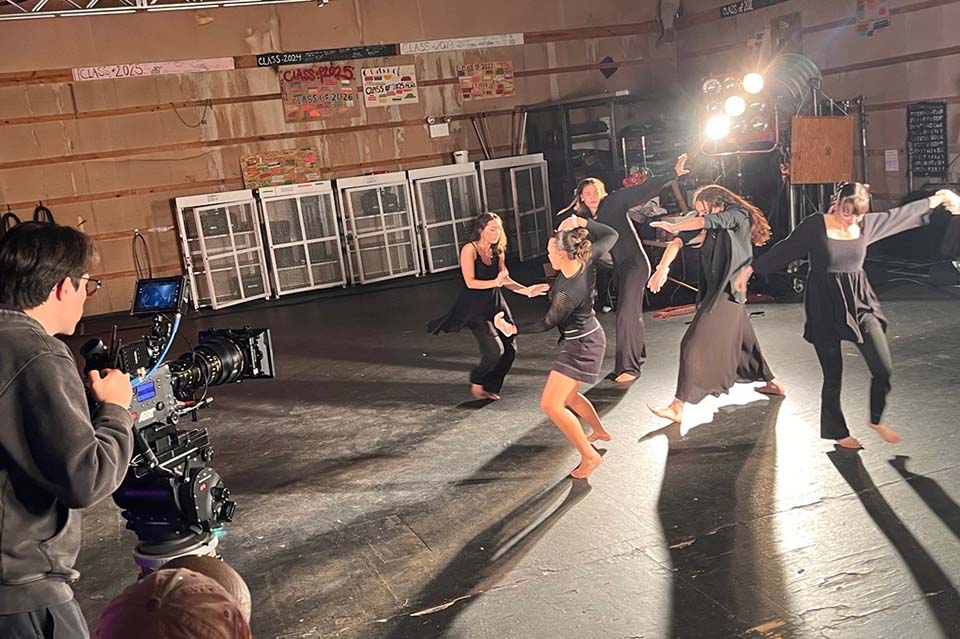
A School of Filmmaking student filming School of Dance students for Eric Slick's "Mannequin" music video / Photo: Sasha Hartzell
Waters distilled the class discussions into a treatment, a written outline of the concept, and developed a shot list. He shared the plan with Slick and the student cinematographers. They would know which shots they needed before arriving on set, but there would still be room to discover something new once they got there.
Bringing Eric Slick’s “Mannequin” to life
By the time class began on the day of the shoot, some of the crew had already been working for hours. Student co-director of photography Jada Cheek arrived at 10 a.m. to begin lighting with Waters. Fellow co-director of photography David Frazier came in a couple of hours before class to build cameras and prepare equipment. “She was dialed in,” Waters says of Cheek.
Their preparation helped make the ambitious class session possible. With approximately three hours allotted for the shoot, the crew needed to be ready to work. Students shared responsibilities across the production, with two cinematographers, two focus pullers and two dolly grips among those on set. Waters was somehow every at once in his role as both director of the video and class professor.
As Slick and the dancers worked in front of the cameras, the students behind them had more than a list of instructions to follow. They could offer ideas of their own. “Jada was inventing things on the fly. David was inventing things on the fly,” Waters says.
That flexibility was intentional. Waters wanted the aspiring directors and cinematographers in the class to experience an independent production where preparation gave the crew a shared direction without closing off possibilities. Knowing the essential shots left them space to experiment around those requirements. For him, the pleasure of filmmaking includes being able to “riff with people in the moment and come up with great ideas.”
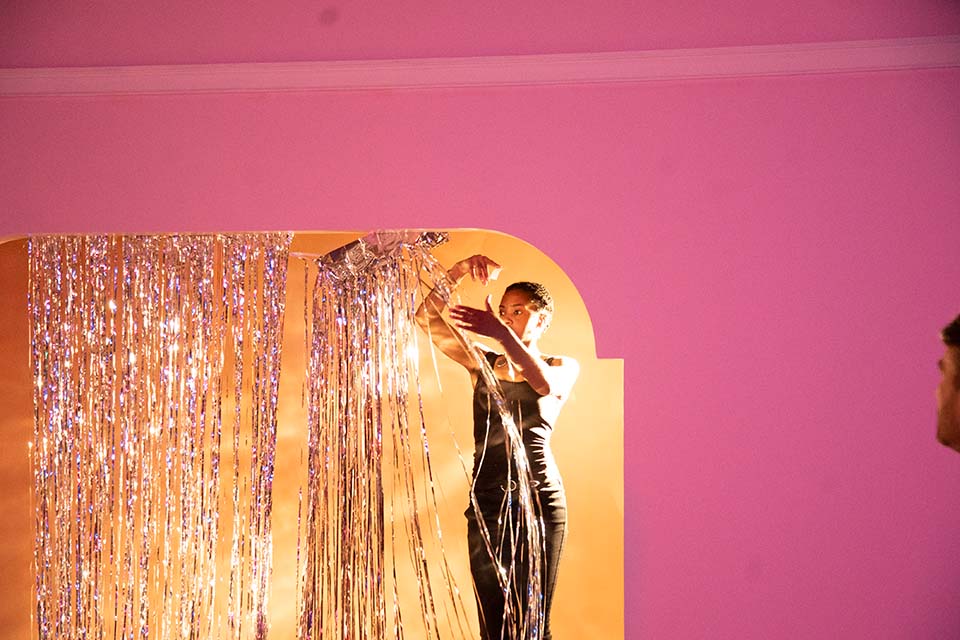
Jada Cheek prepping the set for Eric Slick's "Mannequin" music video / Photo: Sasha Hartzell
For Le, the shoot was an opportunity to see a shared concept move from discussion to production. “We were able to learn how to collaborate and work with the music artist’s ideas while also implementing pieces of each of our own creative visions into the concept, and then we had the opportunity to actually bring that to life in a practical way,” she says.
The collaboration also gave students an opportunity to work on something intended for an audience beyond campus. Waters planned for every student who participated in the shoot to receive a credit for their contribution.
“That way, the students are all working on an actual music video that’s going out into the world, and they all get credit for whatever crew position that they worked on,” he says.
Yes, music videos still matter
Slick’s “Mannequin” single was released Sept. 18, along with the UNCSA student-shot music video, edited by Waters (the full “Bounce House” album is scheduled for release March 5, 2027). It’s exactly the type of collaboration Waters hopes to repeat, bringing more musicians to campus so students can work with artists on videos intended for release.
He would like to arrange a similar project every other semester, drawing on relationships with musicians and record labels he has worked with. The timing would depend on finding the right artist and release, but the Slick shoot offered an example of what was possible.
And while music videos may be closely associated with the MTV era, Waters sees their value extending beyond a particular period, or their ability to sell an album. What interests him is the creative exchange: a musician trusting a filmmaker to interpret a song, and the satisfaction of seeing that music become something visually beautiful, meaningful or simply fun. “I think it’s an eternal art form,” he says.
In Slick’s case, Waters says the musician described enjoying the chance to step in front of the camera and make the space his own as a solo artist. The experience offered something beyond another promotional asset.
For students, the course offered repeated opportunities to develop an idea and see it through. Several made three music videos over the semester. The Slick production was one expression of what they were learning; their individual projects were others.
Whether a video required a soundstage full of equipment or a much smaller setup, Waters wanted students to leave with a stronger understanding of how writing, directing, cinematography and editing could work together to communicate an emotion.
“And I think if you get all those down, you’ve got all the most basic components of being a pretty full, well-rounded filmmaker,” he says. “That’s what music videos are for me.”
Get the best news, performance and alumni stories from UNCSA.
SUBSCRIBE TO OUR NEWSLETTERS(OPENS IN NEW TAB)(opens in new tab)
September 18, 2026