The Arts & The Big Break
What does a “big break” in Hollywood really look like — and what does it take to build a career that lasts?
In this two-part episode, Chancellor Brian Cole sits down with actors and UNCSA alumni Anna Camp and Krys Marshall to unpack the moments that changed their career trajectories, and the years of training, resilience and hard decisions behind them. From a tiny off-Broadway show with Mike Nichols in the audience to a last-minute audition for a new sci-fi series that led to seven seasons on a hit series, their stories challenge the myth of the overnight success. Together, they reveal how preparation, courage and the confidence to say no can shape a long-term creative life.
Part 1 with Anna Camp
Transcript
Brian Cole: In the arts, there's this idea of the big break. That one moment where you're in the right place at the right time. When you meet the right person, land the perfect role. When you get called up to stand in for somebody in that big performance. A moment that changes everything.
It's sort of a fairy tale in the arts industry. But like all fairy tales, it's at least somewhat rooted in truth. The question is how much truth? If you pull back the curtain on these big moments, what do you find? Welcome to the arts and everything. I'm Brian Cole, Chancellor of the University of North Carolina School of the Arts.
Brian Cole: Today we have a two-part episode looking at The Arts & The Big Break. And we ask, are big breaks just the natural culmination of years of putting in the work? Or is there also a little luck involved? I'll be speaking with two actors and UNCSA alums whose careers you likely already know. Anna Kamp and Krys Marshall. They both have big break stories, and they both push back in their own ways on the myth that the big break comes to you. Here's part one.
You may know Anna Camp from hit TV series like True Blood or Mad Men, or movies like Pitch Perfect or most recently, A Little Prayer. From Broadway to TV to film, from comedy to horror, Anna is constantly stretching herself as an artist.
Fresh out of UNCSA, she landed an off-Broadway role in a wild musical at a small theater in New York. It was a big deal for her at the time and turned out to be a huge deal for her career.
Anna joined me from her home in Los Angeles to talk about what her big break really looked like, and how one small show led to Broadway, to hit television, and beyond.
Anna again, thank you so much for taking this time and joining us. It's really special to have you here.
Anna Camp: I'm so happy to be talking to you today and I’m delighted that you guys wanted to talk to me.
Brian Cole: Well what I want to talk today about is the idea for artists of the big break or things that happen in careers that are kind of a before and after. You know whether you realize it in the moment or whether you realize it down the road. You've had so many moments in your career which already includes so many incredible achievements. Is there one that sticks out right now that you kind of feel like was a big break or a moment where you felt everything changing?
Anna Camp: Yeah, definitely. There are a lot of moments that I can look back on and say one thing really did lead to the next. I did a very, very, very small off-Broadway play at the Rattlestick Playwrights Theatre called God Hates the Irish. It's like a terribly raunchy, musical, like really wild. And a lot of students who went to Yale developed it and worked on it and Will Frears actually ended up directing it. I mean, I had to audition for that play probably four times. I was playing a British girl. And the director didn't know if I could act. He thought I was just a girl when I came in, and I was like, no, I went to college for this. I went to school for this. Like, I'm a trained actor.
I was so young, I think I was like 22 years old or something. But I got the role, and two people came to see me in this very, very small off-Broadway play. And the first person was Mike Nichols. So, Mike Nichols ended up coming and seeing me in that show, and then he cast me in my very first Broadway role opposite Frances McDormand and Morgan Freeman, just from being in this crazy little off-Broadway play.
And then the other person that came was the amazing playwright, Teresa Rebeck, who ended up giving me a script for a play called The Scene after one of the performances and told me that she wanted me to come and do it at the Humana Festival. And then that got an off-Broadway run at Second Stage, which was amazing. But those two people coming to this very, very, very tiny off-Broadway play, like, that basically changed the trajectory of my life as an actor, especially in New York City. And I kept getting play after play because of those plays, and then Alan Ball came to see me in a play called Equus with Daniel Radcliffe, and then he called me into audition for True Blood, and that's basically how that kind of took off. So, pretty amazing how that one small little off-Broadway play led to so much.
Brian Cole: What did that feel like in the moment? Did you feel that all happening at the same time? Was it just moving really fast for you?
Anna Camp: I felt definitely surprised, but I felt really cool. Like, I kind of felt like, oh, this is what people say could possibly happen. It felt very cinematic, right? Like this amazing director who had directed Who's Afraid of Virginia Woolf and The Graduate and like coming up to me, and like, it just felt like I was in my own little movie or something. It just felt like something I'd heard about, but I never thought would happen to me. Looking back on it, it just feels, like, pretty amazing. Like whenever I tell this story to people, too, they're always very like, wow, like that doesn't happen that much anymore or how cool that that happened to you. So, I think that I appreciate it more now than I even did then.
Brian Cole: I love the stories of those little moments like you described. That this person showed up at this small show and it's kind of this butterfly effect of things that takes you in another direction and that in hindsight we see launch our career. When you look back to those early years, you know, these first big projects, these big breaks, within those experiences were there turning points or risks that you felt that kind of shaped your path as an artist?
Anna Camp: Oh yeah, definitely. I think especially after I got Pitch Perfect, it was such a life-changing job and a life-changing role, and I didn't realize how big that was gonna be and how many people were gonna love it and how it was gonna be this big franchise. We had no idea. But I do think that after that role, people really wanted to pigeonhole me, and I would be offered a lot of the same types of roles. And it's very hard as an actor to say no to projects because you don't know when the next one is going to come.
You know, you should feel grateful for every job that comes your way. But I just knew that I had a lot more to give than the exact same character over and over and over. So I turned down some jobs for some sitcoms where I would have been playing the uptight, blonde, bitchy role again when I just felt like… I had to trust myself, I guess is what I'm saying and trust the fact that I'm more than just that one thing and that I am a talented actor who can do a multitude of things.
And I was lucky to have a team of people and agents who also believed in me, and they weren't forcing me to take jobs just for money or just because it was the easy route. And to this day, I'm still having to work to find the roles that are challenging and creatively stretch me in ways, and I have to have faith in directors and writers to see me beyond just what the world may see me as. I'm grateful for Pitch Perfect, but my God is it like really, it's put me on a path that if I don't say no, I could really go down and get stuck in that for sure.
Brian Cole: Yeah, the thing I took away from what you're saying is all the decisions that you have to make throughout a period like this and that you mentioned saying no to jobs. So, I mean, those must stick out as also moments for you in time, like difficult decisions to say yes to something, to say no to something. Any more of those kind of decisions stick out for you?
Anna Camp: I said no to a lot of jobs in a row and then I had to actively seek out different projects. And I think the work that I'm the most proud of, not that many people have seen. There are these two very small indie movies that I was, I guess, cast against type, so to speak. I didn't do it for any money at all.
Like I lost money, I think on some of it, because I had to put myself up in the hotel rooms or whatnot. But I did it because I wanted to stretch myself as an artist. You know, I ended up dying my hair black and I pursued this incredible horror movie that I loved being in, and then there was a very small indie movie called Hero Wild that I did that was about the Death with Dignity Act and I played a woman who was dying from cancer. And I threw everything I had into these two roles that not that many people have seen and that I didn't really get any career bump from it, so to speak, but I got fed in my soul as an artist.
Everybody graduates college and they want to hit it big right when they get out, and they want to book the agent, and they want to be on the TV shows and be in movies like right from the get-go. But there's something about saying I want to do this forever, I want to do this as my career, as my life. And there's going to be ups and downs and there's going to be dry times, there's going to be times where you're in that hit thing, and it'll go like this constantly. And so, to have that perspective of this is for the long haul and sometimes I need to take jobs that feed my soul and not just advance my career or my bank account. But those are also incredibly worthy and sometimes they're the most worthy jobs, actually.
Brian Cole: I love hearing that aspect of a career. When you talk about your career, I mean from that big break that you described until now, it seems to me externally as kind of a meteoric rise. It may not have felt that way to you at the time, but it seems like so much happening in a very short amount of time, relatively speaking. What are some of the unexpected challenges that you noted along the way as all this started to happen for you and you engaged the industry in really meaningful ways? What do you remember about that?
Anna Camp: I mean, I'm still facing these challenges today. There's always this tendency to compare yourself, compare yourself to other actors, compare yourself to, you know, your friends who also graduated school with you. And somehow there's this feeling that you're on a race, especially as a woman I've noticed. And I'm now 42, I'm about to be 43 at the end of the month. And there comes this time where you stop racing and you stop competing.
I’m not technically where I wanna be quite yet either. You know what I mean? So, it's nice when people say you have had this meteoric rise or that you're doing everything that you wanna do. And in so many ways I am, but there's always this thing of trying not to compare yourself to other people's careers and other people's paths. Because, like, somebody just got nominated for their very first Emmy just the other day and she's 58 years old, you know? And she's on this new show called The Pitt. And you don't know when it's gonna happen for you. It might never, like the awards may not come or whatnot, but it's really about going and sticking in for the long haul, you know? I mean, I've stopped trying to compare myself even though it's really hard not to. I'd say that's one of the biggest challenges.
Brian Cole: That's all really great advice for young actors like those here at UNCSA Because you
were here too as a student at UNCSA. What other points of advice come to mind? Like
what advice would you give Anna back in high school and college at UNCSA as a drama
student?
Anna Camp: Oh my gosh, so much advice. Um. You know, I think that you have to be very open to things not working out exactly how you might want them or wish for them to go. You have to follow your gut and your heart and, you know, don't take jobs if you feel wrong about a role or if it doesn't feel right, you know, just to get your foot in the door, Like, just try not to compromise yourself as an actor and as an artist. And maybe, you know, it's not your goal to start out doing regional theater but, like, do it. Say yes to smaller roles, meet people, get knowledge, continue to take training after school if you feel the need. Just don't have, don't be so wound so tightly that there's a yes or a no, a correct way to go about making it happen for yourself in this business. There are many ways to go about it, and it usually doesn't happen exactly how you think it's going to go.
Brian Cole: Right. Well, while on the subject of you as a student here, if you think back to that time, is there a moment that sticks out for you and your experience here that feels like is one particularly helped you prepare for this career?
Anna Camp: Oh, wow. Yeah. I mean, there's so many incredibly valuable moments that I learned at UNCSA. I mean, I had a wonderful time in the training programs there, all of these amazing teachers that I felt like saw me creatively. I never got cast in like a lead role while I was there. I watched my fellow students, and other actors get cast in like the bigger roles. I was always like such a supporting character, which was wonderful, but I always was like, oh man, like what's wrong with me? Why can't I get like a lead, you know? But I remember I had such an amazing like moment where Gerald Freedman came to see me in a play that I did off Broadway. And I, you know, crushed it. I was one of the leads in the show. And I remember I saw him after the performance and he just said, where was that the whole time you were at NCSA?
And I said, it was there the whole time. And I think that if that story can help any student who, um… Like, things change. Just because you are, you know, having a certain experience in college, in your training program doesn't necessarily mean that it will translate when you leave the school. My advice is to be prepared and learn everything that you can there. And it's such a wonderful training program, but do not be deterred if you are not maybe, quote unquote, as successful as some of your classmates in getting certain roles or whatever it may be. Like I was definitely super hard on myself and I was really like, I was sometimes very sad there to be totally honest. And so, when I got out, it was so liberating to see that I wasn't crazy, that I am talented. And to know that things can change, you know what I mean? And just because it's like that one day, it doesn't mean that it's gonna stay that way for forever, I think is what I would reach out and tell little Anna, that not to worry, your time will come.
Brian Cole: I think little Anna would be pretty excited if she could see a window into Anna today.
Anna Camp: Thank you. Thank you. I'm very proud of what I've accomplished and I think you're right.
Brian Cole: Well, UNCSA is incredibly proud of you and what you've accomplished. And you know, you were speaking earlier about how, with all that has happened in your career to this point, that you haven't done everything that you've wanted to do, that you haven't become everything that you wanted to be. What do you feel in this moment is the next leap or the next steps for you? What's the next big break?
Anna Camp: Oh my gosh, so many wonderful things come to mind. I think that what I would like to see happen in my career and what I'm actively searching for is a role that people will see me as a very complex actress. I can handle drama as well as the comedy. I usually, I've been cast in a lot of comedies. I also think comedy is very difficult to be totally honest. But I would love for it to have a very weighty, meaty, complex leading role in a film that can definitely stretch my talents and put me on the map in a different way than I think that people are used to seeing me, which is something that I'm actively seeking out now in my career. And it could also be a play where I get to play an amazing role in a classic play that I can really own and have some real gravitas to. I think that people are used to seeing me in a bit lighter fare and I'd like to have something be very full of depth. So that's the main thing that I'm searching for these days.
Brian Cole: I really saw some of that in your performance in A Little Prayer as well.
Anna Camp: Oh, thank you. Thank you. It's so, it’s awesome to see that people are responding to that. There was an amazing emotional moment the camera really caught and that Angus really got out of me and the other actors as well. I mean, you're only as important as the other actor that you're working with and getting to work with David and Celia and Jane was really incredible. So, I'm happy that you saw that. Thank you.
Brian Cole: Oh, I can't wait for everyone else to see it too, and I'm so glad that they now have the opportunity to do that. Well, I really appreciate you taking the time to do this today. It's just inspiring to hear your story.
Anna Camp: Aw, thanks, thank you.
Brian Cole: A huge thank you to Anna for sharing her time and story with us. You can catch her in the new Scream movie, Scream 7, which is coming this February. And Anna's example of an actor winning their first Emmy at age 58? That's UNCSA alum Katherine LaNasa for her performance in the hit series The Pitt.
In part two of the Arts and the Big Break, I sit down with another incredible actor and alum, Krys Marshall, to hear how a last-minute audition and a life-changing phone call turned into seven years on an Emmy-winning series. I'm Brian Cole. Thank you for listening to the Arts and Everything. Until next time, take care and keep finding the arts in everything.
Part 2 with Krys Marshall
Transcript
Brian Cole: In the arts, there's this idea of the big break. That one moment where you're in the right place at the right time. When you meet the right person, land the perfect role. When you get called up to stand in for somebody in that big performance. A moment that changes everything.
It's sort of a fairy tale in the arts industry. But like all fairy tales, it's at least somewhat rooted in truth. The question is how much truth? If you pull back the curtain on these big moments, what do you find?
Welcome to the arts and everything. I'm Brian Cole, Chancellor of the University of North Carolina School of the Arts.
Brian Cole: Today we have a two-part episode looking at the arts and the big break. And we ask, are big breaks just the natural culmination of years of putting in the work? Or is there also a little luck involved?
I'll be speaking with two actors and UNCSA alums whose careers you likely already know. They both have big break stories, and they both push back, in their own ways, on the myth that the big break comes to you.
Here's part two.
Brian Cole: Krys Marshall is quickly becoming a household name. She rose to fame in the Emmy-winning series For All Mankind as astronaut Daniel Poole and now plays special agent Nicole Robinson in the Emmy-nominated series Paradise.
On paper, Krys's big break moment looks classic. A last-minute audition, a life-changing phone call, and a role that turned into seven years on a hit series. But Krys sees that moment differently. For her, it's not about being discovered. It's about preparation, agency, and trusting your gut.
Brian Cole: So, just to start off, if you think back over the arc of your career, is there a moment where you feel like there was this big break where things changed, you know, because of an opportunity or because something changed?
Krys Marshall: Yeah, I think that there is sort of this myth that it's important for me to dispel, which is the idea that, you know, you're an actress and you're just pumping gas and you're humming a tune and along comes Steven Spielberg, who's like, You kid, you've got it.
And so I think that that idea of being discovered or having a big break, I think it's very beautiful, but it's also sort of fantastical. And it takes the onus and the responsibility out of the hands of the artist and into the hands of the cosmos. So, I think that two things can be true at the same time. Obviously, there has to be opportunity, there has to be chance and luck and these things that are sort of, you know, the perfect place at the perfect time. But there's also got to be the true talent and craftsmanship and boring, uninteresting 10,000 hours that are put into it, that put you in a position so that when opportunity is arriving at the precipice of preparation, then you're actually ready for that big fat moment. But that being said, to answer a question and not be obtuse, you know, I just felt like I was very much like a journeyman actor. My IMDB credits are just like waitress one eight different times. But it felt like that big fat moment for me was getting For All Mankind.
I'd actually gone into our casting director's office for a totally different show about lesbians in their 20s. And as I was leaving, Junie, our casting director, stopped me and said, hey, do you have a second to read this thing about NASA? And I was like, well, that's a crazy request. Just like, could you quickly do this brain surgery?
So I said, yeah, sure. And at the was no script for me to read. There was just 10
pages of sides. That was all a bunch of, like, you know, astronaut jargon. I'm like,
this is completely overwhelming. But I stepped outside and took a good 10 minutes
to look over the material. And this is what I mean when I talk about, like, the boring
hours logged, you know, the hours of breaking down script, about character analysis,
of things that our deans are drilling into us for four years straight. And so, I just
picked apart, like, the things that I knew to be true about her, which was that I
knew the story took place in the sort of late 1960s civil rights era. I knew that
she was a black woman heading into the NASA program, which at that time, you know, didn't exist.
I don't know what it's like to live in segregated communities, but I know what it's like
to feel like an outsider. I know what it's like to feel overwhelmed, to feel like
I have to impress. And so I took the bits and pieces that I could cherry pick about
me and threw them in there.
Because there's no way that I have the time to do the things that we would do in school
of hours and days spent preparing and, you know, does she move like a gorilla? Or
does she move like a monarch? You know, like there isn't room for all of that. I'm
grateful for my School of the Arts experience for reminding me like, wherever I go,
there I am. I can bring Krys with me. And so, I did the best I could to look over
these sides in the 10 minutes that I had. And then I came back in and just did it.
And played with it and probably got 60% of the lines right but just sort of played
in the story.
And I felt good and left. And that evening, I went to an acting class. And in LA,
you know, there's a lot of, a lot of charlatans who have a lot of ideas about how
acting should be done. And this time I was auditing the class, and we had some fluff
scene from like a Grey's Anatomy or something like that. And this teacher is just
reaming me about how I'm not going to make it if I don't do this if I don't do that.
And, you know, you really, I know you're here to audit, but you need to get in my
class as soon as possible. And for $1,200, you can take my four-week intensive.
Brian Cole: Of course.
Krys Marshall: And I'm just there on the verge, you know, lip quivering as this asshole tells me how I'm not gonna make it. And then during the break I check my phone and I see I have 11 missed calls.
Brian Cole: Wow. Eleven.
Krys Marshall: And it's everybody who works with me and is like, where the hell are you? Call us back.
Brian Cole: Oh my gosh.
Krys Marshall: So I step out and my manager is like, they want you, they put in an offer. You're gonna start in two days, like, get to a computer, we got to send you the Docusign and you know, there's this multi-page contract that you need to go over. Come on, come on, come on, where are you? And I'm like, I'm in class. And they're like, well—
Brian Cole: I'm learning to act!
Krys Marshall: Exactly! And they're like, well get out. So, I sneak back in, I grab my purse, I'm like, sorry, goodbye. And the next day I was on the Sony lot doing a costume fitting and the day after that I was on set for a show that I would then do for seven more years.
Brian Cole: Wow.
Krys Marshall: And so, of course, there's still pain in my heart feeling like, oh gosh, did I take that from someone else? This is the part that you don't have control over. And there have been many times where I have been so close and the hook was pulled out of my mouth. And I felt like, oh my God, that wasn't fair. But things happen the way that they're meant to. And so, I think just coming back full circle to preparation and the arduous, uninteresting parts of pulling apart material, building character, you're doing all that so that when opportunity is presented to you, and it is quick, fast and in a hurry, that you're ready.
Brian Cole: Yeah, yeah, I think the idea of being ready. That's everything.
Krys Marshall: Yeah
Brian Cole: I very much respect the context you gave initially about the idea between a big break and the work it takes. And the idea of these big moments, these big breaks fits a big romantic narrative, you know, for the artist and their career.
Krys Marshall: Yeah.
Brian Cole: But then when you're describing that moment when you're looking at your phone in those subsequent days, I imagine that definitely felt like a moment. And I can hear it in your voice when you describe it.
Krys Marshall: Yeah. And you know, I also didn't know then what I know now. Initially, the role was meant to just be a three-episode guest star. And you know, in the first episode, I think I maybe had three or four scenes. But I was a steward of those scenes. I didn't see them as like, oh, I'm just playing this little, small part, or I'll only be here for three episodes. I mentally was, like, I'm in this world. I am in 1968 Houston, Texas. I'm believing in this world. I'm living in this world. I've always been like a desperately inquisitive person and on set I like to sit with the ADs and ask them like, okay, so when we turn around, what is it that we're picking up this time? And I see, you know, talking to the DP and saying, okay, I heard that you're going to swing from a 60 to an 80. Like, what exactly does that mean?
Brian Cole: Right.
Krys Marshall:At that point, I'd never been on a show for a long enough time to really feel like I had a rapport with the crew where I could, you know, feel comfortable enough to ask questions. It helped me kind of cheat code my way into feeling more at ease on set. So, I didn't behave like a girl who was just there for three episodes. I behaved like a girl who belonged as a part of this family. As time went on, they kept writing more and writing more and writing more until, you know, I became the second lead of the show.
Brian Cole: Wow.
Krys Marshall: I sort of hung in there like a virus.
Brian Cole: Yeah. A happy virus. Well, as you said, you didn't know then what you know now. You know, in terms of, certainly what the experience has taught you, but didn't know that there was gonna be more than three episodes. You didn't know that the show was gonna go on to be the huge success it was. I mean, it's such a great show.
When you look back on knowing what you know now and what this experience has taught you, what are kind of the unexpected challenges that have come from this kind of success?
Krys Marshall: So something I had not expected at all is, you know, when you're in a school environment, you're going up to do your scene work, and in that moment, your deans or your professors are watching your work expressly to give you remarks about your work. And so there is this sort of one-to-one exchange that you grow accustomed to, and you're at times putting a lot of responsibility on your superiors to guide you.
Being on a TV show is the exact opposite. The director is at the same time as he's watching your work, he's also looking at the art department and making sure, wait a minute, in the background I see a copy of Time Magazine from 1981 and no, no, no, wait. This scene is a flashback scene from 1974. Hey, can somebody fly in and pull out that Time Magazine? And so here you are doing the performance of your life and now it's all gotta be redone because there was a magazine in the background that was not the right fit. I did not realize until I got in the business and started to work how little feedback you get.
Oftentimes, if you're doing something that works, no one will ever tell you, and if you're doing something that doesn't work, oftentimes no one will ever tell you. They just kind of cut around you or they cut your scene out entirely. And so, the director is both on his downtime or her downtime thinking about the prep for the scenes that they have later on this week or for the next block of episodes.
At the same time as they're talking to the writer about scene work that's being done tomorrow. At the same time as they're watching edits from yesterday's dailies that have come in on the iPad, as they're also hearing that the actress is arriving late at base camp, so we're going to have to move around the scenes because she's late to work. And so Krys Marshall sitting here like, did you like the scene? Did you like my choice? I wanted to destroy him. And the director's like, I didn't notice.
I'm sure it was fine. Let's move along. And so, it took me some time, but I realized that it's up to me to decide that on this take, I'm going to eviscerate him. Now I'm going to try this again where I lure him in. Now I'm going to try this where I submit to him. I am on the hook for offering variations of this performance, variations of how I see her. So that I give the director, I give the editors, I give the post-production team an opportunity to carve out a full fleshed out performance that I have no control over. So, I can either go through the grocery aisle and put in 10 cans of, you know, chicken noodle soup, or I can put in a can of chicken noodle soup and, you know, a bunch of fresh broccoli and a handful of cilantro. Like, I'm still at the grocery store. I'm still operating within the realm of the world and not making up brand new lines. But I think this is what smart actors do. And sometimes the director will say, ooh, a couple takes back, you know, you did this and it was much more subtle. I love that. Stay in that pocket. Okay, great.
But at least I'm giving them options to operate with. And no one, maybe not no one told me, but it just didn't impress upon me how much responsibility I would have for my work until I got out there and had to do it on my own.
Brian Cole: That's a really fascinating insight into the process.
Krys Marshall: Yeah.
Brian Cole: That wouldn't be evident to somebody. Certainly, somebody outside of the craft. Are there times in your career where you felt you took chances or took risks that led to something?
Krys Marshall: Yeah, yeah, huge. So, when I did season four of For All Mankind, I spoke to my showrunners before the season started and I said to them, I think that Danielle has to die. And it's like the craziest thing an actor could ever say to producers and showrunners because most actors want to live forever and keep playing on that show. But I felt in my bones, like, personally, I want more to do than this story which I've been doing for many years. And also, I think it could be a really cool thing for this world if Danielle dies. We talked about it ad nauseam, we went back and forth and, spoiler alert, ultimately I did not die. But when the opportunity came for me to either sign another long contract to stay on that show or do something else, I chose to do something else. You know, I was making great money on a show that was well received. But in my bones, I felt like I've so thoroughly enjoyed this experience. And I also know that I want something fresh and something new. For such a long time, I assumed that where you meet the fork in the road is a bit more obvious. Like, oh, this job sucks or the folks I work with are mean or this job's out of town. Like there needs to be some reason why I walk away. And it just felt like I was holding on to a divining rod that was pulling me, you know, like a magnetic pull in a different direction.
So of course, I talked to my husband about it and he's like, you're crazy. Honey, we got bills to pay. What do you mean you want off your show? And also did something bad happen? I'm like, no, I love it there as I'm crying. I'm like, I love it there.
But I feel it in my heart that there's some other thing I want to do. And so, I finish For All Mankind season four and at the same time, my same casting director cast me in a pilot for FX. And I was like, I knew it. I knew something wonderful, magnetic, beautiful to come along. And then I go off to Vancouver to shoot this pilot. And it is so cool and so thoughtful and an amazing cast. And David Corenswet was our lead along with Lucy Hale.
And, you know, everyone's so cool, it was produced by Darren Aronofsky. And I'm like, I'm right where I need to be. I'm in the nook. I knew it. I knew it. I knew it. And we finished the pilot and the writer strike happens and FX doesn't pick it up. And I felt like I had the ultimate egg on my face. I mean, I had a great job that I left for this magic carpet ride of a pilot that then went nowhere. And I've got a brand-new baby. And so now I don't have a job, the industry is at a standstill. No one's working. No writers, no actors. I'm an idiot. And so, I spent the strike both raising this brand newborn and also really lamenting some of my choices and feeling like I really chose the wrong horse.
And unbeknownst to me, because of the strike, Dan Fogelman, the creator of Paradise, my current show, which is Emmy nominated, was in his downtime, watching For All Mankind and loving my work and saying, man, Krys Marshall is really, really good. I wonder if she's available. Turns out I was. And so, when the strike ends, I get a call from Tiffany Little Canfield, who is a School of the Arts alumni. And she says, Dan loves your work and wants you for Paradise. And I'm floored because, you know, now I've got this little baby. You know, I go and I'm terrified because I've not worked as an artist in this new capacity. And thank God, it was the most warm and inviting environment to be this sort of fledgling me all over again, this person who is like playing this sexual woman with prowess but also this gun-toting, brains-blowing-out, kind of, you know, secret service badass. And all of this in the luxury of getting to work a few miles away from home and see my kid at night and, you know, get paid really well to do what I love with a bunch of folks who have more Emmys and I have pairs of underwear. I look back now and that no for For All Mankind led me into a bigger no, which was that pilot not being greenlit, but led me to an ultimate yes that put me on the red carpet of the Emmys two weeks ago. I could not have seen that. There was no way I could have seen that.
Brian Cole: Wow.
Krys Marshall: And so, some of it about, you know, the preparation and the big fat splashy, Hey, you kid, get over here and read this thing for NASA, those moments. But again, it's also about putting a single pearl on the string each time. And so, because I both led with my intuition of my bones as an artist saying, I don't know what the future holds, but I know I can believe in Krys. This is the same Krys who I was at 17 right here at South Main Street, this kid. I believe in that kid. And if it's not this, it'll be something else. And so holding onto that little pearl of like, as the kids call it, delulu, you know, like that little, teeny delusion of like, I'm gonna do it. I don't know where I don't know how, but I'm gonna do it, led me to where I am today. In a third season of a show that I couldn't love more if I tried.
Brian Cole: I think that's beautiful. That's a beautiful narrative and story. What is the advice if you look back to Krys when she was a student here at UNCSA, which is invariably also what advice would you give to this generation of young actors and artists that we’re developing here that are going to join you out in this big, crazy world? What would that be? The advice for yourself or for them?
Krys Marshall: Yeah. I think that because I live in Los Angeles, there's a real sort of timbre and tone in the atmosphere that the industry is dying. AI is going to replace us. There's going to be a million Tilly Norwoods that are all little AI robots.
And I'll just say to anyone who is listening to this, you're already miles ahead because you're here.
You know, these types of institutions, specifically School of the Arts, they are so
rigorous. The curriculum is so thought out and so beautifully executed that these
kids who are coming here are light-years ahead. And I think that there is a limiting
belief that I held when I was a student that the folks who make it, they are other.
They are outside of me. They've got some it-factor and I'll just never have that.
And this limiting belief that I would never make it. But then there are plenty of
other actors who I've worked beside who are good, but they're not earth-shattering.
And I realized that the kids who I went to school with and the other folks who put
time and attention and money and years of service into whittling down their artistry
to something that's a fine point, these kids are ready. And a lot of what ends up
being the limitation in the obstacle is the belief that they're not.
And so when you show up, whether it's an interview to work as a hostess, or it's an
audition for a series lead, I'm going to do this the way I like it, the way I feel
good, I'm going to remain open and play and have fun. I'm not going to seek validation
in this room. I have had a career that's been artistically fulfilling and also lucrative
because I continue to operate with a sense of sort of just, like, childlike belief
that it's just going to be okay.
And so I think, you know, whoever can hear my voice right now, if you can just hold on to the memory and this exact moment that you already are right where you need to be. You're with good people. You're learning from incredible people. And you're gonna get out into this business and continue to do incredible work as long as you stay in it. And I think for me, the moments where I thought I can't bend, I'm gonna break, I gotta get out of here, this is too tough. Those were always the moments right before the next windfall, right before some weird residual check came in. Right before some huge job offer came in. And I think just staying in it and knowing that it's a marathon, not a sprint. But I just wish that the little me knew how much I had in me starting off.
Brian Cole: You just made me think of one other question that, not to do with this topic, but
a lot of the discussion on our campus and without the arts industry relates to artificial
intelligence. And of course, a huge topic within the last strike in negotiations.
I was wondering, you mentioned these famous stories that we see in the media now about
AI characters and the topics that have come up over that are concerned for the creative
industry.
As an actor working within the industry and television and film, do you feel that there is this window or opportunity for how generative AI could be used as a useful collaborator within film and TV? I guess I'm asking to speak for you and also just kind of what you perceive within your colleagues and in the world.
Do you see it as something to really fight off? Do you see it as something to really just be reused responsibly that has certain opportunities? And of course, your opinion on this could change very much month to month as things evolve, but where do you kind of sit with that at the moment?
Krys Marshall: Yeah, I mean I think that for me I feel like I have to focus my energy and attention on the things that I have control over. But I think the overarching fear that AI will replace us, I think is silly. In this moment right now, Brian you and I are sitting here talking. And there is, without being woo-woo, there's a kinetic energy between us. It's not the same as if we were in a Zoom.
And so when you have a wonderful meal with friends, and you've laughed and you've eaten, and then you look up and you see it's midnight. And you go oh my god, where did the time, Jesus Kryst, I have work in the morning.
That experience of losing yourself in this moment, it's alive, it sparkles, it's got static energy and feels like your fingertips are dazzling. And when you experience that through art, whether it's film or music. The other night we were at a restaurant and they suddenly started to play live jazz and I thought, Oh my God, there's jazz! It just shifts.
Brian Cole: Yeah.
Krys Marshall: There's a difference between music that's played on a recording versus a live band striking up. There is no AI replacement for that feeling of realizing that a band started up in the room that you were in. I think as artists coming back to both preparation and also an internal sense of knowing, we have to know in our bones that we are irreplaceable. We are.
Brian Cole: Another huge thank you to Krys. It was wonderful to have her on campus and sit down with her in our studio.
In part one, we heard from Anna Camp about her own rise from Broadway stages to hit films and TV series. Both Krys and Anna share these moments that define their careers. From the outside, they look like lightning strikes. An off-Broadway show where Mike Nichols happens to be in the audience. A last-minute audition. A gut instinct that pays off.
But from the inside, these moments are built. They're built on years of training and a thousand small choices. They're built on discipline and courage and countless hours of work. Like the old phrase says, Luck is what happens when preparation meets opportunity.
I'm Brian Cole. Thank you for listening to the arts and everything. We'll keep looking at these big break stories and future seasons from filmmaking to music to behind the scenes. Until next time, take care and keep finding the arts in everything.
"The Arts & Everything" is a podcast by UNCSA Media hosted by Brian Cole, produced by Maria Wurttele and Sasha Hartzell. Executive producers are Katherine Johnson and Kory Kelly, and Louie Poore is the associate producer. Creative Design is Alli Myers Gagnon and Digital Strategy is Natalie Shrader. Music was composed by Krys Heckman and performed by Krys Heckman, André Vasconcellos, Miah Kay Cardoza and Gabe Lopez.
February 18, 2026
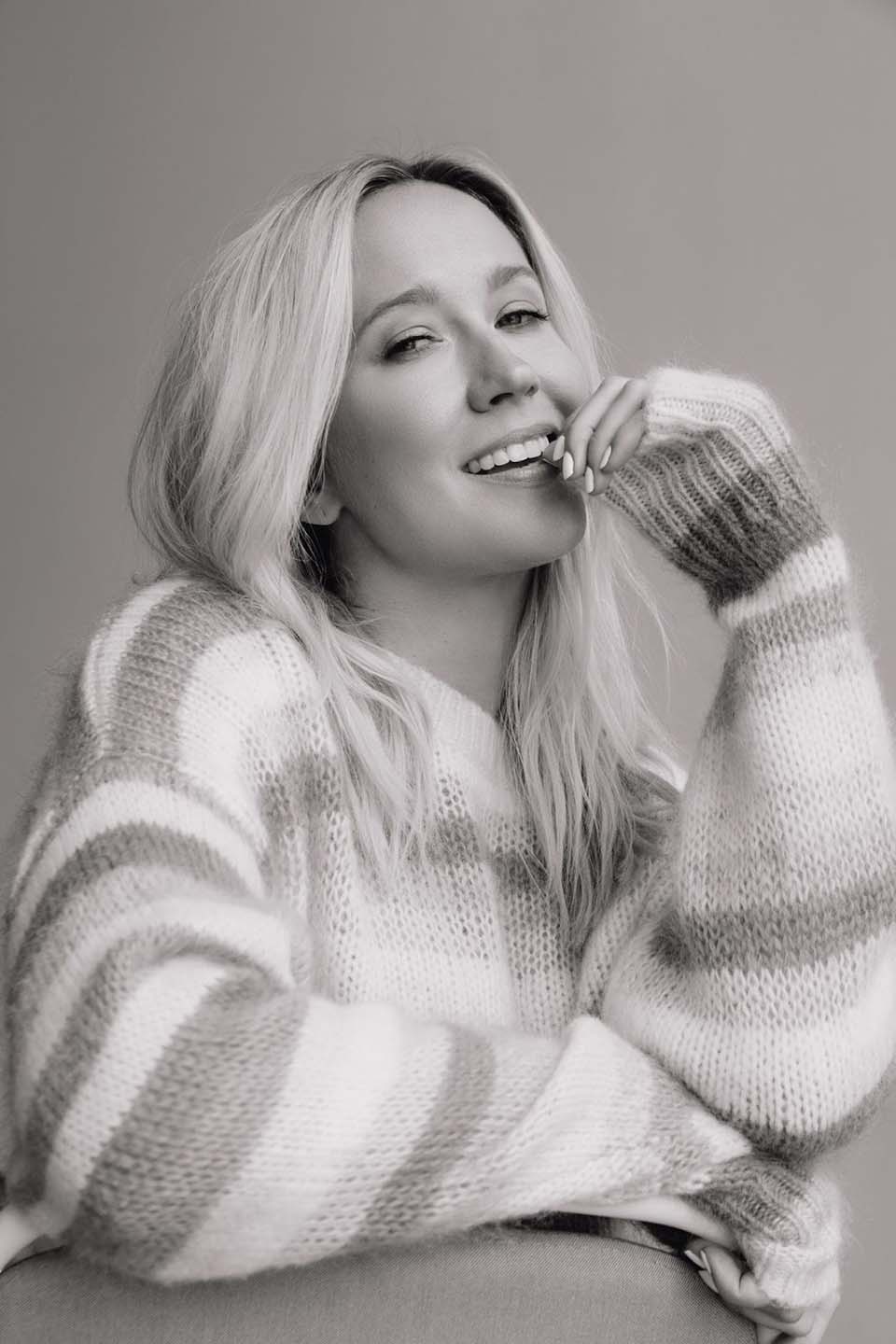
Anna Camp
Actor & Alum
Alumna Anna Camp (H.S., B.F.A. Drama) is a versatile actor known for her work across Broadway, film and television. She gained widespread recognition for her role as Aubrey in the “Pitch Perfect” franchise and has appeared in hit series including “True Blood” and “Mad Men.” A classically trained stage actor, she continues to take on a wide range of roles spanning comedy, drama and independent film.
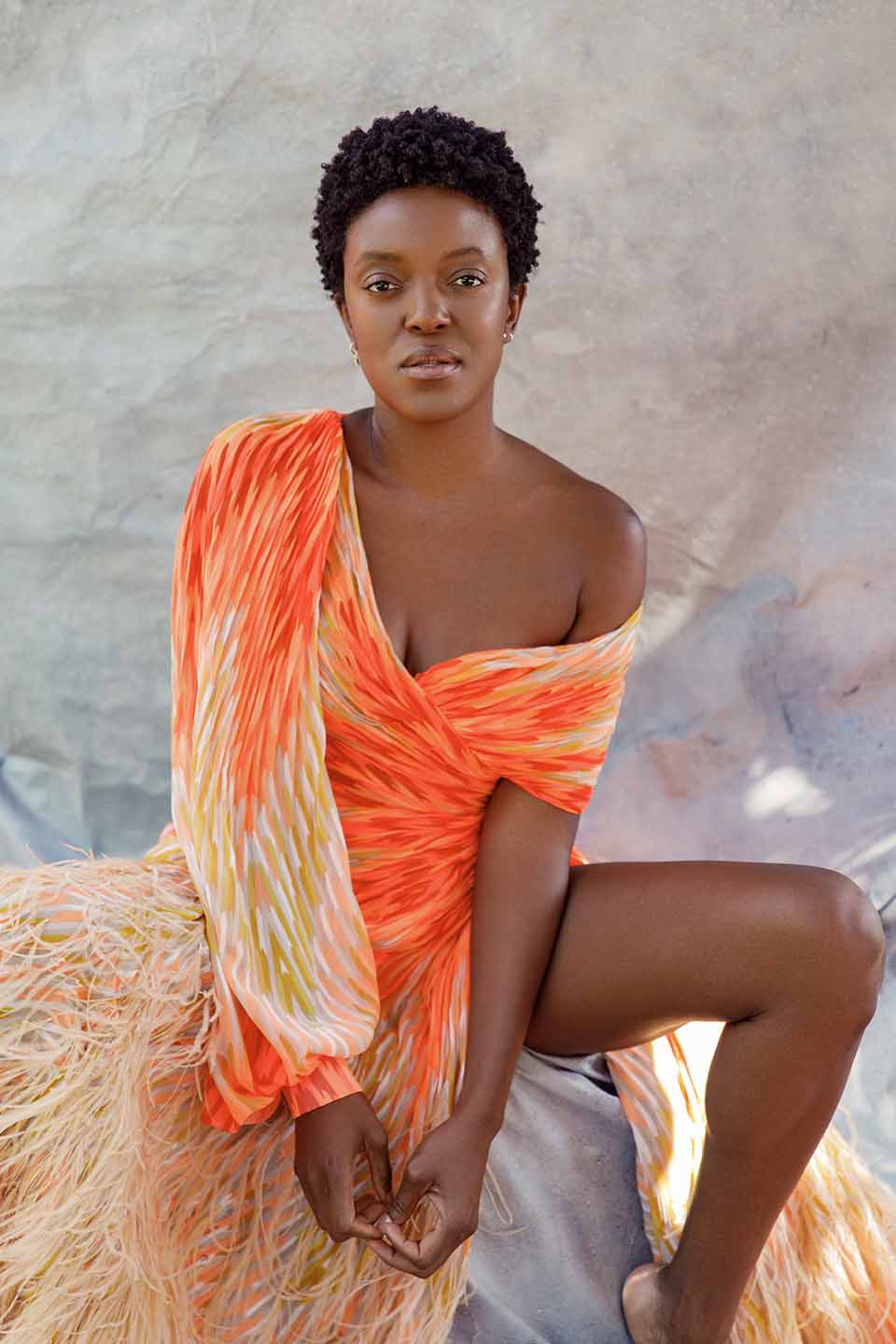
Krys Marshall
Actor & Alum
Alumna Krys Marshall (Drama, ’09) is an actor known for her powerful performances across television and film. She rose to prominence as astronaut Danielle Poole in the Emmy-winning Apple TV+ series “For All Mankind,” where her role grew into a central presence across seven seasons. She currently stars as Special Agent Nicole Robinson in the Emmy-nominated series “Paradise,” earning critical acclaim for her performance.
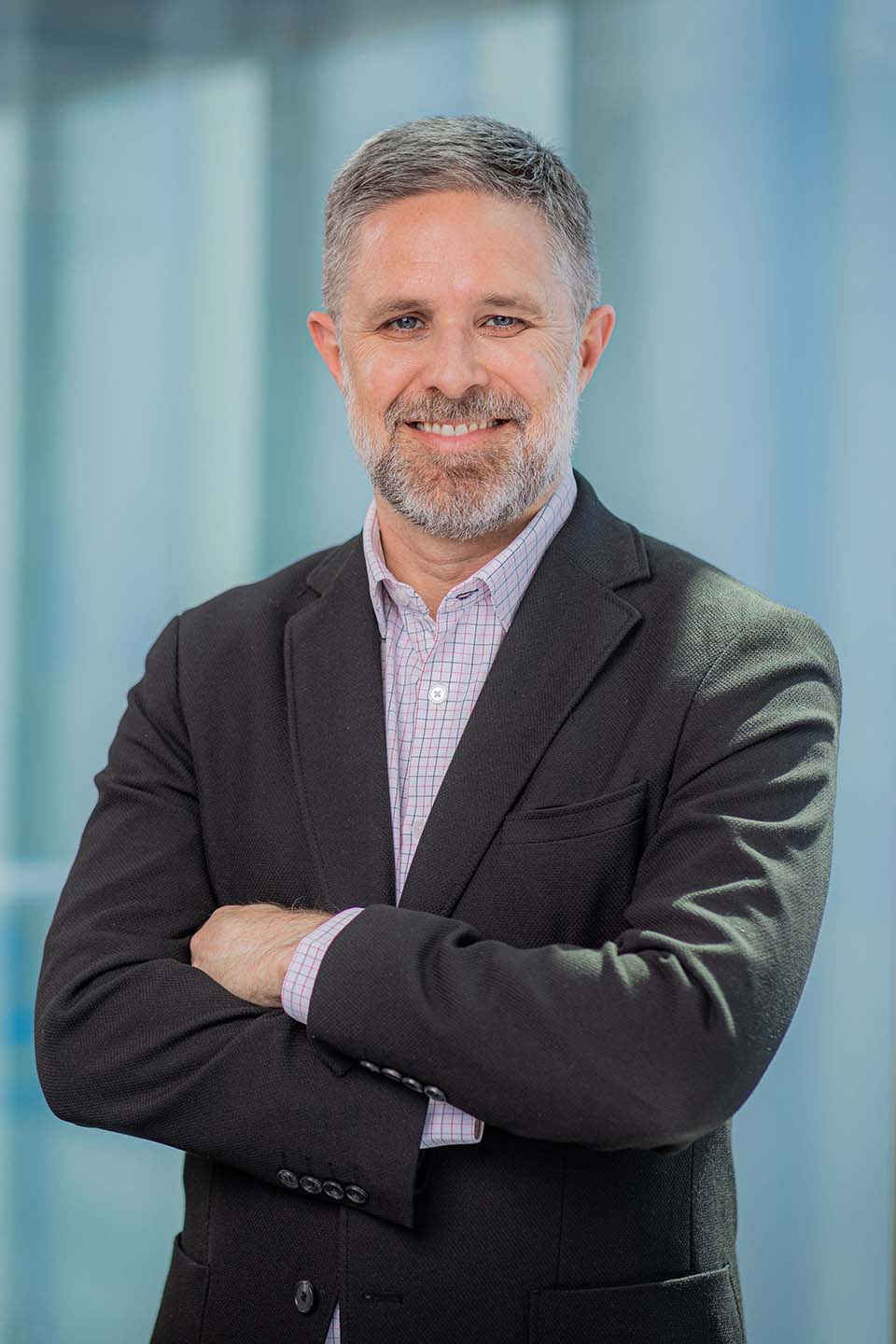
Brian Cole
Chancellor & Host
An innovative, experienced and bilingual arts leader, Brian Cole is the ninth chancellor of UNCSA. The UNC Board of Governors appointed Cole as chancellor on May 20, 2020; he had previously served as interim chancellor since August 2019, and as dean of the School of Music since 2016. An accomplished conductor, Cole has led orchestras and operas throughout the United States, Europe, South America and the Caribbean.