The Arts & Your Brain
A concussion once left violinist Jennifer Koh unsure if she’d ever perform again — and launched her into the world of neuroscience. Researchers Christina Hugenschmidt and Christina Soriano have spent the last decade studying how dance impacts cognition, and are working to determine the optimal dose for neurological issues.
In episode two of "The Arts & Everything," Brian Cole explores what happens in our brains when we engage with the arts, from motor planning and memory networks activated by music to the surprising ways creative movement can support brain health. Listen as artists and scientists break down what the arts reveal about the brain:
Transcript
Brian Cole: Welcome to the Arts and Everything. I'm Brian Cole, Chancellor of the University of North Carolina School of the Arts.
The arts often feel deeply personal, shaped by memory, emotion, and experience. But increasingly, scientists are studying the arts through a different lens: the brain. What happens when we make art? When we dance or listen to music? And why does it affect us so profoundly?
In today's episode, we dive into some of these findings. We're talking about the arts in your brain. Two artists and a neuroscientist join me to explore what we have already learned and what we're just beginning to understand.
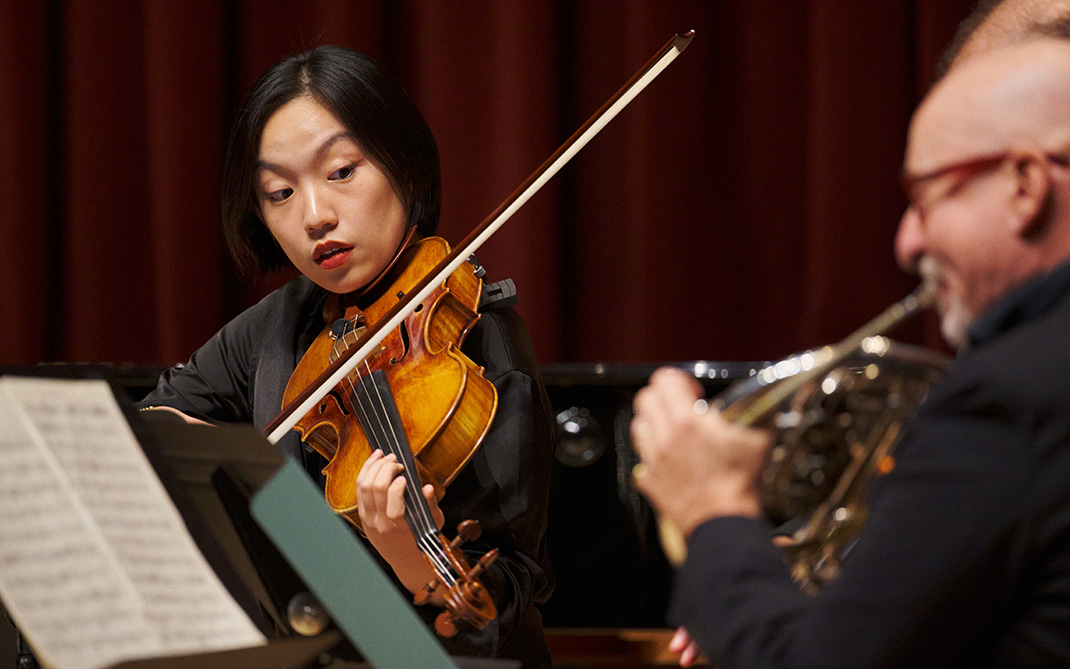
First, we'll start with a story. Jennifer Koh is a Grammy Award-winning violinist and one of today's most respected classical musicians. It's fair to say that music has shaped her entire life. She made her debut with the Chicago Symphony Orchestra when she was just 11 years old. But one day in 2014 in New York City, Jennifer took a fall and hit her head on the pavement and soon discovered that she had a severe concussion.
Jennifer Koh: I think in the beginning I was so out of it. Once I realized I couldn't remember things, like I would walk into a room and not remember why it had walked into the room, then I started having a lot of anxiety because I realized I had lost my memory, to the point I was like, would I be able to like work in a fast food restaurant? Because I can't remember from second to second. But of course, like the most intense underlying anxiety was like would I be able to perform? Would I be able to perform a piece memorized again?
When I finally was able to kind of return a bit to practicing, I did go back out on tour, but I remembered I was so wiped out. I couldn't do anything except show up for the rehearsal and then I’d just sleep all the rest of the day and then I'd only play the performance.
Brian Cole: I can only imagine what fatigue you just described felt like. In that period where you couldn't play, and you're having that experience, what was happening? Was it a matter of relearning to do certain things physically? Was it a matter of memory, of remembering how to do certain things? What was happening with you that prevented you as your brain healed?
Jennifer Koh: It was like the volume gave me splitting headaches.
Brian Cole: Oh.
Jennifer Koh: So just to physically, you know, because the first thing, like 99.9% of what you do as a musician is listen. So I think it was literally the volume was just so, yeah, it just, I’d immediately have a splitting headache.
Brian Cole: As you went through that process of remembering and just healing and rebuilding your playing, are there things you learned about yourself through that process? Are there things that you learned about making music in a general sense?
Jennifer Koh: Well, I think the first thing was I had never canceled before. Like, even when I was — now after COVID, it feels so different. But, you know, I would be so sick and I would still perform. So the idea of canceling a concert was, you feel like there's a responsibility because these organizations have asked for you to show up that week, like maybe sometimes two, three years in advance. And so, I would always and I still do feel the weight of that responsibility. But when I did have to cancel, I realized, oh, the world doesn't actually end. So, it's okay, you know?
Brian Cole: Like, it's OK. It's going to be OK, yeah.
Jennifer Koh: I think that was the, in a weird way, that was the biggest thing I realized. But aside from that, I did not enjoy having to stop my life in that way.
Brian Cole: Oh, I can only imagine.
Jennifer Koh: But mostly it was because, you know, if it was had been a choice, but it was more like having all of this concern that my brain wouldn't work again.
Brian Cole: That fear that her brain might not work again left Jennifer with a new passion, learning everything she could about the brain. What had actually been happening inside of her head? And what happens in musicians’ brains when they play or even think about playing?
Jennifer Koh: I think neurology fascinates me. So what I feel like is that even when I'm on stage is that 99.9% is listening and then responding, versus just focused on the physicality of it. So there was also a question to me of whether that could be reflected in the brain and whether that could be seen.
You know, sometimes I'll wake up in the morning and like my hands are tired. And I realized, oh, I must have actually been kind of playing in my sleep somehow, even physically. And then I feel like there’s so much of planning ahead. Like before I start a piece, I have to know how it ends. Like you can't start the first note without knowing how it, what the entire skeleton will be. So I did wonder if like imagining it, if the same kind of areas of the brain would be activated.
Brian Cole: To help answer those questions, Jennifer became the subject of a research study at Duke University. While she was there as an artist in residence, she connected with neuroscientist Tobias Overath through his course Music in the Brain. Together, they designed a small study using a functional MRI, which is a scan that lets researchers watch brain activity in real time.
Once inside the MRI machine, Jennifer was given three tasks with a piece of music. First, she imagined herself playing the music, then she listened to the music, and finally, she read through the music score silently.
Jennifer Koh: And what was interesting to me, I think they said that no matter what I was doing, it was always activating the part of the brain that's right before action.
Brian Cole: Hmm.
Jennifer Koh: So that was also interesting to me, like how music is really embodied to the point that even if you're not moving, your brain is still in movement, in flow.
Brian Cole: In other words, even when Jennifer was just listening or reading the score, her brain was preparing to play. Music was activating not just her auditory system, but motor planning, memory, and other networks across the brain. It's one of the reasons why music is often described as a whole brain experience.
And this isn't unique just for performers, like Jennifer. The field of music cognition explores how music shapes perception, attention, and especially memory, including in people with Alzheimer's or dementia, where a familiar song can suddenly bring a moment back to life. So I asked Jennifer how she sees music's role in memory and identity in her own work.
Jennifer Koh: I see everything that music is, is a metaphor for how I want to live my life. So for me, what's really interesting was just hearing the experiences and stories of people that are totally, have different backgrounds and different lives. And I think that's what in music has always been fascinating to me.
Brian Cole: 100% agree. Well and music is so important to all human beings whether they realize it actively or not. And the idea that music that's a part of our lives Either because of the frequency that we heard it or it was a part of a certain Impactful moment or a relationship with somebody and that that could unlock something that could break through The obstacles of something like Alzheimer's disease.
Jennifer Koh: I mean, I feel like what music does for us and can give to us is connecting us to feelings that we can't necessarily, we don't access on a daily basis, like going to the store or something. You're not accessing like every part of joy or sorrow or loss that you've had in your life. But when you listen to music, when you go to a performance, and this is even more so for me when I actually am in a live performance, it can be theater, it can be music, it can be anything, is that you actually have to sit and be very present. And it is accessing that. So I feel like in a way it does feel normal that for into a different cognitive state that music would one to place this that they weren't accessing every day. Because I think it does for us now.
Brian Cole: So we know music's impact on the brain can be profound, from how it engages the mind to the connections it makes. But music isn't the only art form that can literally change your brain. Another North Carolina study, this one at Wake Forest University, has been showing the cognitive effects of dance, particularly in older adults with neurological conditions like Alzheimer's or Parkinson's. To conduct the study, two experts came together, bridging the often separate worlds of science and the arts.
Christina Soriano: I'm Christina Soriano. I'm the Reynolds Professor of Dance at Wake Forest University, and I also serve as the co-director of the Wake the Arts Center.
Christina Hugenschmidt: I'm Christina Hugenschmidt. I'm an associate professor in the section on gerontology and geriatric medicine at Wake Forest School of Medicine, and I'm the Rebecca Isha Professor and Director of the Memory Counseling Program here.
Brian Cole: So Christina and Christina, thank you so much for taking the time to come and talk about a really important topic that I know is, that you both are passionate about in the arts in the brain. I am just consistently inspired by what I've heard from both of you. So let's just dive right in it's a question for for both of you. So can creativity and dance actually change the brain? Especially for people living with conditions like Parkinson's and Alzheimer's.
Christina Hugenschmidt: So the question was, can the arts change the brain? And the answer is definitely yes. There are not a huge number of studies that have looked at arts in the brain in ways that I think would be ideal. But there are definitely enough to say that the brain is changing. And certainly in people with things like Parkinson's disease or Alzheimer's disease, we can still see those changes.
Christina Soriano: And I'll say, so from where I sit, I'm really fortunate to teach both able-bodied, very healthy, creative, powerful undergraduate students who've had exquisite training and I also get to work with older adults, many of whom might never think that they're a dancer. And so designing dance experiences for those two audiences are a lot more similar than you think.
And the best part is those worlds come together. So my students get to work in our clinical environments, in our research environments, and in our community-facing classes. And it is not out of the ordinary for me to give a movement exercise or plump to somebody who's brand new into a dance studio space or to a student who's had years and years of training.
So when I look at somebody before class, they arrive and their body is a certain way. And then there is just what I call movement confidence that results at the end of class. And that's true of undergraduate students and that's also true of older adults. I think what you see changing in the brain is what I see changing in the body. And we know those things are deeply connected.
Brian Cole: You made me think of a follow-up question for Christina Hugginschmidt. So the idea of what you see in the changes from a neuroscience standpoint, what does that mean when somebody says the brain changes? What exactly are we talking about?
Christina Hugenschmidt: I really appreciate that question because this is something that I feel like is sometimes a disconnect when artists and neuroscientists are talking about the evidence for art. So, when you think about how the brain is structured, you have structure and you have function, right?
So, in brain, the structure is the neuron. The neuron has sort of a computational part, which is the body of the cell. And then it has long arms that branch out to connect. So, when we think about the function, we tend to think about the actual points of connection between the neurons, which are called synapses. And synaptic changes are things that can happen very rapidly. Like, it might be different before a dance class versus the end of a dance class. And that isn't a change in structure, right? The brain hasn't had time to build new connections or to build out any new cells or anything like that. That's just or like a rewiring or reconnecting of synapses that can happen rapidly.
There are some interesting ways that people have tried to look at how the arts can change the brain. One way that you can do this is to look at people who have been lifelong artists or professional artists. And you can ask questions like, are their brains different than other people's brains? So, there's some pretty compelling evidence from studies like that, that lifelong musicians, lifelong dancers, that these people may have subtle differences in their brain structure and also in their brain function.
Then you can also ask questions like, what if you take a non-expert and you ask them to undertake arts-based experiences? What happens to their brains? And this tends to be more the kind of questions that Christina and I have been asking over the past few years of, what are the benefits of incorporating arts practice into your life? And can you see changes associated with that?
Brian Cole: I think it's also fascinating. We have two experts in your field that have created this, some might think unlikely, but to me it seems so natural, partnership. How long have you been doing this work together?
Christina Soriano: 11 years? Is that right?
Christina Hugenschmidt: It's probably about right.
Christina Soriano: Yeah.
Brian Cole: If we dig into some of the details of your work with dance so far, one of the things that's really fascinating and interesting to me is that you're talking specifically about improvisational dance. And so, what's happening cognitively when people are asked to respond in the moment improvisationally rather than following choreography?
Christina Hugenschmidt: There are very few studies on what is happening when people are actively improvising. And there are some technical reasons for that. Whenever you are imaging the brain in a living human, it's similar to photography. So, if someone is moving, you get a blurry picture. So, when people are improvising, they are usually moving, right?
But in these studies, the interesting thing to me, when your brain is functioning, it's important to realize that your brain never turns off and it's almost like a symphony in a way where some things are turning up and some things are turning down and they're in a balance and it's coming and going over time. So, what you see when you look at people actively improvising is first of all, there's a lot of dynamic shifts over time, but also there's a lot of turning down of the brain in important regions, like regions that you use to do math or solve problems. Those regions are actually turning off or turning down during a lot of improvisation. I think we don't fully understand it, but I think it probably is related to flow state and to this being able to act without necessarily thinking so deliberately, but to kind of go with the flow and to improvise.
That's one of my favorite things about improvisation in the brain is just letting people know that sometimes you need to turn your brain off in order to do creative work.
Christina Soriano: Or turn parts of your brain off and turn other parts – yeah.
Christina Hugenschmidt: Yeah, turn parts of your brain off. Yeah.
Christina Soriano: Because the gifts of improvisation include the capacity to not judge your choices in the moment. And so inviting someone who is living with a neurodegenerative disease, particularly one where your body has betrayed you. So rather than asking someone to, quote, look like the instructor and learn this material, I always from thought, people should be self-generating movement where they are physically, where they are cognitively.
And so what I've grown very fond of and continue to be surprised by and teaching people to improvise with their bodies is the idea that you create a judgment-free zone. You are always inviting whatever answer they respond with, it's the right answer. And not moving as a choice, right? Just like in music, silence is a choice. And so there is space to find where you need to be physically and where you want to go. And there's room to grow with that, right? Improvisation invites scaffolding, multitasking, all things that are really good for the brain, particularly with older adults.
Brian Cole: That resonates with me quite a bit. I remember so many times where I was trying to improvise or somebody was trying to teach me how to improvise and how that definitely was using my brain in a way or different parts of my brain that I had not exercised to the same degree. And I've watched that in students too.
So how close are we to having like evidence-based guidelines? Three dance classes per week to improve memory. What would that mean for healthcare? This is really fascinating stuff.
Christina Hugenschmidt: This is fascinating stuff. And there are, you know, there's, one of the things about research is that you can never answer all the questions that you want to in one study.
But I will say the fundamental question in this one actually came from a question my mom asked me, my mom has Alzheimer's disease now. And when she was earlier on, we were doing our previous study and she said, so your study says that dance is good for me. If I can find a class, how many times a week should I go? And I was like, that's a great question that nobody knows the answer to. So, we will try to answer it. One of the cool things I think that we're learning about dance prescriptions even in our study is all of the different ways that dance affects a human being both in terms of their brain and their body and the fact that different kinds of dance can do that differently. So, I think hopefully we will get to some kind of basic answer with the question that we're doing right now. We're looking at six months of dance and people can be randomized to dance either once, twice, or three times a week or take a music appreciation class. So, with those in our main outcomes that we're looking at are cardiorespiratory fitness and cognition because those are two outcomes that are important for brain health and aging.
The other piece of this is we are doing heart rate monitoring during all of the classes, including the music appreciation class. I'm bringing this up because when you think about all the ways that dance can affect the brain and the body and overall wellbeing, there is a sense of connection that you can have, right? There's social connection, which we know is really beneficial and important. There's physical activity. How much are you getting of your heart rate? There are also different cognitive challenges.
So I'm hoping as the research moves forward, we will be able to look at what people's needs are. Like what are your needs for fitness? What are your needs for balance training? What are your limitations? Do you have pain issues? Do you have cognitive issues? And be able to use all of those factors to look at what is the right arts prescription for you that can support you right now.
Brian Cole: I love that idea that there isn't just one formula, but a personal kind of medicine in the arts for each of us. And while there's still more research to be done, the evidence is clear. The arts and our brains are deeply connected. And we are just beginning to understand the impact not only in how the arts can make us feel, but how they can heal, how they can connect, how they can expand cognitive capacity, and how they can change our mental and physical state for the better.
Right now, we can only imagine the incredible advances this work could uncover, or the potential benefits for people throughout the world. But if we embrace it and invest in the work of the artists and scientists focused on this discovery, we might just find out.
Thank you to our incredible guests, Jennifer Koh, Christina Hugenschmidt, and Christina Soriano. Your work is helping the arts be recognized for all they offer society and how they can change the world.
I'm Brian Cole. Thank you for listening to the Arts and Everything. Until next time, take care and keep finding the arts in everything.
"The Arts & Everything" is a podcast by UNCSA Media hosted by Brian Cole. Development producers are Maria Wurttele and Sasha Hartzell. Executive producers are Katherine Johnson and Kory Kelly, and the associate producer is Louie Poore. Creative Direction & Design is Alli Myers Gagnon and Digital Strategy & Distribution is Natalie Shrader. Music was composed by Chris Heckman and performed by Chris Heckman, André Vasconcellos, Miah Kay Cardoza and Gabe Lopez. The violin music used in this episode is by Jennifer Koh.
December 09, 2025

Jennifer Koh
Grammy Award-Winning Violinist
Grammy Award-winning violinist Jennifer Koh is a forward-thinking artist dedicated to exploring a broad and eclectic repertoire. She has expanded the contemporary violin repertoire through a wide range of commissioning projects and has premiered more than 100 works written especially for her. Her quest for the new and unusual, sense of endless curiosity, and ability to lead and inspire a host of multidisciplinary collaborators, truly set her apart.

Christina Hugenschmidt
Neuroscientist, Professor, Director
Christina Hugenschmidt, Ph.D., is a neuroscientist and the Rebecca E. Shaw Professor and Director of the Memory Counseling Program at Wake Forest University School of Medicine. Her research focuses on how movement, metabolism and aging shape the brain, with particular attention to Alzheimer’s. She is widely known for her collaborative work using dance-based interventions to support cognitive and physical wellbeing in older adults.
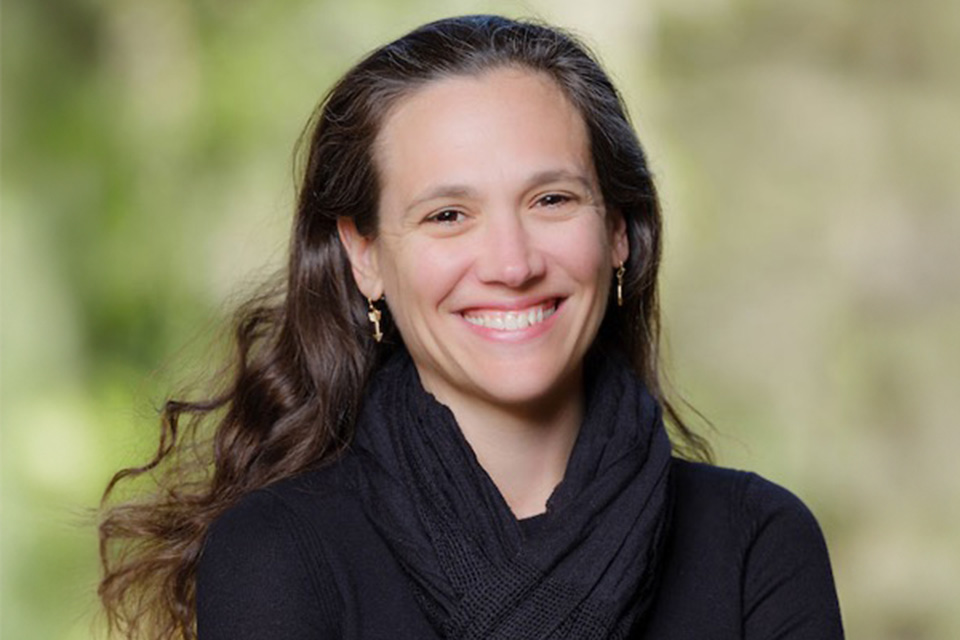
Christina Soriano
Dancer, Professor, Vice Provost
Christina Soriano is the Reynolds Professor of Dance and the former Vice Provost for the Arts and Interdisciplinary Initiatives at Wake Forest University, a position she held for seven years. A choreographer and educator, she is known for her work in improvisation and for developing IMPROVment®, a movement curriculum used in research on balance, mobility and cognition for older adults. Her collaborations with neuroscientist Dr. Christina Hugenschmidt have helped advance understanding of how dance supports people living with neurodegenerative conditions.
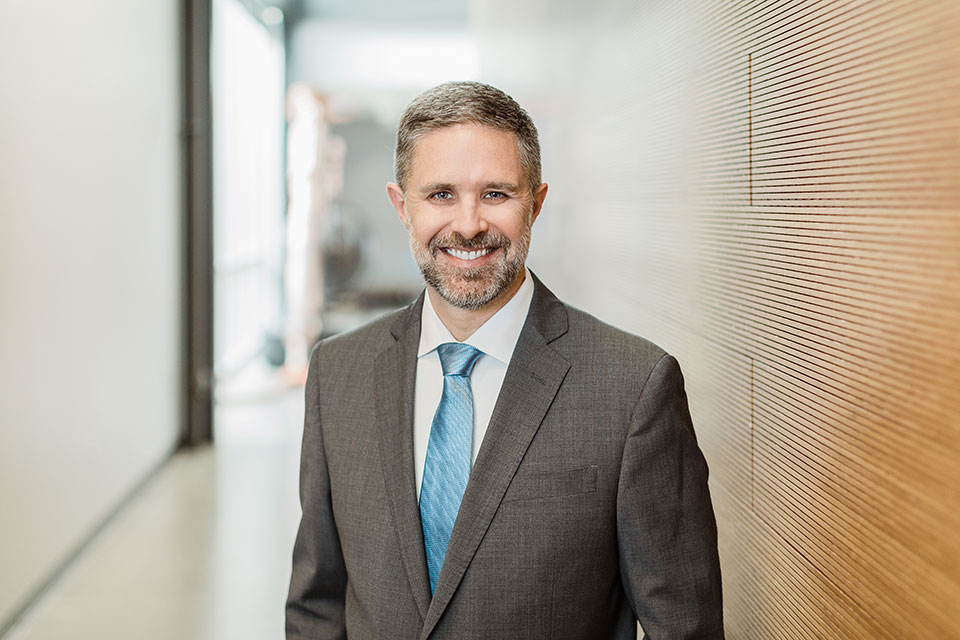
Brian Cole
Chancellor & Host
An innovative, experienced and bilingual arts leader, Brian Cole is the ninth chancellor of UNCSA. The UNC Board of Governors appointed Cole as chancellor on May 20, 2020; he had previously served as interim chancellor since August 2019, and as dean of the School of Music since 2016. An accomplished conductor, Cole has led orchestras and operas throughout the United States, Europe, South America and the Caribbean.